
RSF Drone Attacks UN Facilities in Sudan: International Condemnation Follows
Summary
- Rapid Support Forces drone attacks in Khartoum and Omdurman killed at least four civilians and damaged a UN facility.
- International bodies and several nations condemned the attacks, emphasizing the need to protect civilians and humanitarian workers.
- The UN Office for the Coordination of Humanitarian Affairs also reported drone strikes near humanitarian offices in Nyala, South Darfur.
- Ongoing insecurity has displaced over 6,400 people in West Kordofan, while food insecurity worsens across Sudan.
- A humanitarian appeal for $2.86 billion is currently only 51% funded, despite growing needs.
Escalating Violence Targets Civilians and UN Facilities
The targeting of civilian neighborhoods and aid infrastructure by the Rapid Support Forces represents a grave violation of international humanitarian law, prompting widespread condemnation and urgent calls for the protection of non-combatants and humanitarian personnel.
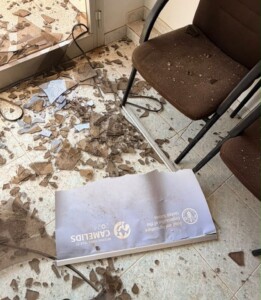
The Rapid Support Forces (RSF) recently conducted drone strikes across Sudan, impacting both Khartoum and Omdurman. These aerial assaults on Sunday specifically targeted residential areas and the main office of the Food and Agriculture Organization (FAO).
The attacks resulted in the deaths of at least four non-combatants in Omdurman. Furthermore, a United Nations building sustained damage during the strikes, with personnel present inside at the time, though no injuries to staff were reported. This series of events underscores the severe risks faced by civilians and international aid organizations operating in the region.
In a separate but related incident, the UN Office for the Coordination of Humanitarian Affairs (OCHA) documented multiple drone strikes last Thursday in the El Mazad neighborhood of Nyala, located in South Darfur. These strikes occurred in close proximity to the operational bases of various humanitarian organizations, highlighting a broader pattern of threats to aid infrastructure.
Global Outcry and Calls for Protection
The recent RSF drone attacks UN facilities Sudan have drawn widespread international and United Nations condemnation. Ambassadors from several nations, alongside the head of the European Union delegation to Sudan, collectively voiced their support for UN humanitarian workers, issuing a joint declaration that emphasized the imperative to shield these individuals from harm. Their statement unequivocally declared that any assault on civilian areas and infrastructure is unacceptable, underscoring a fundamental principle of international humanitarian law.
Germany's ambassador to Sudan, Philipp Wendland, also expressed solidarity with both civilians and UN staff in Khartoum who endured these renewed RSF attacks, noting that air defense systems had successfully mitigated further destruction. UN spokesperson Stéphane Dujarric publicly denounced the aggression, stating a clear position against all actions that target non-combatants. Denise Brown, the UN Resident and Humanitarian Coordinator in Sudan, urgently appealed for the safeguarding of aid personnel and their facilities, warning that the continuous drone activity is exacting a heavy toll on the civilian population, raising concerns about potential Rapid Support Forces war crimes.
These incidents highlight the critical need for adherence to international humanitarian law amidst the ongoing Sudan conflict, particularly concerning the protection of those not involved in hostilities and the infrastructure vital for delivering aid. The targeting of the FAO headquarters attack Khartoum and other civilian sites represents a serious breach of these principles, prompting calls for greater accountability and measures to ensure UN humanitarian workers protection Sudan.
Worsening Humanitarian Crisis and Funding Gaps
Beyond the immediate violence, the broader Sudan conflict continues to exacerbate a dire humanitarian situation. The International Organization for Migration (IOM) reported that persistent insecurity is forcing a continuous exodus of civilians from their homes in Kordofan. Specifically, over 6,400 individuals were displaced from the Abu Qalb area within the Abu Zabad locality of West Kordofan over a two-day period.
Compounding these challenges, food insecurity is intensifying across Sudan, driven by significant price surges and insufficient rainfall. The World Food Programme (WFP) observed a 24 percent increase in the cost of the local food basket in October compared to the previous month, signaling a deepening crisis for vulnerable populations. This escalating need comes as OCHA reiterates its plea to international donors for increased financial contributions.
The humanitarian appeal, which seeks USD 2.86 billion to provide essential life-saving assistance and address the growing requirements, has only secured 51 percent of the necessary funding. This substantial shortfall severely hampers efforts to mitigate the widespread suffering caused by the protracted conflict and its devastating consequences.
Practical Implications
Lawyers and compliance officers advising entities with operations or interests in Sudan should be aware of the documented violations of international humanitarian law, specifically the targeting of civilian areas and UN facilities by the RSF. This information is critical for risk assessments, due diligence, and understanding potential future accountability measures or sanctions related to the conflict, particularly concerning the protection of non-combatants and humanitarian aid infrastructure.
Source
How does this affect you?
Get an AI analysis of this article grounded in your jurisdictions, practice areas, and any policy documents you've uploaded to Wansom.
Finish Reading the Full Story and the Expert Analysis.
Get the latest legal & regulatory intelligence in Sudan
Wansom is AI and can make mistakes.