
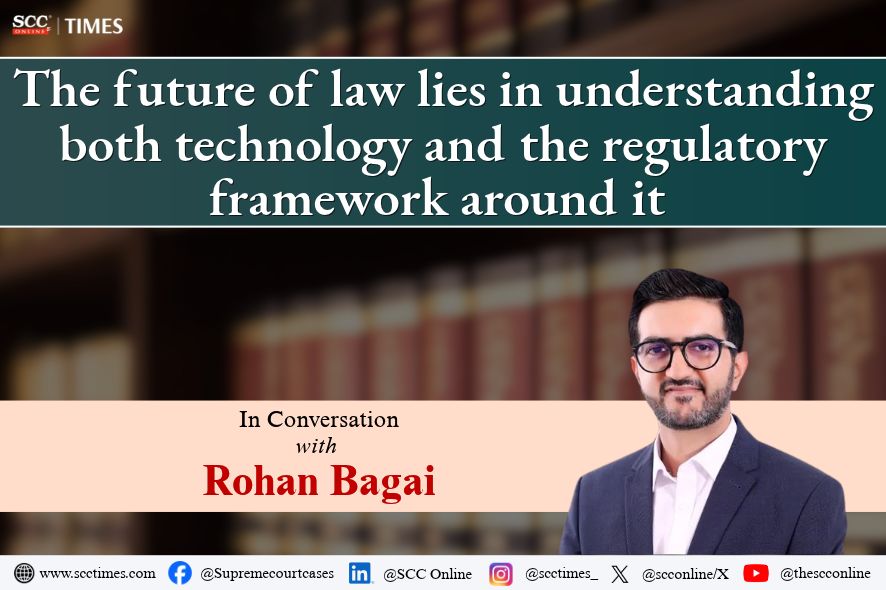
Rohan Bagai Technology Law Insights: Navigating India's Digital Frontier
Summary
- Rohan Bagai, a Senior Partner at AZB & Partners, specializes in complex legal and regulatory issues within technology and financial services, including cryptocurrency and data governance.
- His nearly two-decade career in law evolved into tech and fintech due to the industry's shift from offline to digital models, which he found intellectually engaging.
- Bagai advocates for lawyers to act as "product counsel," deeply understanding business models and proactively identifying legal concerns before they are embedded in product design.
- This approach is crucial for building resilient businesses, ensuring compliance with both the letter and purpose of the law, especially in emerging technology sectors with regulatory grey areas.
- Keeping pace with rapid technological change requires continuous learning, regular reading, and consistent communication with product, business, and compliance teams.
A Career at the Forefront of Tech Law
By identifying potential legal or regulatory issues early, before they become ingrained in the product's design, legal professionals can proactively contribute to building a resilient business framework.
Rohan Bagai, a Senior Partner at AZB & Partners, operates from the firm's Delhi office, bringing nearly two decades of specialized experience to the complex legal and regulatory landscape of technology and financial services. His extensive practice encompasses critical areas such as payment systems, cryptocurrency, blockchain technology, and data governance, alongside guiding the establishment of new digital and fintech ventures. Bagai's expertise is widely recognized, with both Chambers and Partners and The Legal 500 commending his deep sector knowledge and pragmatic approach to intricate regulatory challenges. He has also contributed significantly to legal literature, authoring pieces for prominent legal publications and international guides on fintech, data protection, and blockchain regulation.
Bagai's journey into this specialized field was not pre-planned but rather evolved through opportunity. As a third-generation lawyer, the legal profession was a constant presence in his life, shaped by observing his father's client interactions and the inherent responsibilities of the role. While initially pursuing intellectual property law before transitioning to corporate law, his definitive shift into technology and fintech coincided with a period when numerous businesses were migrating from traditional offline models to digital platforms. This transformation created a demand for legal professionals capable of integrating business understanding with corporate, legal, and regulatory navigation, a challenge Bagai found intellectually stimulating and which progressively defined his career path.
The Evolving Mandate of Technology Lawyers
In today's rapidly advancing technological environment, the role of legal counsel extends far beyond mere interpretation of statutes or the provision of compliance checklists. Rohan Bagai emphasizes that businesses typically seek legal guidance when regulatory shifts or new laws present tangible operational hurdles. The fundamental responsibility of a technology lawyer, therefore, is to grasp these business problems comprehensively and devise actionable solutions that empower the client's commercial objectives. This necessitates a profound understanding of the product and its underlying business model.
Bagai advocates for lawyers to function as "product counsel," requiring them to meticulously examine every aspect of a proposed model. This involves understanding the client's development goals, the product's operational mechanics, the identities of its users and other participants, and the allocation of data, financial, and accountability responsibilities. By identifying potential legal or regulatory issues early, before they become ingrained in the product's design, legal professionals can proactively contribute to building a resilient business framework. This approach ensures compliance not only with the explicit wording of the law but also with its underlying legislative intent, fostering robust and sustainable growth.
Navigating Regulatory Ambiguity and Future-Proofing
The proactive stance of "product counsel" is particularly vital in the realm of emerging technologies, where specific legal frameworks may not yet exist, or where current laws present genuine ambiguities as regulation struggles to keep pace with innovation. In such scenarios, Bagai's approach involves a thorough analysis of established legal principles, existing regulatory guidance, and developments observed in comparable international markets. This comprehensive study informs advice that is practical, balanced, and crucially, aligned with the anticipated intent of regulators.
Maintaining relevance in this dynamic field demands continuous engagement and learning. Bagai underscores the necessity of regular reading and consistent dialogue with product, business, and compliance teams. Given the swift pace of technological evolution, legal professionals cannot rely on past solutions for future challenges. A commitment to ongoing education and a willingness to adapt legal thinking are paramount to effectively advise on the next generation of technological products and services, ensuring that legal strategies remain current and effective.
Practical Implications
Lawyers and compliance officers in technology and fintech must evolve beyond mere compliance interpretation to act as proactive 'product counsel,' deeply understanding business models and anticipating regulatory intent. This approach is crucial for building resilient businesses in rapidly evolving, often grey-area, technological domains, necessitating continuous learning and engagement with product and business teams.
Source
How does this affect you?
Get an AI analysis of this article grounded in your jurisdictions, practice areas, and any policy documents you've uploaded to Wansom.
Wansom is AI and can make mistakes.