
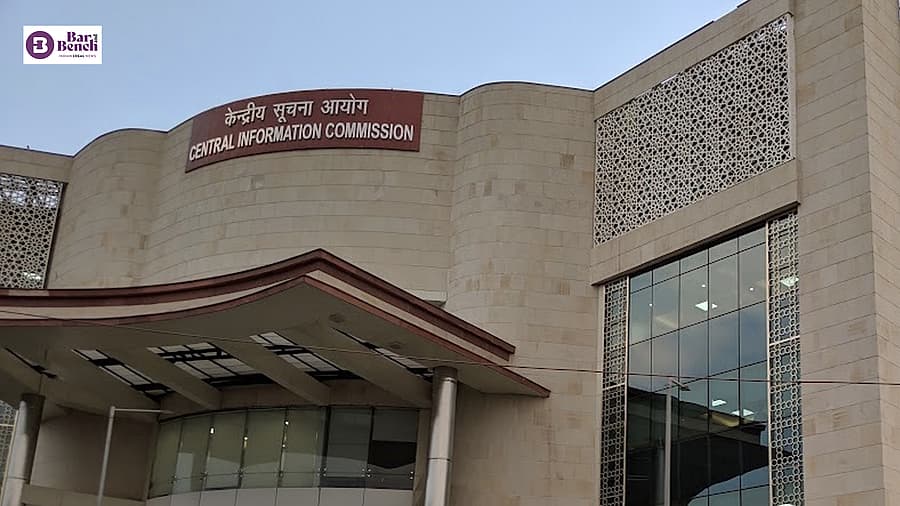
CIC: Rishabh Mishra v CPIO Delhi University RTI - Justify Withholding Exam Records
Summary
- The Central Information Commission directed Delhi University's CPIO to justify withholding exam evaluation records requested by Rishabh Mishra.
- The CPIO had argued the information sought opinions and was confidential under a fiduciary capacity.
- Information Commissioner Sudha Rani Relangi clarified that existing records like marking schemes are "information" under Section 2(f) of the RTI Act.
- The CIC ruled that merely calling information "confidential" is not a valid denial ground, and the fiduciary exemption under Section 8(1)(e) requires specific justification.
- Denials of information must be explicitly linked to specific exemptions under Section 8 or 9 of the RTI Act.
What Happened
Any refusal to disclose information must be explicitly traceable to a specific exemption outlined in Section 8 or Section 9 of the Act.
The Central Information Commission (CIC) has issued a significant directive to the Central Public Information Officer (CPIO) of Delhi University (DU), demanding a justification for the withholding of records pertaining to the evaluation of semester examination answer scripts by the Faculty of Law. This order stems from a case initiated by Rishabh Mishra, who sought access to these crucial documents. The `Rishabh Mishra v CPIO Delhi University RTI` case highlights ongoing challenges in transparency within educational institutions.
Initially, the DU CPIO had resisted the request, arguing that many of the appellant's inquiries were not straightforward requests for factual information but rather sought clarifications or subjective opinions. The CPIO contended that the evaluation process itself was confidential and conducted under a fiduciary capacity, thereby exempting it from disclosure under the Right to Information (RTI) Act. These `Grounds for denial RTI Act confidentiality` were central to the university's initial refusal to provide the requested details.
Legal Context and CIC's Clarifications
Information Commissioner Sudha Rani Relangi, presiding over the matter, provided important clarity on the scope of the RTI Act. While acknowledging that a CPIO cannot be compelled to generate information, offer interpretations of existing records, or provide explanations not already documented, the Commission firmly distinguished between creating new information and providing access to existing records. The `Information Commissioner Sudha Rani Relangi ruling` underscored that materials such as marking schemes, written instructions issued to examiners, official notices, circulars, and guidelines unequivocally fall under the definition of "information" as per Section 2(f) of the RTI Act. This clarification is vital for understanding `What constitutes information RTI Act India`.
Crucially, the CIC rejected the CPIO's blanket assertion of confidentiality. The Commission emphasized that merely labeling information as 'confidential' does not automatically provide a valid basis for denial under the RTI Act. Any refusal to disclose information must be explicitly traceable to a specific exemption outlined in Section 8 or Section 9 of the Act. The `RTI Act Section 8(1)(e) fiduciary exemption`, often cited by public bodies, cannot be invoked without the university concretely establishing the existence of such a fiduciary relationship. The ruling makes it clear that this exemption is not a mechanical tool for withholding information without proper justification.
Implications for Transparency
This ruling by the CIC carries substantial implications for transparency and accountability, particularly within the education sector. The `CIC Delhi University exam evaluation RTI` case sets a precedent that public authorities, including universities, cannot rely on vague claims of confidentiality or a generalized fiduciary relationship to deny access to information. It reinforces the principle that specific statutory exemptions must be cited and justified when withholding records.
The Commission's directive for the Delhi University CPIO to provide a detailed justification for its denial means that the university must now demonstrate how its withholding aligns with specific provisions of the RTI Act, rather than broad assertions. This outcome empowers citizens like Rishabh Mishra to challenge denials more effectively, ensuring that public bodies adhere strictly to the provisions of the RTI Act. It serves as a reminder that the spirit of the RTI Act prioritizes disclosure unless a clear and specific exemption applies.
Practical Implications
This ruling provides a precedent for challenging RTI denials by public bodies, especially educational institutions, that rely on vague claims of confidentiality or fiduciary capacity without specific statutory exemptions. Lawyers should review their clients' RTI policies to ensure compliance with Sections 8 and 9 of the RTI Act.
Source
How does this affect you?
Get an AI analysis of this article grounded in your jurisdictions, practice areas, and any policy documents you've uploaded to Wansom.
Finish Reading the Full Story and the Expert Analysis.
Get the latest legal & regulatory intelligence in India
Wansom is AI and can make mistakes.