
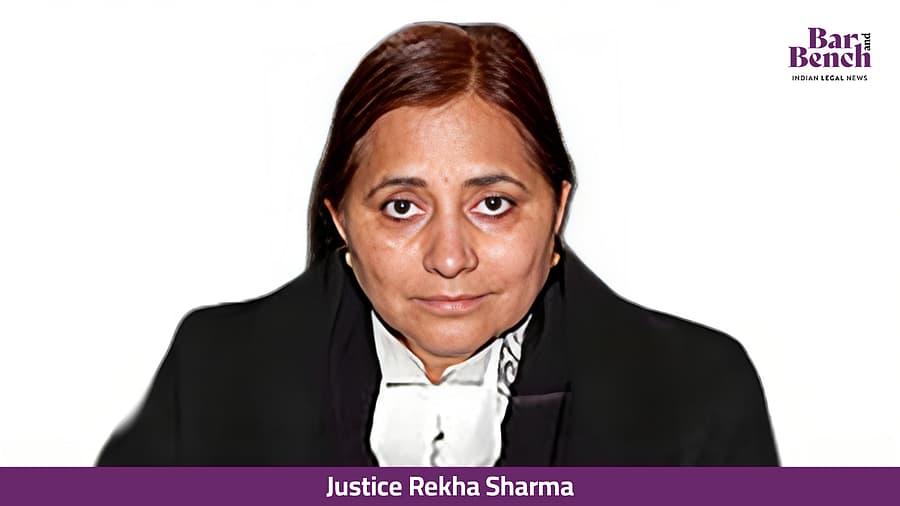
Justice Rekha Sharma: Supreme Court Inaction On Voter Deletion Criticized
Summary
- Former Delhi High Court Justice Rekha Sharma criticized the Supreme Court for its inaction on the deletion of 13 crore voter names.
- She noted that petitions challenging these deletions have been pending for months without meaningful orders from the Supreme Court.
- Justice Sharma highlighted that peaceful protestors against the Election Commission of India were reportedly beaten and arrested.
- She expressed her revised view that the Collegium system for judicial appointments has "all but failed."
- The Collegium system, she explained, was established to counter government influence but has become a worse solution.
The Issue of Voter Deletions and Judicial Inaction
Yet, Justice Sharma candidly stated that this "remedy," intended to improve judicial independence and quality, ultimately proved to be worse than the original problem it sought to address, implying a new set of challenges and deficiencies.
Former Delhi High Court Justice Rekha Sharma recently voiced significant concerns regarding the deletion of an estimated 13 crore (130 million) names from India's electoral rolls by the Election Commission of India (ECI). Despite the massive scale of these removals, she highlighted that the Supreme Court has yet to issue any substantive directives or meaningful orders, even though related petitions challenging these deletions have been awaiting resolution for several months. This prolonged judicial silence, according to Justice Sharma, is particularly troubling given the profound implications for democratic participation and the fundamental right to vote.
She further pointed out the harsh treatment meted out to individuals who have protested these deletions. Students, activists, and various members of civil society who engaged in peaceful demonstrations against the ECI's actions were reportedly subjected to physical force and detained by police, being "beaten up and pushed into police vans." Justice Sharma underscored that these incidents unfolded openly, directly under the purview of the nation's highest court, raising serious questions about the protection of civil liberties.
Constitutional Mandate and Judicial Accountability
Justice Sharma's critique extended to the Supreme Court's fundamental role within the Indian constitutional framework. She emphasized that the Constitution explicitly entrusts the Supreme Court with the responsibility to safeguard the rights of ordinary citizens, particularly in matters of such national importance. In her view, the court's apparent inaction in the face of widespread voter deletions and the reported suppression of peaceful protests represents a significant failure to uphold this crucial constitutional mandate and its duty as the guardian of fundamental rights.
These pointed observations were delivered during an event organized by the Campaign for Judicial Accountability and Reforms (CJAR). The forum, titled "Accountability of Judges of the Supreme Court & High Court of India," provided a platform for a candid discussion on the judiciary's performance and its adherence to principles of oversight and responsibility. Her remarks thus placed the issue of voter deletions within a broader discourse on judicial accountability, urging a deeper examination of the judiciary's role in protecting democratic processes.
The Collegium System Under Scrutiny
Beyond the immediate issue of electoral roll management, Justice Sharma also offered a stark re-evaluation of the Collegium system for judicial appointments. She openly admitted that she was once a proponent of this system, which grants judges significant power in selecting their peers for appointment to higher courts. However, her perspective has fundamentally shifted over time, leading her to conclude that the Collegium system has, in her words, "all but failed" in its intended purpose. She expressed a desire to be "very candid" about this assessment.
Justice Sharma elaborated on the historical context of the Collegium's establishment, noting that it arose from a desire to counteract perceived flaws in government-led judicial appointments. Concerns about nepotism, favoritism, and political affiliations influencing the selection of judges under the executive's control were prevalent, prompting a search for an alternative mechanism. Consequently, the power to appoint judges was effectively transferred from the government to the Supreme Court itself. Yet, Justice Sharma candidly stated that this "remedy," intended to improve judicial independence and quality, ultimately proved to be worse than the original problem it sought to address, implying a new set of challenges and deficiencies.
Practical Implications
This article highlights a retired judge's strong criticism of the Supreme Court's inaction on voter deletions and the perceived failure of the Collegium system. While not directly actionable in terms of new legal requirements, it offers lawyers critical insight into the current judicial climate and ongoing debates surrounding judicial accountability and appointment processes in India.
Source
How does this affect you?
Get an AI analysis of this article grounded in your jurisdictions, practice areas, and any policy documents you've uploaded to Wansom.
Finish Reading the Full Story and the Expert Analysis.
Wansom is AI and can make mistakes.