
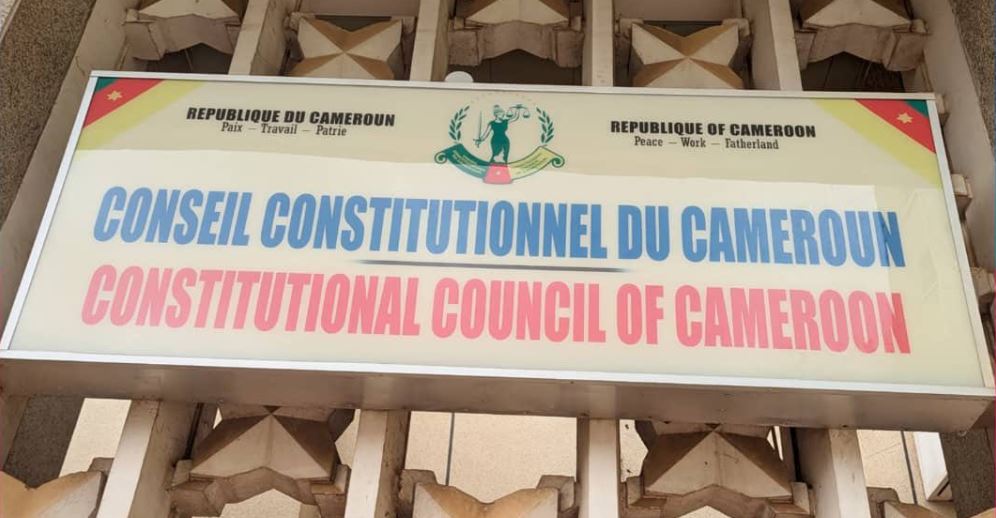
Paul Biya: Remy Nama Président Conseil Constitutionnel Cameroun
Summary
- President Paul Biya appointed Remy Nama as the new president of Cameroon's Constitutional Council on October 16, 2026.
- Remy Nama succeeds Clément Atangana and is the second president in the Council's history.
- Abdoulaye Daouda was also appointed as a new member, replacing Bah Oumarou Sanda, who died in August 2026.
- The Constitutional Council, established in 1996 and operational since 2018, is the highest authority for constitutional and electoral matters.
- Remy Nama is a senior magistrate with prior experience in the Presidency's General Secretariat and various board memberships.
Key Appointments to Cameroon's Constitutional Council
Remy Nama's elevation to the presidency makes him only the second individual to hold this crucial office since the Constitutional Council became operational in February 2018, despite its formal creation in 1996.
President Paul Biya issued decrees on October 16, 2026, announcing significant changes to the leadership and composition of Cameroon's Constitutional Council. These appointments include Remy Nama, who has been named the new president of the esteemed body, succeeding Clément Atangana. The presidential directives also designated Abdoulaye Daouda as a new member of the Council, filling a critical vacancy.
The dual appointments address two open positions within the constitutional jurisdiction, which functions as the nation's highest court for constitutional matters and holds ultimate authority in resolving electoral disputes. Remy Nama's elevation to the presidency makes him only the second individual to hold this crucial office since the Constitutional Council became operational in February 2018, despite its formal creation in 1996. The new member, Abdoulaye Daouda, steps into the role previously held by Bah Oumarou Sanda, who passed away in August 2026. These changes are poised to shape the future direction and interpretation of constitutional law in Cameroon.
Profiles of the New Leadership
Remy Nama, a distinguished "magistrat hors hiérarchie," brings extensive experience from various high-level governmental capacities to his new role as president of the Constitutional Council. His career includes a significant tenure as a "chargé de mission" within the General Secretariat of the Presidency of the Republic, a position that provided him with deep insight into the workings of the highest echelons of state administration. Beyond his direct service to the presidency, Nama also contributed to public sector governance through his involvement on several boards of directors.
Notably, he served on the board of the National Civil Engineering Equipment Park (Matgenie), an entity vital to national infrastructure development. Additionally, Nama represented the Presidency of the Republic on the board of the Agency for the Promotion of Small and Medium-sized Enterprises (APME), underscoring his engagement with economic development initiatives. His appointment as president was accompanied by a separate decree also naming him as a member of the Constitutional Council, alongside Abdoulaye Daouda, on the same day. Abdoulaye Daouda, the other key appointee, recently held the position of special advisor to the President of the Senate, indicating his familiarity with legislative processes. His designation as a member of the Constitutional Council was specifically made by the President of the National Assembly, highlighting a collaborative approach to filling this important judicial role.
The Constitutional Council's Pivotal Role
The Constitutional Council stands as a cornerstone of Cameroon's legal and political architecture, serving as the supreme judicial body responsible for upholding the constitution. Its mandate encompasses a broad range of critical functions, including the review of legislation for constitutional conformity and the adjudication of disputes arising from electoral processes. Given its ultimate authority in electoral matters, the composition and leadership of the Council are of paramount importance for ensuring transparency, fairness, and public confidence in the nation's democratic institutions.
Established by decree in 1996, the Council's full operational capacity was realized in February 2018, marking a relatively recent phase in its institutional development. The appointment of Remy Nama as its second president, following Clément Atangana, signals a new chapter for this vital institution. The Council's decisions have far-reaching implications for governance, human rights, and the balance of power within the Cameroonian state, making the recent leadership changes a matter of significant national interest and legal scrutiny.
Practical Implications
Lawyers and compliance officers in Cameroon should be aware of the new leadership at the Constitutional Council, as changes in its presidency can influence the interpretation of constitutional law, electoral dispute resolution, and the overall judicial approach of the highest constitutional body. This may necessitate adjustments in legal strategy for cases involving constitutional matters or electoral challenges.
Source
How does this affect you?
Get an AI analysis of this article grounded in your jurisdictions, practice areas, and any policy documents you've uploaded to Wansom.
Finish Reading the Full Story and the Expert Analysis.
Get the latest legal & regulatory intelligence in Cameroon
Wansom is AI and can make mistakes.