
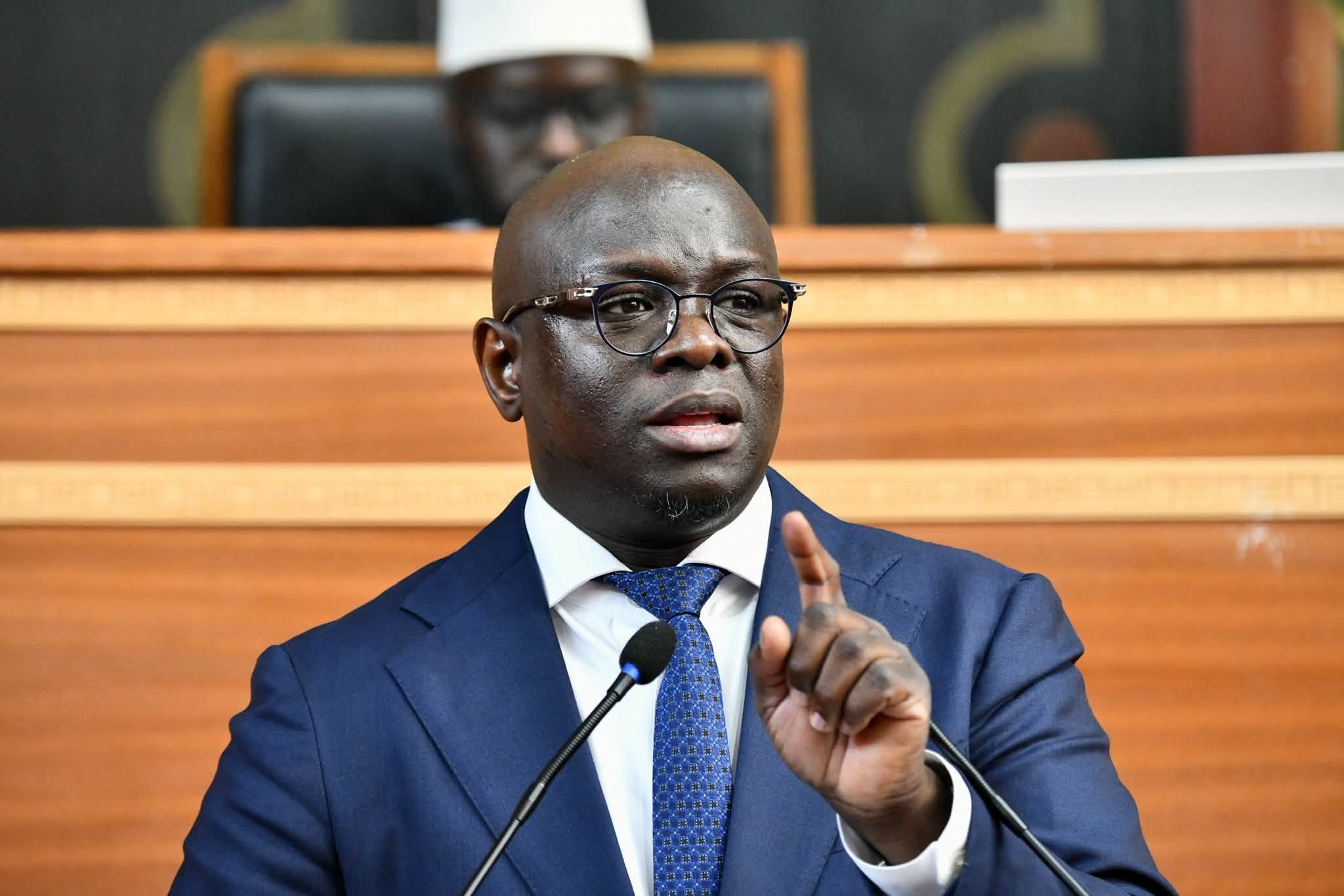
Sénégal: Cheikh Diba on Rejet LFR 2026, President Faye to Decide Next Steps
Summary
- The Senegalese National Assembly rejected the rectifying finance law (LFR) 2026 in a plenary session.
- Minister Cheikh Diba stated President Bassirou Diomaye Faye would determine the next steps after the rejection.
- The LFR aimed to increase energy subsidies by 540 billion FCFA, from 250 billion to 790.3 billion FCFA, due to rising costs.
- Deputies used Article 83 of the Internal Regulations to bypass detailed examination and general discussion of the bill.
- The rejection is seen as an escalation of a political power struggle between the executive and legislative branches.
What Happened
Minister Diba asserted that the parliamentary rejection jeopardizes the state's capacity to provide essential support to its citizens.
The Senegalese National Assembly recently rejected the rectifying finance law (LFR) 2026 in a plenary session, leading to immediate political fallout. Following this significant parliamentary decision, Cheikh Diba, the Minister of Economy, Finance, and Planning, indicated that the responsibility for the subsequent course of action now rests with President Bassirou Diomaye Faye. Minister Diba affirmed that President Faye would implement the necessary measures, though he did not specify what these actions might entail.
This rejection in the full assembly marks an escalation of a political dispute that had already intensified when the same legislative text was initially turned down at the commission stage. Earlier, Serigne Guèye Diop, who serves as the Minister of Industry and Commerce, had publicly accused the parliamentary majority of attempting to obstruct government initiatives. Speaking at a press conference organized by Kiraay, Minister Diop had warned that the President of the Republic might be compelled to take decisive steps if the loi de finances rectificative 2026 Sénégal failed to pass. The vote in plenary therefore prolongs a confrontation that extends beyond the specific details of the budget itself.
The Fiscal Imperative
In the wake of the rejet LFR 2026 Sénégal Cheikh Diba, the Minister of Economy, Finance, and Planning voiced strong criticism of the deputies, contending that their refusal to engage in debate prevented the Senegalese populace from understanding the proposed adjustments to revenue and expenditure forecasts. He argued that the rejection effectively stifled any meaningful discussion regarding this substantial modification to the national budget. A primary justification offered by Minister Diba for the LFR was the escalating cost of energy, a direct consequence of ongoing tensions in the Middle East.
The initial finance law had allocated 250 billion FCFA for energy subsidies, a figure that has since proven insufficient. Current estimates now place the required amount at 790.3 billion FCFA, necessitating an additional 540 billion FCFA to meet the country's energy needs. Cheikh Diba ministre économie finances asserted that the parliamentary rejection jeopardizes the state's capacity to provide essential support to its citizens. He also dismissed as "amalgamation or manipulation" any accusations suggesting the government was failing to assist the Senegalese people, underscoring the critical nature of the proposed budgetary changes.
Parliamentary Maneuvers and Political Accusations
The parliamentary process leading to the rejection of the LFR 2026 was characterized by a procedural move that circumvented a detailed examination of the project and a general discussion. Deputy Amadou Ba initiated this by requesting the adoption of a preliminary question, a tactic permissible under article 83 Règlement intérieur Assemblée nationale. This procedural step effectively halted further deliberation on the proposed legislation.
Minister Diba further challenged the argument of budgetary sincerity, which Deputy Amadou Ba had put forth, stating that this specific issue had not been a central point of discussion during the commission meetings. Diba accused the deputies of using this argument as a mere pretext, suggesting that the true source of disagreement lay instead with the Economic and Social Recovery Plan (PRES). This highlights the deep-seated crise parlementaire Sénégal budget that has emerged between the executive and legislative branches.
Calls for Resolution and Future Steps
The rejet LFR 2026 Sénégal Cheikh Diba has intensified the friction between the Executive and Parliament, prompting calls for presidential intervention to restore institutional harmony. Babacar Ba, a former vice-president of the National Office for the Fight Against Fraud and Corruption (OFNAC) and president of the Forum du justiciable Sénégal, publicly urged President Bassirou Diomaye Faye to take action to end what he described as "parliamentary guerrilla warfare."
Ba emphasized the importance of fostering appeasement, advocating that political disputes should not be allowed to impede the normal functioning of state institutions. The ball is now in President Faye's court, as he is expected to respond to this budgetary impasse and the broader crise parlementaire Sénégal budget. The implications of the rejection, particularly concerning the substantial increase in subventions énergétiques Sénégal LFR, remain a critical concern for the nation's fiscal stability and public welfare.
Practical Implications
The rejection of the LFR 2026 by the Senegalese parliament creates significant fiscal uncertainty, particularly regarding government spending and energy subsidies. Lawyers advising clients on public finance, investment, or regulatory compliance in Senegal must closely monitor the executive's response, as any presidential measures to address this budgetary impasse could introduce new legal or financial risks and opportunities, impacting existing contracts or future investments.
Source
How does this affect you?
Get an AI analysis of this article grounded in your jurisdictions, practice areas, and any policy documents you've uploaded to Wansom.
Wansom is AI and can make mistakes.