
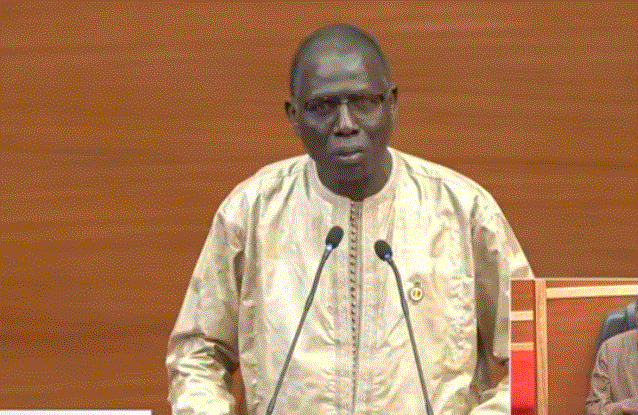
Alioune Ndao: Rejet LFR 2026 Does Not Affect Senegal's Initial Finance Law
Summary
- Deputy Alioune Ndao clarified the impact of the National Assembly's rejection of the Projet de Loi de Finances Rectificative (LFR) 2026.
- Ndao, a former public prosecutor, stated that this rejection does not affect the Loi de Finances Initiale (LFI) 2026.
- The Loi de Finances Initiale (LFI) 2026 remains fully in effect and legally binding in Senegal.
- His clarification aims to prevent misinterpretation regarding the country's applicable fiscal framework.
What Happened
Lawyers should note that despite the rejection of the Projet LFR 2026, the Loi de Finances Initiale (LFI) 2026 remains in effect in Senegal.
The National Assembly in Senegal recently rejected the Projet de Loi de Finances Rectificative (LFR) 2026, a decision that prompted immediate clarification from prominent legal figure Alioune Ndao. Ndao, who serves as a deputy and previously held the position of public prosecutor, stepped forward to address potential misunderstandings arising from the legislative body's action. His intervention aimed to provide a clear interpretation of the implications of this rejection for the nation's financial framework.
This significant legislative development, the Alioune Ndao rejet LFR 2026, underscores the dynamic nature of Senegal's budgetary process. The rejet LFR Assemblée nationale indicated that the proposed adjustments to the initial budget law did not garner sufficient support from the lawmakers. Such rejections, while not uncommon in parliamentary democracies, often necessitate expert commentary to guide public and professional understanding, particularly concerning the continuity of existing legal provisions.
Legal Context
Following the Assembly's decision, Alioune Ndao emphasized a crucial distinction between the rejected rectifying finance bill and the country's existing financial legislation. He explicitly stated that the rejection of the Projet LFR 2026 does not, in any way, invalidate or undermine the Loi de Finances Initiale (LFI) 2026. This initial finance law, which outlines the government's original budgetary provisions for the year, continues to be fully operational and legally binding.
Ndao's clarification is vital for understanding the ongoing fiscal landscape in Senegal. The loi de finances rectificative Sénégal was intended to introduce modifications to the initial budget, typically in response to unforeseen economic shifts or revised government priorities. However, with its rejection, the framework established by the LFI 2026 remains the definitive legal basis for state expenditures and revenues. Therefore, the LFI 2026 en vigueur ensures continuity in financial governance despite the legislative setback for the proposed amendments.
Why It Matters
The pronouncements from Alioune Ndao loi finances are particularly significant for legal professionals, financial institutions, and government agencies operating within Senegal. His authoritative statement confirms that the original budgetary parameters, as set forth in the Loi de Finances Initiale 2026, are still the applicable fiscal framework. This prevents any potential misinterpretation of the legislative status, which could otherwise lead to uncertainty in financial planning, compliance, and economic forecasting.
Lawyers should note that despite the rejection of the Projet LFR 2026, the Loi de Finances Initiale (LFI) 2026 remains in effect in Senegal. This clarifies the applicable fiscal framework for financial planning and compliance, preventing misinterpretation of the legislative status. The continued validity of the LFI 2026 provides stability and predictability, ensuring that government operations and public finances proceed under a clearly defined legal structure, unimpacted by the failed attempt to introduce a rectifying budget.
Practical Implications
Lawyers should note that despite the rejection of the Projet LFR 2026, the Loi de Finances Initiale (LFI) 2026 remains in effect in Senegal. This clarifies the applicable fiscal framework for financial planning and compliance, preventing misinterpretation of the legislative status.
Source
How does this affect you?
Get an AI analysis of this article grounded in your jurisdictions, practice areas, and any policy documents you've uploaded to Wansom.
Wansom is AI and can make mistakes.