
RDC: PAM Mettelsat Accord Climatique Boosts Disaster Prep
Summary
- The World Food Programme (PAM) and the Democratic Republic of Congo's (RDC) National Agency for Meteorology and Satellite Remote Sensing (METTELSAT) have signed a Memorandum of Understanding.
- This agreement, known as a Protocole d'accord, formalizes a partnership between the international organization and the Congolese government agency.
- The primary objectives of the collaboration are to improve climatic data and enhance the prevention of natural disasters within the RDC.
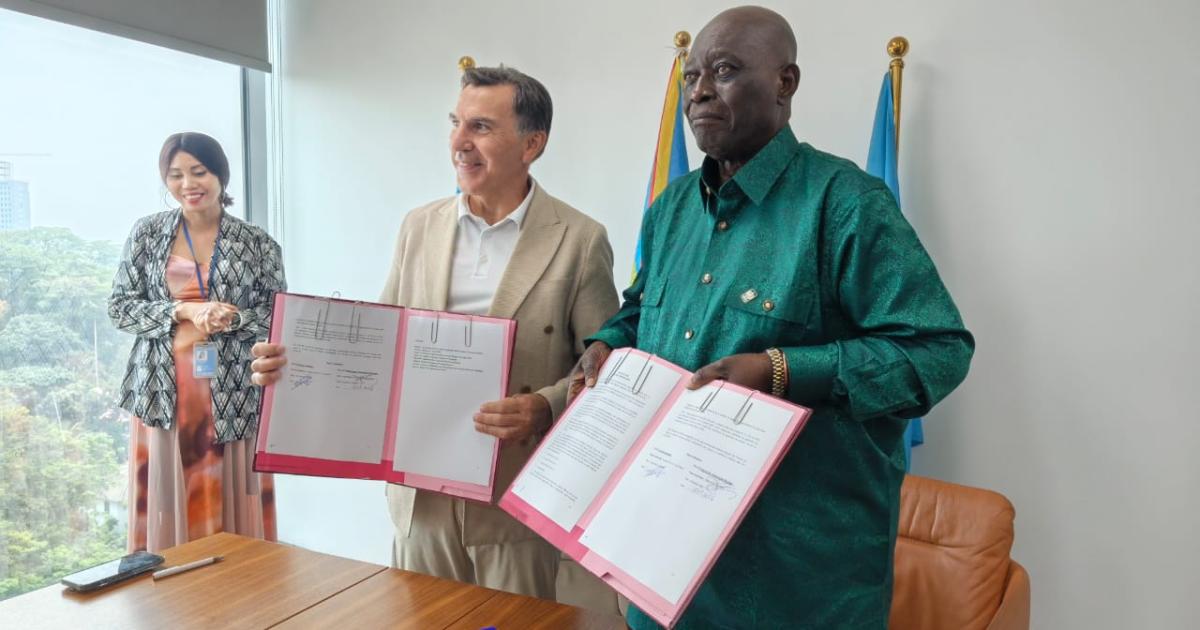
- The signing of the accord marked the official launch of the joint work between PAM and METTELSAT.
- The report detailing this partnership was made public on Saturday, September 26, 2026, at 3:08 PM.
New Partnership for Climate Resilience in RDC
This collaborative effort is specifically designed to enhance the quality and accessibility of climatic data, thereby bolstering the nation's capacity for the prevention of natural disasters.
A significant collaborative initiative has been launched in the Democratic Republic of Congo (RDC) involving the World Food Programme (PAM) and the Congolese government. This partnership, formalized through the National Agency for Meteorology and Satellite Remote Sensing (METTELSAT), aims to bolster the nation's capabilities in managing environmental risks. The formal agreement, known as a Protocole d'accord, was signed by representatives of both organizations, marking a crucial step towards enhancing climate resilience.
The signing of this Memorandum of Understanding signifies the official commencement of joint operations between PAM and METTELSAT. The core objectives underpinning this collaboration are twofold: to improve the quality and availability of climatic data across the RDC, and to strengthen the country's mechanisms for the prevention of natural disasters. This strategic alliance, publicly reported on Saturday, September 26, 2026, at 3:08 PM, is set to address critical environmental challenges facing the region.
Establishing a Collaborative Framework
The Protocole d'accord PAM Mettelsat RDC establishes a structured framework for cooperation between an international humanitarian organization and a key national scientific agency. The World Food Programme brings its global expertise and resources to the table, while METTELSAT, as the government's designated body for meteorology and satellite remote sensing, contributes its national mandate and technical infrastructure. This inter-agency cooperation is designed to leverage complementary strengths in pursuit of shared environmental and humanitarian goals.
Within this collaborative structure, the focus is squarely on actionable outcomes. The commitment to improving climatic data involves enhancing collection, analysis, and dissemination processes, which are foundational for informed decision-making. Simultaneously, the partnership aims to translate this improved data into more effective strategies for the prevention of natural disasters, directly impacting the safety and livelihoods of communities across the RDC. This Mettelsat accord climat represents a concerted effort to build a more robust and responsive system for environmental management.
Strategic Importance for Disaster Prevention
The strategic importance of this partnership for the Democratic Republic of Congo cannot be overstated. By focusing on WFP DRC climate data, the initiative directly addresses a fundamental need for accurate and timely environmental information. Enhanced climatic data is crucial for understanding evolving weather patterns, predicting extreme events, and developing targeted interventions to mitigate their impact. This foundational improvement in data quality is a prerequisite for any effective national strategy for climate adaptation and disaster risk reduction.
This collaborative effort is specifically designed to enhance the quality and accessibility of climatic data, thereby bolstering the nation's capacity for the prevention of natural disasters. A more comprehensive understanding of climate-related risks empowers authorities and communities to implement proactive measures, such as early warning systems, improved infrastructure planning, and community-level preparedness programs. The RDC PAM Mettelsat accord climatique is therefore not merely an agreement on data sharing, but a vital step towards safeguarding vulnerable populations from the devastating consequences of climate-induced hazards. This partnership climat RDC underscores a commitment to building long-term resilience against environmental shocks.
Source
Source: Original reporting via PMaki
How does this affect you?
Get an AI analysis of this article grounded in your jurisdictions, practice areas, and any policy documents you've uploaded to Wansom.
Finish Reading the Full Story and the Expert Analysis.
Get the latest legal & regulatory intelligence in DR Congo
Wansom is AI and can make mistakes.