
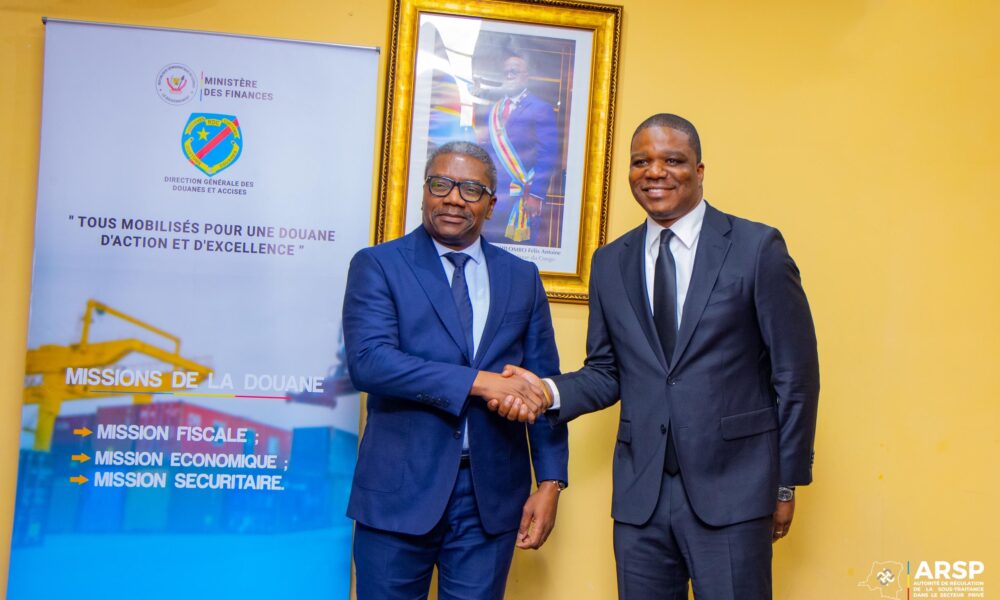
RDC ARSP DGDA: Renforce les Avantages de la Sous-Traitance Congolaise
Summary
- On August 31, 2026, the Directors General of ARSP and DGDA met in the Democratic Republic of Congo.
- The meeting focused on strengthening advantages for Congolese subcontracting companies.
- Beleshayi Kasanda Juan Ted, DG of ARSP, and Bernard Kabese Musangu, DG of DGDA, led the discussions.
- A core topic of their working session was the application of the Subcontracting Code.
- This collaboration aims to bolster local content and ensure compliance within the DRC's private sector.
Recent Regulatory Summit on Local Content
Lawyers and compliance officers should closely monitor any forthcoming regulations or enforcement actions emanating from ARSP and DGDA.
A significant high-level meeting took place on Monday, August 31, 2026, bringing together two pivotal regulatory bodies in the Democratic Republic of Congo. The Director General of the Autorité de Régulation de la Sous-Traitance dans le Secteur Privé (ARSP), Beleshayi Kasanda Juan Ted, convened with his counterpart, Bernard Kabese Musangu, the Director General of the Direction Générale des Douanes et Accises (DGDA).
The primary objective of this working session was explicitly focused on the reinforcement of advantages extended to Congolese subcontracting companies. This collaborative engagement underscores a concerted effort by key state institutions to bolster the position of local enterprises within the national economy.
Central to the discussions between the two directors general was the practical application of provisions outlined in the Subcontracting Code. This legal framework is designed to govern and promote local participation in various economic sectors, ensuring that Congolese firms benefit from preferential treatment and increased opportunities.
Inter-Agency Collaboration and Legal Framework
The collaboration between the Autorité Régulation Sous-Traitance Privé RDC (ARSP) and the Direction Générale Douanes Accises RDC (DGDA) is crucial for effective implementation of local content policies. ARSP is mandated to regulate and oversee subcontracting activities in the private sector, ensuring fair competition and adherence to local preference rules. Meanwhile, DGDA, as the national customs and excise authority, plays a vital role in facilitating trade and enforcing customs regulations, which can directly impact the operational environment and competitive advantages for local businesses.
Their joint focus on the `Code de la sous-traitance RDC` highlights the government's commitment to leveraging existing legal instruments for economic development. This code serves as the foundational legal text defining the scope and nature of advantages granted to Congolese subcontractors, aiming to foster local industrial growth and job creation. The meeting signifies an intent to ensure these legal provisions are not only understood but also effectively enforced across relevant sectors.
This high-level engagement between ARSP and DGDA is a clear indicator of the ongoing national strategy for the `Renforcement sous-traitance locale RDC`. By aligning their efforts, these agencies aim to create a more robust and supportive ecosystem for local companies, ensuring that the intended benefits of the subcontracting framework are fully realized and consistently applied.
Enhancing Local Content and Compliance Imperatives
The discussions between the ARSP and DGDA leadership signal a renewed emphasis on enhancing the `RDC ARSP DGDA avantages sous-traitance congolaise`. This initiative is poised to translate into more tangible benefits and opportunities for local firms, potentially through improved access to contracts, preferential treatment in procurement processes, or other mechanisms designed to give Congolese companies a competitive edge in their home market. The concerted effort by these regulatory bodies aims to solidify the framework that supports local economic participation.
For businesses operating within the Democratic Republic of Congo, particularly those engaging with or as subcontractors, this development underscores the growing importance of `Conformité sous-traitance congolaise`. Lawyers and compliance officers should closely monitor any forthcoming regulations or enforcement actions emanating from ARSP and DGDA. This proactive stance could necessitate a thorough review of existing contracts to ensure alignment with reinforced local preference rules, advising clients on evolving compliance requirements, and identifying new avenues for Congolese subcontractors to capitalize on these strengthened advantages.
This collaborative approach by two key state institutions demonstrates a strategic push to ensure that the legal and regulatory environment actively supports the growth and competitiveness of Congolese subcontracting companies. The outcome of such high-level coordination is expected to have a lasting impact on the landscape of local content development and economic participation across the DRC.
Practical Implications
Lawyers and compliance officers should monitor upcoming regulations or enforcement actions from ARSP and DGDA regarding local content and subcontracting in the DRC. This could necessitate reviewing existing contracts, advising clients on compliance with reinforced local preference rules, or identifying new opportunities for Congolese subcontractors to leverage these strengthened advantages.
Source
Source: Original reporting via {source}
How does this affect you?
Get an AI analysis of this article grounded in your jurisdictions, practice areas, and any policy documents you've uploaded to Wansom.
Finish Reading the Full Story and the Expert Analysis.
Wansom is AI and can make mistakes.