
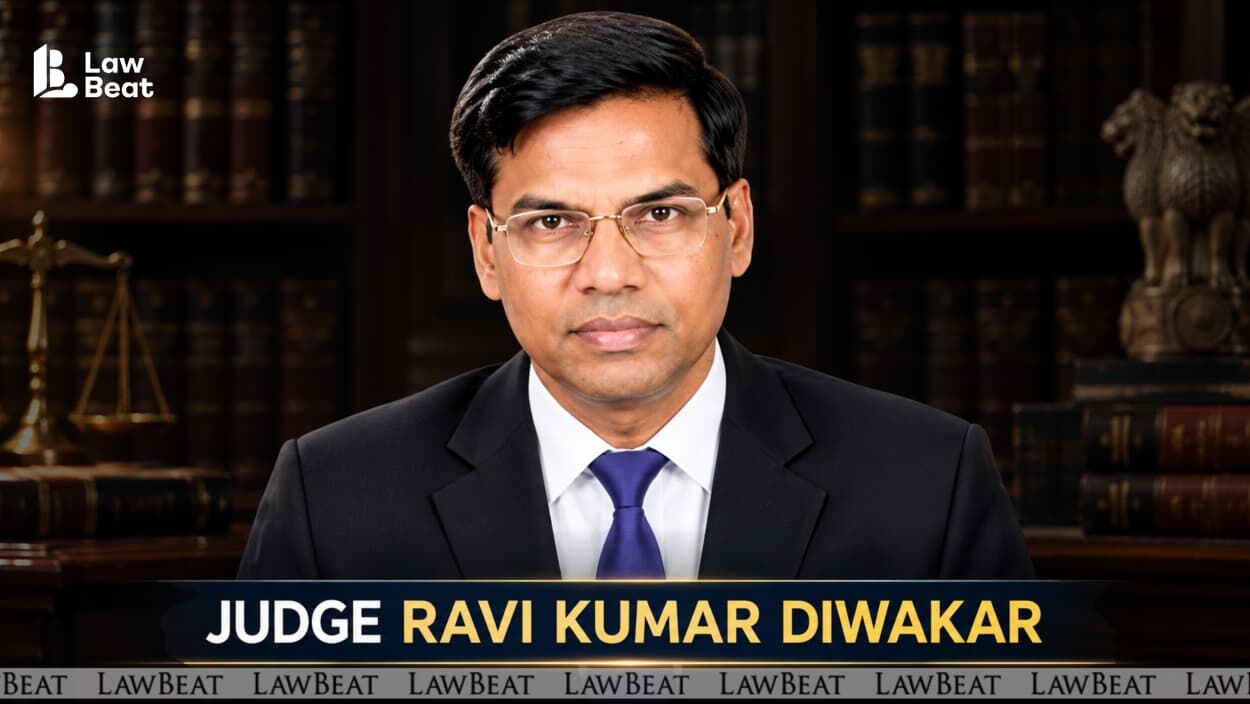
Allahabad High Court: Ravi Kumar Diwakar Transfer to Family Court
Summary
- Judge Ravi Kumar Diwakar was transferred from a Muzaffarnagar fast-track court to a family court by the Allahabad High Court.
- The transfer followed his issuance of 23 death sentences in 11 cases between April and September 2026.
- Diwakar had questioned the administrative withdrawal of 97 part-heard criminal cases, including murder cases, from his court.
- The death sentences, some for "rarest of rare" cases, require confirmation by the Allahabad High Court.
- The Muzaffarnagar District Bar Association president described the case withdrawal as routine, despite lawyer apprehensions.
Judicial Transfer Amidst Controversy
The transfer of Judge Ravi Kumar Diwakar from a fast-track court to a family court, particularly in the wake of his prolific sentencing and his challenge to administrative case withdrawals, raises important questions regarding judicial independence and the proper conduct of judicial transfers in Uttar Pradesh.
Additional District and Sessions Judge Ravi Kumar Diwakar, known for his prolific sentencing record, has been reassigned from a fast-track court to a family court in Muzaffarnagar, Uttar Pradesh. This move, mandated by an Allahabad High Court transfer order, appoints him as Additional Principal Judge of the family court. The transfer follows a period between April and September 2026 during which Judge Diwakar issued 23 death sentences across 11 distinct cases, a remarkable number for a six-month span.
The judicial transfer has drawn attention, particularly as it occurred after Judge Diwakar publicly questioned the administrative withdrawal of 97 part-heard criminal cases from his court. These cases, which included serious offenses like murder, were recalled by the then Muzaffarnagar District and Sessions Judge in August through administrative directives. Judge Shiv Kumari is slated to assume the role of Additional District and Sessions Judge at the fast-track court previously presided over by Judge Diwakar.
Unprecedented Sentencing Record
Between April and September 2026, Judge Diwakar handed down 23 death sentences in 11 separate criminal proceedings. His tenure in Muzaffarnagar began in April 2026, and within the initial four months, he had already pronounced 22 death penalties in 10 cases. These convictions pertained to murders committed over a two-decade span, from 1999 to 2019, with several cases explicitly categorized by the court as falling within the “rarest of rare” criteria.
Notable among these judgments were the death sentences issued on April 6 to three individuals for the 2019 kidnapping and murder of lawyer Mohammad Sameer, stemming from a monetary dispute involving Rs 45 lakh. Later that month, on April 28, a woman and her three sons received death sentences in connection with another 2019 murder. May 30 saw Rahis, aged 50, condemned to death for the 2011 murders of Rajesh Devi and her six-year-old son, Himanshu, a crime where the prosecution alleged he used bricks to kill them in a sugarcane field. Further death sentences were pronounced in July for three distinct cases, including the murder of a home guard, a 2010 murder linked to a panchayat election rivalry, and the 2011 killing of a farmer during an attempted robbery. August brought the death penalty for four men involved in the 2014 murder of Pawan Kumar in Shamli, and for Shahnawaz, who kidnapped and murdered wood trader Saleem for ransom in a 1999 case. The 23rd death sentence was delivered on September 7, when Nadeem was convicted for deliberately burning his 23-year-old wife, Shahzadi, alive, causing approximately 98 percent burns. Judge Diwakar concluded that the killing was premeditated, and the aggravating factors significantly outweighed any mitigating circumstances. It is important to note that these trial court death sentences are not immediately enforceable and necessitate confirmation by the Allahabad High Court.
Questions Surrounding Case Withdrawal
A significant event preceding Judge Diwakar's transfer was the administrative recall of 97 part-heard criminal case files from his fast-track court on August 18. The then Muzaffarnagar District Judge issued these orders, directing that these cases, which encompassed murder and other grave offenses punishable by death or life imprisonment, be placed before the district judge for appropriate disposition. This action followed a series of death penalty verdicts by Judge Diwakar, though the withdrawal itself did not formally imply misconduct on his part or explicitly link to his sentencing record as the reason for the administrative measure.
However, Judge Diwakar subsequently challenged the legality of withdrawing cases where hearings had already commenced. In a 35-page judgment, delivered during the acquittal of an accused in a nearly decade-old Narcotic Drugs and Psychotropic Substances Act case, he specifically referenced provisions of the Code of Criminal Procedure and "Bharat" to question the propriety of such administrative interventions. While Pramod Tyagi, president of the Muzaffarnagar District Bar Association, characterized the movement of cases as a routine administrative exercise, he acknowledged that the death penalty verdicts had indeed generated apprehension among both legal practitioners and litigants.
Implications for Judicial Independence
The transfer of Judge Ravi Kumar Diwakar from a fast-track court to a family court, particularly in the wake of his prolific sentencing and his challenge to administrative case withdrawals, raises important questions regarding judicial independence and the proper conduct of judicial transfers in Uttar Pradesh. The Allahabad High Court's decision to reassign a judge who had recently delivered a high volume of severe sentences, and who had openly questioned administrative interference in his docket, underscores the delicate balance between administrative efficiency and judicial autonomy.
The fact that Judge Diwakar explicitly questioned the legality of withdrawing part-heard cases, citing established legal codes, highlights a potential area of concern for the judiciary. Such actions, even if deemed routine by some, can create an impression of administrative pressure on judicial officers, especially when they follow a period of high-profile or controversial rulings. The situation surrounding Judge Diwakar's transfer, therefore, serves as a critical example for legal professionals to monitor, as it touches upon the allocation of cases, the continuity of judicial proceedings, and the broader principles of judicial independence within the Indian legal system.
Practical Implications
This development highlights potential administrative interference in judicial proceedings and raises questions about the legality of withdrawing part-heard cases, which lawyers should monitor for implications on case allocation and judicial independence.
Source
How does this affect you?
Get an AI analysis of this article grounded in your jurisdictions, practice areas, and any policy documents you've uploaded to Wansom.
Finish Reading the Full Story and the Expert Analysis.
Wansom is AI and can make mistakes.