
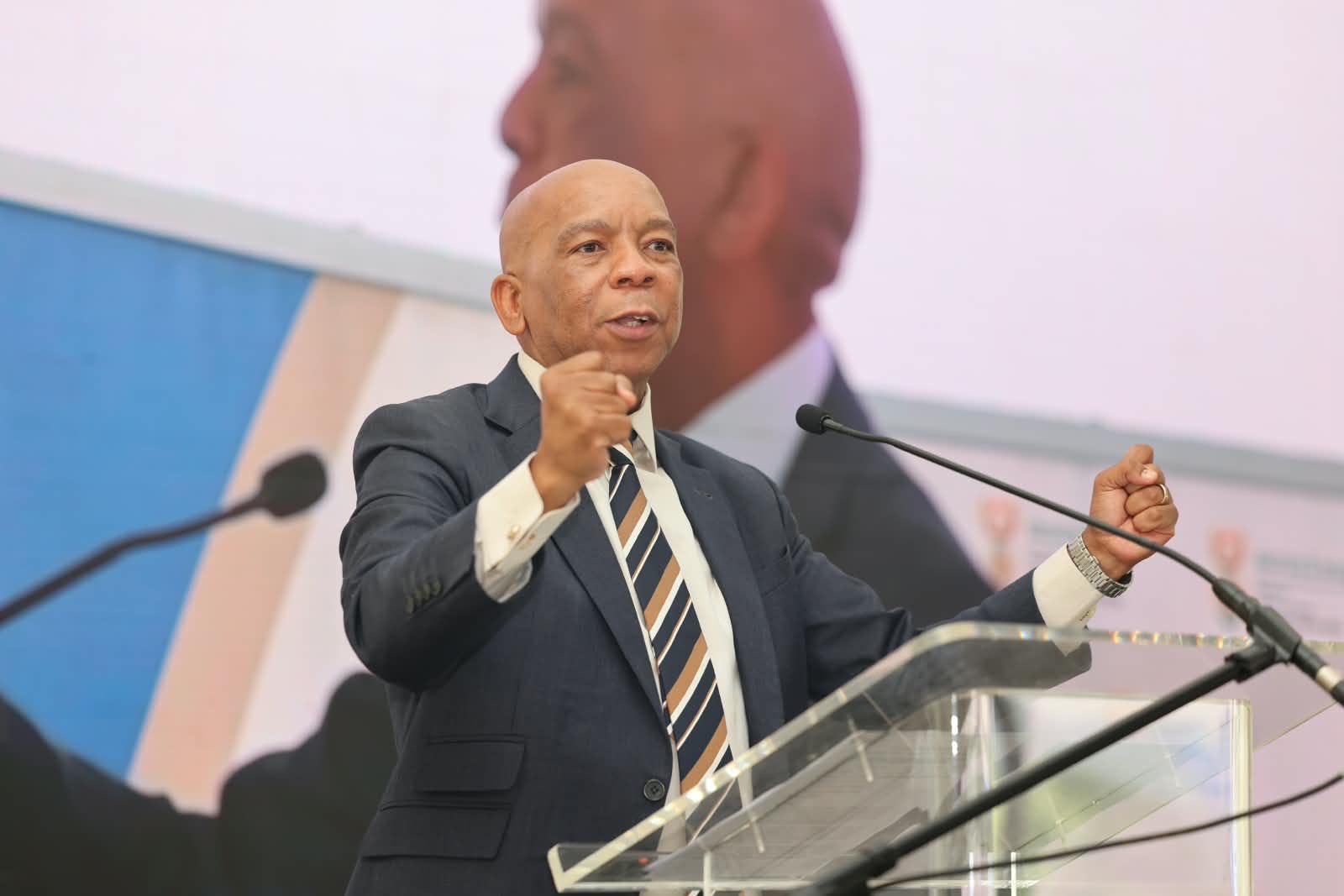
Ramokgopa: New Nuclear Reactor Determination Planned for ZA
Summary
- Minister Kgosientsho Ramokgopa will publish a scientific motivation for new nuclear reactors by the end of November.
- The public will have 60 days to comment on the document, followed by departmental feedback roadshows.
- This process precedes a ministerial determination for 5200MW of new nuclear capacity, expected by June next year, requiring Nersa and finance minister concurrence.
- The 5200MW capacity, nearly three times Koeberg's size, is the first phase of a 10,000MW program, with potential sites at Koeberg or Thyspunt.
- South Africa's broader nuclear strategy includes exploring Small Modular Reactors and re-establishing domestic nuclear fuel production.
What's Next for South Africa's Nuclear Ambitions
The public participation phase is a crucial precursor to a significant legal step: the issuance of a ministerial determination by Dr. Ramokgopa for the procurement of 5200MW of new nuclear reactors.
Minister of Electricity and Energy, Dr. Kgosientsho Ramokgopa, announced plans on November 10 to publish a detailed, science-backed justification for the procurement of new nuclear reactors. This motivation document, expected before the end of November, aims to preemptively address potential opposition to the expansion of South Africa's nuclear energy capacity. The announcement was made during a government-hosted conference in Pretoria, themed "From Policy to Implementation," underscoring the government's intent to move forward with its energy strategy.
Following the publication, the public will be afforded a 60-day period to submit comments on the proposed nuclear expansion. After this period, the department will meticulously review all submissions and conduct a series of roadshows to engage directly with communities, providing feedback and addressing concerns. This comprehensive public engagement process is designed to lay the groundwork for the subsequent formal steps in the nuclear procurement journey.
The Path to 5200MW Nuclear Capacity
The public participation phase is a crucial precursor to a significant legal step: the issuance of a ministerial determination by Dr. Ramokgopa for the procurement of 5200MW of new nuclear reactors. This determination, anticipated by June of the following year, is a mandatory legal requirement that must be met before any formal procurement activities can commence. It will necessitate the concurrence of both the energy regulator Nersa and the Minister of Finance, highlighting the multi-agency approval required for such a substantial national project.
The planned 5200MW nuclear capacity represents a considerable increase, nearly tripling the output of the existing Koeberg power station. Potential locations for these new reactors include sites adjacent to the current Koeberg facility or at Thyspunt, situated near Jeffreys Bay. It is important to note that Eskom is still in the process of securing the necessary environmental authorisation for the Thyspunt site, a critical regulatory hurdle that must be cleared. The formal procurement process, once initiated by the determination, will involve selecting technology partners and commencing construction work. This initial phase is part of a larger, long-term vision to ultimately achieve 10,000MW of new nuclear power capacity for the nation.
Strategic Rationale and Litigation Preparedness
Dr. Ramokgopa articulated that achieving 10,000MW of nuclear capacity would enable South Africa to develop the necessary economies of scale to foster a domestic supply chain for manufacturing nuclear plant components. This localization effort is projected to generate numerous employment opportunities within the country. While acknowledging that the upcoming public participation process is not a legal prerequisite, Ramokgopa emphasized its strategic importance in a "litigious society" like South Africa.
He expressed confidence that a scientifically robust case for nuclear power would withstand potential legal challenges from opponents, making it easier for judges to adjudicate any disputes that may arise. Globally, 417 nuclear reactors are currently operational, with an additional 78 under construction, providing a wealth of international experience for South Africa to draw upon. The Minister also affirmed that any new nuclear facilities would be subject to the stringent oversight of the National Nuclear Regulator and would remain under the ownership and operation of Eskom, explicitly stating there would be "no room for privatisation."
Broader Nuclear Energy Strategy
Beyond large-scale reactors, South Africa's future energy landscape includes a role for Small Modular Reactors (SMRs). Dr. Ramokgopa voiced regret over the cancellation of the country's pebble-bed modular reactor program approximately 16 years ago, indicating a renewed interest in this technology. This comes as the US Nuclear Regulatory Commission recently granted a construction permit to X-energy, a company with South African venture capitalist André Pienaar's involvement, and its client Dow, to build four Xe-100 SMRs in Texas. Notably, several South African engineers who previously worked on the pebble-bed program are now contributing to the X-energy project.
Loyiso Tyabashe, CEO of the South African Nuclear Energy Corporation (Necsa), highlighted that only China and Russia have successfully commissioned SMRs to date, though numerous international teams are actively developing the technology. Ramokgopa stressed that South Africa must learn from past experiences, such as the pebble-bed program, and cultivate patience for successful SMR deployment. The national nuclear program's third key component involves re-establishing a domestic nuclear fuel production industry, leveraging South Africa's strategic mineral resources like uranium and thorium, though this will require significant investment in exploration. Furthermore, Cabinet has already approved the procurement of a new multipurpose reactor, slated for operation at Necsa's Pelindaba facility outside Pretoria.
Practical Implications
Lawyers should advise clients on the upcoming 60-day public participation period for the new nuclear reactor motivation document, as this is a critical pre-procurement phase. Compliance officers should monitor the eventual ministerial determination for 5200MW nuclear capacity, which will trigger formal procurement processes and potential environmental or regulatory challenges.
Source
How does this affect you?
Get an AI analysis of this article grounded in your jurisdictions, practice areas, and any policy documents you've uploaded to Wansom.
Finish Reading the Full Story and the Expert Analysis.
Get the latest legal & regulatory intelligence in South Africa
Wansom is AI and can make mistakes.