
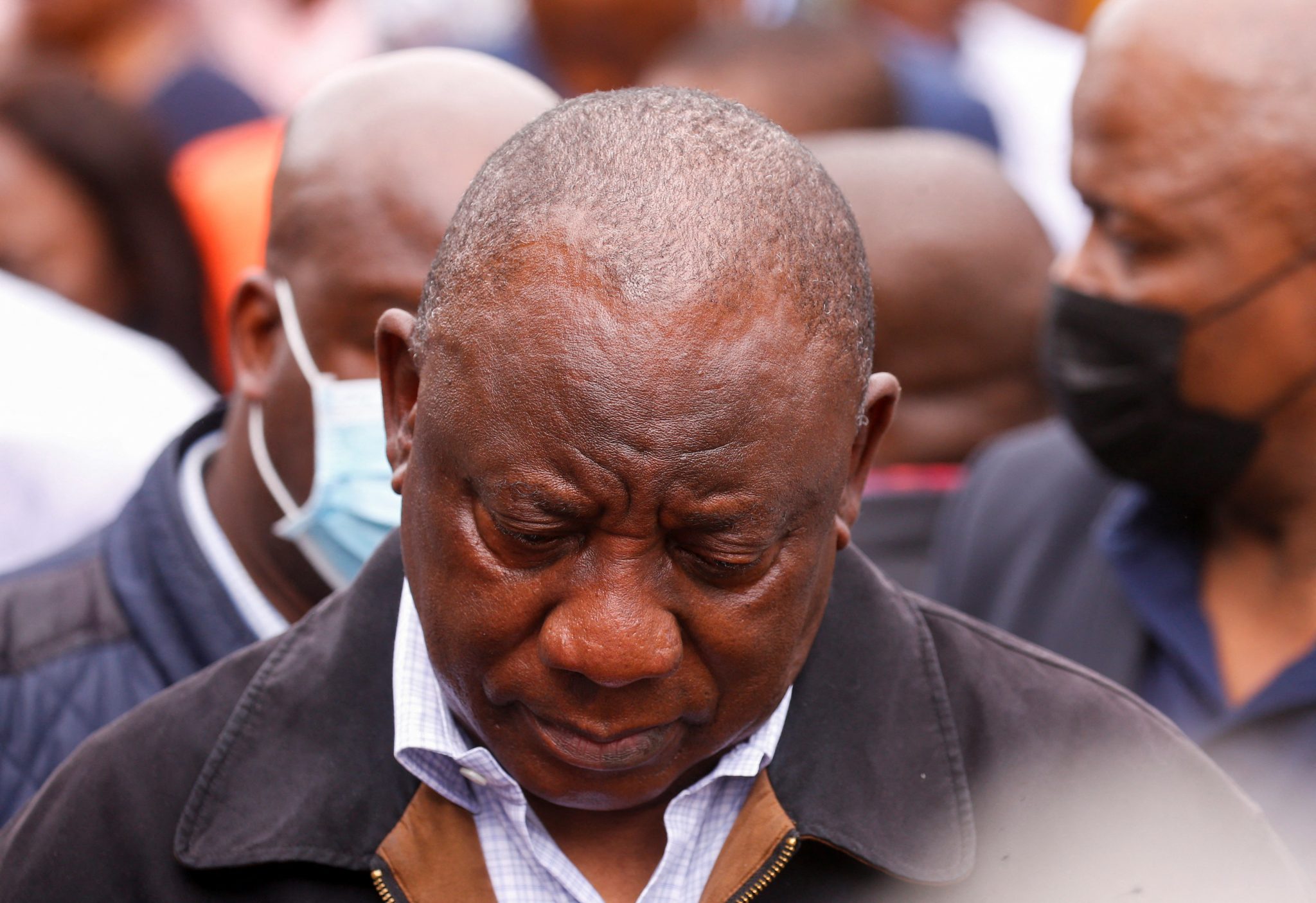
Western Cape High Court: Ramaphosa Phala Phala Impeachment Report Set Aside
Summary
- The Western Cape High Court set aside the Phala Phala impeachment report and related parliamentary proceedings against President Ramaphosa.
- The court found the independent panel applied an incorrect legal test and failed to meet the required scrutiny for a presidential impeachment.
- Section 89 of the Constitution outlines a high threshold for presidential removal, requiring serious misconduct or legal violation.
- The parliamentary rules for impeachment were established in 2018 following the EFF II Constitutional Court judgment.
- This ruling highlights ongoing questions about the effectiveness of parliamentary oversight and accountability for the president in South Africa.
Judicial Intervention in Phala Phala Impeachment
Lawyers advising on constitutional law or parliamentary procedure should note this judgment as it clarifies the legal test and evidentiary standards required for presidential impeachment proceedings under Section 89 of the Constitution, particularly regarding the independent panel's mandate and the threshold for a prima facie case.
President Cyril Ramaphosa recently secured a significant legal victory as the Western Cape High Court invalidated the independent panel's report concerning the Phala Phala incident. This ruling also nullified the parliamentary proceedings that stemmed from the report, offering the President immediate political relief. The controversy, which has persisted for more than six years, centers on allegations that prompted an impeachment motion against him.
The unanimous judgment from the Western Cape High Court was critical of the panel's methodology and findings. The court determined that the independent panel failed to properly execute its mandate, specifically by applying an incorrect legal standard when assessing whether sufficient evidence existed to warrant a comprehensive impeachment inquiry. This judicial intervention redirects the focus from the substantive allegations to the procedural integrity of the accountability mechanisms.
Constitutional Framework for Presidential Accountability
The legal framework governing the removal of a South African president is enshrined in Section 89 of the Constitution. This provision is designed not merely as a mechanism for general accountability but as a punitive measure intended to remove a head of state from office. Such a drastic step requires meeting a high threshold: evidence of serious misconduct, a grave violation of the law or the Constitution, or an established incapacity to perform presidential duties.
The current parliamentary rules for presidential impeachment were only established in 2018, a direct consequence of the Constitutional Court's landmark ruling in the EFF II judgment (Economic Freedom Fighters and Others v Speaker of the National Assembly and Another, CCT 76/17). This case underscored the necessity for clear procedures to implement Section 89. The recent President Ramaphosa impeachment challenge marked the first practical application of these rules, and the subsequent judicial review has highlighted certain deficiencies in their implementation, with the Constitutional Court itself noting earlier this year that the rules were "wanting" in some respects.
Court's Scrutiny of the Independent Panel
The Western Cape High Court's decision to set aside the Phala Phala report was rooted in its finding that the independent panel fundamentally misunderstood its constitutional and procedural obligations. The court explicitly stated that the panel applied an inappropriate legal test when evaluating the evidence presented. Instead of determining if there was sufficient evidence to justify an intrusive process, such as a full impeachment committee, the panel conflated this requirement with the standard for establishing a prima facie case.
Furthermore, the court found that the panel failed to meet the rigorous level of scrutiny demanded by such a serious inquiry. It considered matters irrelevant to the four specific charges outlined in the impeachment motion passed by the National Assembly in 2022. This misapplication of legal standards and inclusion of extraneous information ultimately rendered the panel's report invalid, leading to its nullification by the Western Cape High Court Phala Phala ruling.
Implications for Parliamentary Oversight
This ruling, while a victory for President Ramaphosa, brings into sharp focus the effectiveness of South Africa's parliamentary oversight mechanisms, particularly when it comes to holding the highest office accountable. The fact that the process has been mired in procedural disputes for more than six years, rather than addressing the substantive allegations, raises critical questions about the system's ability to function impartially.
The judgment underscores the challenges parliament faces in exercising independent oversight, especially given the pervasive influence of party loyalty in legislative decisions. Lawyers advising on constitutional law or parliamentary procedure should note this judgment as it clarifies the legal test and evidentiary standards required for presidential impeachment proceedings under Section 89 of the Constitution, particularly regarding the independent panel's mandate and the threshold for a prima facie case. This ruling sets a precedent for future challenges to similar reports and underscores the importance of strict adherence to procedural fairness and legal tests in high-stakes accountability processes.
Practical Implications
Lawyers advising on constitutional law or parliamentary procedure should note this judgment as it clarifies the legal test and evidentiary standards required for presidential impeachment proceedings under Section 89 of the Constitution, particularly regarding the independent panel's mandate and the threshold for a prima facie case. This ruling sets a precedent for future challenges to similar reports and underscores the importance of strict adherence to procedural fairness and legal tests in high-stakes accountability processes.
Source
How does this affect you?
Get an AI analysis of this article grounded in your jurisdictions, practice areas, and any policy documents you've uploaded to Wansom.
Finish Reading the Full Story and the Expert Analysis.
Get the latest legal & regulatory intelligence in South Africa
Wansom is AI and can make mistakes.