
Ram Nath Kovind: AI Legal Credibility Demands Human Oversight
Summary
- Former President Ram Nath Kovind stated that AI can enhance justice access only with vigilant human oversight and personal verification of citations by lawyers.
- He warned that generative AI can fabricate legal precedents and hallucinate cases, citing examples like Mata v. Avianca Inc. and Pooja Ramesh Singh v. Jammu and Kashmir Bank Ltd.
- Kovind stressed that lawyers must personally verify all assertions from original sources, not just rely on software, to maintain professional credibility.
- He emphasized that human supervision is indispensable because even minor AI errors can significantly alter a litigant's rights.
- Kovind urged legal educators to focus on critical thinking and procedural law, teaching students to critically examine AI output.
What Former President Kovind Said
Kovind firmly stated that lawyers "cannot transfer our professional credibility to a software provider," emphasizing that human oversight artificial intelligence law is "utterly indispensable" at every stage of legal work.
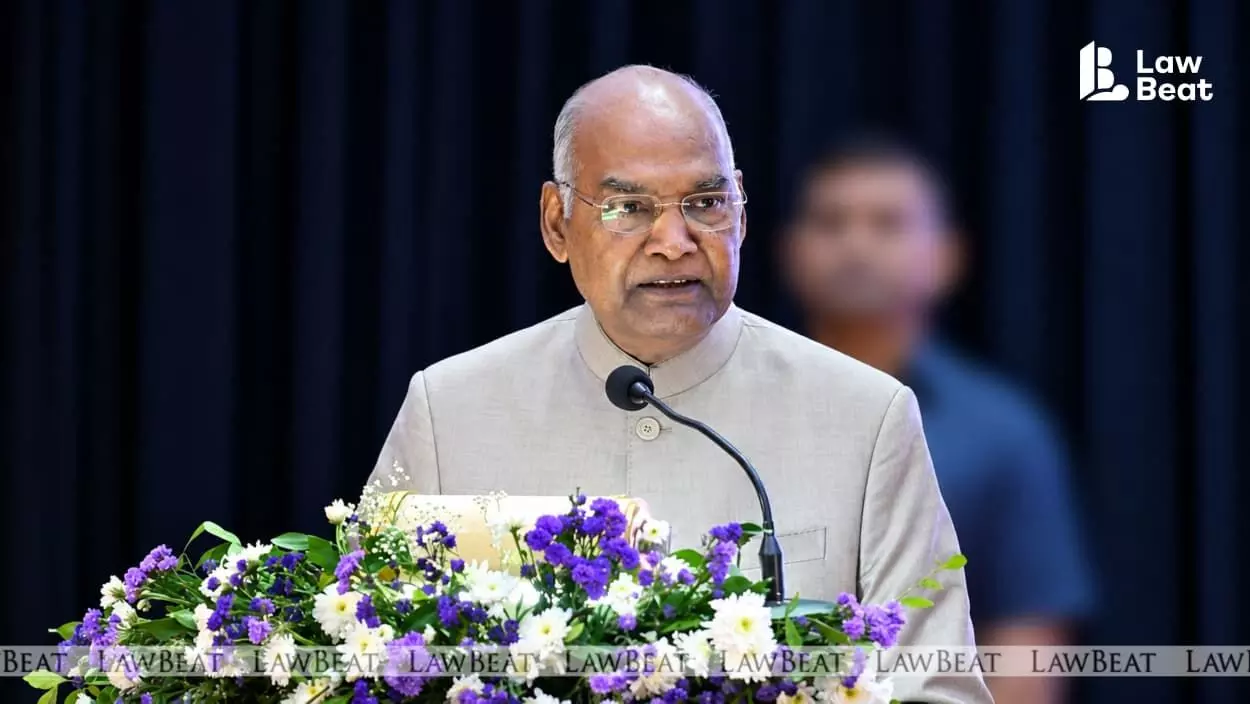
Former President Ram Nath Kovind recently addressed the evolving role of artificial intelligence in the legal sector, emphasizing that while AI can significantly broaden access to justice, its implementation demands rigorous human oversight. Speaking at the Justice K. Ramaswamy Endowment Lecture on November 14, 2026, at Dr BR Ambedkar College of Law, Andhra University, Visakhapatnam, Kovind delivered a speech titled “The Legal Profession: Opportunities and Challenges in the Digital Age.” He cautioned that without vigilant human supervision, AI's benefits might remain confined to well-resourced urban law firms, thereby exacerbating existing inequalities within the legal system.
Kovind highlighted equitable access as a primary challenge in the digital era, advocating for district court lawyers to possess the same digital tools as their corporate counterparts, and for ordinary citizens to easily navigate online legal platforms. He acknowledged initiatives like Tele-Law and e-Sewa Kendras, which operate through Common Service Centres, but noted that users often encounter language and user-interface barriers. Recalling his own efforts during his presidency, Kovind mentioned urging then Chief Justice of India Ranjan Gogoi to ensure Supreme Court judgments were available in regional languages, a goal now significantly advanced with over 83,000 translations accessible in eighteen Indian languages, with High Courts also adopting this practice.
The Critical Need for Verification
Despite the "unprecedented possibilities for speed and scale" offered by AI, Ram Nath Kovind stressed that machines cannot be blindly trusted with the intricate nuances and specialized terminology of law. He pointed out that even a single misjudged word or an unintended emphasis could fundamentally alter a litigant's rights. Kovind specifically warned about the dangers of generative AI, which can produce seemingly polished legal prose while simultaneously fabricating precedents and hallucinating cases with deceptive fluency. This phenomenon, he noted, is already manifesting in courtrooms, posing a significant threat to the integrity of legal proceedings.
To illustrate this critical issue, Kovind cited two prominent cases. In the American case of Mata v. Avianca Inc., lawyers faced penalties for presenting software-generated citations that were entirely fictitious. Closer to home, the Supreme Court of India, in Pooja Ramesh Singh v. Jammu and Kashmir Bank Ltd., was compelled to set aside orders that had been based on invented citations produced by AI. These incidents underscore the paramount importance of lawyer responsibility AI verification, as the legal profession cannot afford to compromise its credibility by relying solely on automated outputs.
Upholding Professional Credibility
The former President underscored that the fundamental lesson from these AI-related incidents is that any party presenting an assertion to a court must personally verify it against an authentic source. He clarified that true verification extends beyond merely asking the software to confirm its own output. Instead, it necessitates accessing the original judgment, thoroughly understanding its context, and confirming that the ruling has not been subsequently overturned. This rigorous process is essential for maintaining the integrity of the AI in Indian legal profession.
Kovind firmly stated that lawyers "cannot transfer our professional credibility to a software provider," emphasizing that human oversight artificial intelligence law is "utterly indispensable" at every stage of legal work. This principle is crucial for safeguarding the Ram Nath Kovind AI legal credibility message. The responsibility for accuracy and authenticity ultimately rests with the legal professional, not the technological tool.
Shaping Future Legal Minds
Turning his attention to legal education, Ram Nath Kovind articulated that the "quiet struggle of research" is the very crucible in which a legal mind is forged. He argued that if technology automates this foundational work, universities must adapt by deliberately cultivating critical thinking skills among students. This includes assessing their depth of reasoning and their ability to orally defend a position, alongside incorporating lessons on how to critically evaluate AI-generated output.
Kovind urged law schools to ensure students are thoroughly grounded in procedural law, particularly as it applies to the digital age. This forward-looking approach aims to prepare future legal professionals to navigate a landscape increasingly shaped by artificial intelligence, ensuring they possess the necessary skills to leverage technology responsibly while upholding the highest standards of legal practice and ethical conduct.
Practical Implications
Lawyers and compliance officers must personally verify all AI-generated legal citations and research against original sources to prevent sanctions for submitting fabricated case law, as demonstrated by cases like Mata v. Avianca Inc. and Pooja Ramesh Singh v. Jammu and Kashmir Bank Ltd. Failure to do so risks professional credibility and adverse court orders.
Source
How does this affect you?
Get an AI analysis of this article grounded in your jurisdictions, practice areas, and any policy documents you've uploaded to Wansom.
Finish Reading the Full Story and the Expert Analysis.
Get the latest legal & regulatory intelligence in India
Wansom is AI and can make mistakes.