
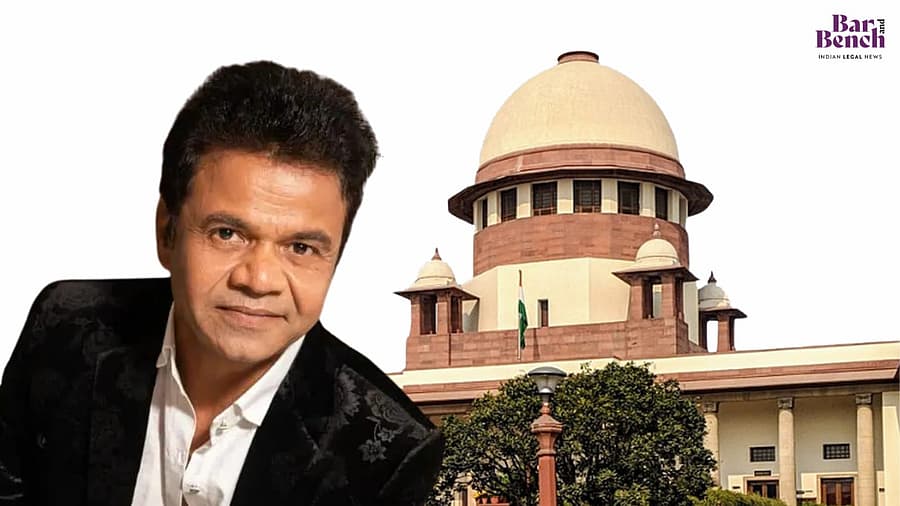
Supreme Court: Rajpal Yadav Cheque Bounce Case Sent to Mediation
Summary
- The Supreme Court referred Bollywood actor Rajpal Yadav's cheque bounce case to mediation.
- This referral followed Mr. Yadav's deposit of ₹2 crore as partial payment of his dues.
- The Court's bench, including CJI Surya Kant and Justice Joymalya Bagchi, aimed for an amicable settlement of the remaining amount.
- Both Mr. Yadav and Murli Projects Private Limited agreed to participate in the Supreme Court Mediation Centre process.
- The Court also allowed Mr. Yadav to seek the release of his passport for professional travel, subject to trial court conditions.
What Happened
This Supreme Court mediation cheque bounce referral signifies a robust judicial endorsement of alternative dispute resolution mechanisms, even in cases where substantial partial payments have already been made.
The Supreme Court recently directed that the cheque bounce case involving Bollywood actor Rajpal Yadav be referred to mediation. This decision came after Mr. Yadav deposited a sum of ₹2 crore with the Court, representing a partial payment towards the outstanding dues. The apex court's bench, comprising Chief Justice of India Surya Kant and Justice Joymalya Bagchi, made this referral to the Supreme Court Mediation Centre, aiming for an amicable resolution between the actor and the complainant, Murli Projects Private Limited.
The referral to mediation specifically targets the remaining amount owed in the dispute. Both Mr. Yadav and the legal representative for Murli Projects Private Limited expressed their agreement to participate in the mediation process. This move by the Supreme Court underscores a judicial inclination towards resolving financial disputes, particularly those under Section 138 of the Negotiable Instruments Act, through consensual means, even at advanced stages of litigation.
Legal Context and Background
The ongoing legal battle stems from a cheque bounce complaint, a common issue falling under Section 138 of the Negotiable Instruments Act. Prior to the Supreme Court's intervention, Mr. Yadav had reportedly agreed to liquidate his ancestral property as a means to settle the outstanding financial obligations. Despite this significant commitment and the recent ₹2 crore deposit, the Supreme Court bench opted to steer the parties towards mediation for the final resolution of the remaining sum.
The Court articulated its perspective, noting that Mr. Yadav had been pushed to the brink of selling family assets solely to conclude this legal matter. While acknowledging the possibility of hearing the case on its merits if necessary, the bench highlighted the limited scope for interference at this advanced stage, given that Mr. Yadav had faced adverse rulings in various lower courts. The judges explicitly stated their desire for an amicable settlement, emphasizing that the issues raised by both sides suggested a strong potential for resolution through the Supreme Court mediation cheque bounce process.
Why It Matters
This Supreme Court mediation cheque bounce referral signifies a robust judicial endorsement of alternative dispute resolution mechanisms, even in cases where substantial partial payments have already been made. The Court's directive for both parties to engage in mediation with an "open mind" reinforces the judiciary's commitment to fostering amicable settlements, thereby potentially reducing the burden on the court system and providing a more efficient path to justice for litigants. The case of Rajpal Yadav cheque bounce Supreme Court mediation serves as a clear example of this judicial philosophy in action.
Furthermore, in a pragmatic move, the Court also granted permission for Mr. Yadav to seek the release of his passport. This allowance is specifically for professional travel abroad, subject to any conditions previously imposed by the trial court. This aspect of the ruling demonstrates the Court's consideration for individual circumstances and professional obligations, ensuring that ongoing legal proceedings do not unduly impede a person's livelihood, provided appropriate safeguards are in place. This decision highlights a balanced approach, combining the pursuit of justice with practical considerations for the parties involved, embodying an amicable settlement Supreme Court approach.
Practical Implications
The Supreme Court's active encouragement of mediation in this cheque bounce case, even after a substantial partial payment, signals a strong judicial preference for amicable resolution. Lawyers should advise clients on the increasing emphasis on mediation as a viable path to settlement, even at the highest court level, and be prepared to explore such avenues, especially when significant efforts towards resolution have already been made. The allowance for passport release for professional travel also indicates the court's pragmatic approach to individual circumstances during ongoing legal proceedings.
Source
How does this affect you?
Get an AI analysis of this article grounded in your jurisdictions, practice areas, and any policy documents you've uploaded to Wansom.
Finish Reading the Full Story and the Expert Analysis.
Get the latest legal & regulatory intelligence in India
Wansom is AI and can make mistakes.