
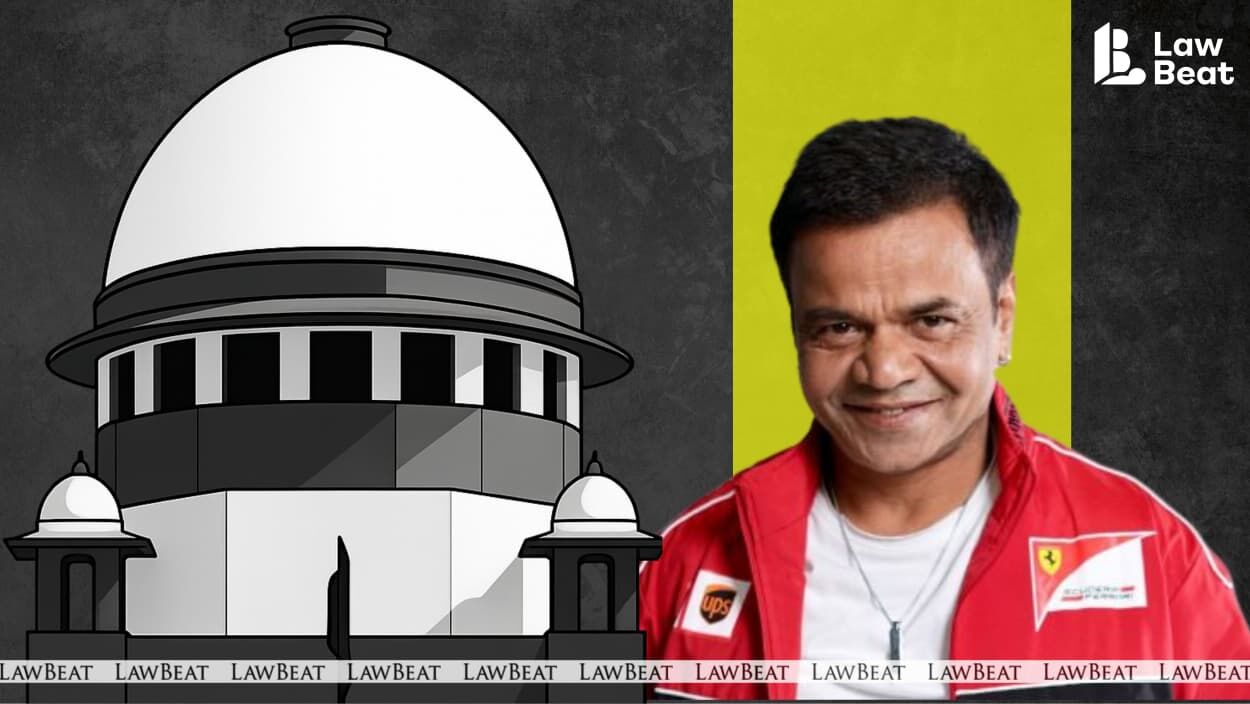
Rajpal Yadav Ancestral Property Sale: Supreme Court Mandates ₹2 Crore Deposit
Summary
- The Supreme Court has ordered actor Rajpal Yadav to deposit ₹2 crore in a cheque bounce case by October 13.
- Yadav proposed selling his ancestral property, valued over ₹30 crore, to raise the funds, having already submitted ₹1.15 crore.
- This directive follows the Delhi High Court's July decision upholding Yadav's conviction in seven cheque bounce cases and denying probation due to repeated non-compliance.
- The High Court had noted Yadav's 'little regard for the judicial process' and his statement about preferring jail over payment.
- Chief Justice of India Surya Kant, part of the bench, informally remarked on Yadav's financial situation, linking it to his film 'Ata Pata Laapata.'
Supreme Court Sets New Deadline for Rajpal Yadav
The Delhi High Court had previously emphasized that 'Law is not a script that can be rewritten at the will of an actor,' underscoring the judiciary's commitment to the sanctity of its proceedings.
The Supreme Court of India has mandated actor Rajpal Yadav to deposit a sum of ₹2 crore in a long-standing cheque bounce case, setting a deadline of October 13. During the recent hearing, Yadav, who was present in court, presented a demand draft amounting to ₹1.15 crore. The remaining balance of ₹85 lakh is now due by the specified date.
The three-judge bench, comprising Chief Justice of India Surya Kant, Justice Joymalya Bagchi, and Justice V Mohana, accepted Yadav's proposal to liquidate his ancestral property to generate the necessary funds. His counsel informed the court that the property holds a valuation exceeding ₹30 crore, though its registration process was temporarily stalled due to the ongoing Pitru Paksha period. This directive follows a previous instance just two days prior, where the court had sternly admonished Yadav for failing to comply with an earlier order to deposit ₹5 crore. That earlier order, issued on September 8, had granted him protection contingent on depositing the sum within a single day, following an oral mention of petitions by Yadav and his wife through their Advocate-on-Record, Saurabh Trivedi.
High Court's Firm Stance on Conviction and Probation
The Supreme Court's current intervention stems from an appeal filed by Yadav challenging a July decision by the Delhi High Court. The High Court had affirmed his conviction in seven separate cheque bounce cases, refusing to overturn the findings of the trial court and denying his plea for probation. Justice Swarana Kanta Sharma, presiding over the Delhi High Court, dismissed a series of petitions from Yadav and others that contested their convictions and sentences under the Negotiable Instruments Act.
In its ruling, the High Court made a pointed observation regarding the sanctity of judicial proceedings, stating that 'Law is not a script that can be rewritten at the will of an actor.' While upholding the convictions, the High Court did modify the sentence, directing Yadav to serve three months of simple imprisonment for each of the seven cases. Recognizing the possibility of further legal recourse, the High Court had granted Yadav a two-month reprieve from the execution of his sentence, allowing him time to approach a higher court.
Judiciary Cites Repeated Non-Compliance and Disregard
The Delhi High Court's decision to deny probation was heavily influenced by Yadav's consistent pattern of non-compliance. The court noted that he had repeatedly failed to honor his commitments to the complainant and had defaulted on undertakings given in various courts despite numerous opportunities. Justice Sharma specifically recorded that the actor had demonstrated 'little regard for the judicial process,' a key factor in refusing to extend the benefit of probation.
Further highlighting his conduct, the High Court took into account a statement attributed to Yadav during the proceedings, where he reportedly declared he would 'go to jail five more times' rather than settle with the complainant. This remark was interpreted by the court as indicative of his unwillingness to comply with legal obligations. Following the Supreme Court's recent order, Chief Justice of India Surya Kant engaged in an informal conversation with Yadav, who spoke of the financial difficulties caused by his 2012 film, 'Ata Pata Laapata.' The CJI humorously remarked, 'Like your movie, your money is also Ata Pata Laapata, gayab.' Yadav responded with 'Pranam karta hoon,' detailing losses of ₹200-250 crores from the film, to which the CJI offered advice about making new movies to rebuild his public image.
Practical Implications
This case underscores the judiciary's firm stance against repeated non-compliance with court undertakings and orders, even when a settlement offer is eventually made. Lawyers should advise clients that such conduct can lead to severe consequences, including the refusal of probation and upholding of convictions, as courts prioritize the sanctity of judicial proceedings over individual celebrity status or belated attempts to settle.
Source
Source: Original reporting via Live Law
How does this affect you?
Get an AI analysis of this article grounded in your jurisdictions, practice areas, and any policy documents you've uploaded to Wansom.
Finish Reading the Full Story and the Expert Analysis.
Get the latest legal & regulatory intelligence in India
Wansom is AI and can make mistakes.