
Supreme Court: Upholds IBC E-Auction EMD Forfeiture for Bidder Default
Summary
- The Supreme Court ruled that a successful e-auction bidder cannot reclaim their earnest money deposit (EMD) if the auction notice clearly stipulates forfeiture upon payment default.
- Liquidators are empowered to include specific EMD forfeiture clauses in e-auction terms under the Insolvency and Bankruptcy Code.
- Bidders are considered to have participated with full knowledge of the terms and are bound by forfeiture conditions explicitly stated in the auction notice.
- The Court rejected arguments that the absence of a forfeiture clause in general regulations overrides specific conditions in the auction tender.
- This decision emphasizes the critical importance of bidder due diligence and adherence to payment schedules in IBC liquidation auctions.
A Landmark Ruling on Auction Forfeiture
The Court emphasized that a failure to pay the balance sale consideration constitutes a clear breach of the auction terms, thereby justifying the automatic forfeiture of deposited amounts, provided such a condition is clearly stipulated in the tender.
The Supreme Court of India recently delivered a significant judgment affirming the enforceability of forfeiture clauses in e-auction notices issued by liquidators under the Insolvency and Bankruptcy Code (IBC). The apex court clarified that a successful bidder in such an auction cannot seek a refund of their earnest money deposit (EMD) if the auction terms explicitly state that the deposit will be forfeited upon failure to pay the remaining sale consideration within the stipulated timeframe. This ruling came in an appeal filed by M/s ASJ Finsolutions Pvt Ltd, challenging a decision by the National Company Law Appellate Tribunal (NCLAT).
The case originated from an e-auction conducted on October 25, 2021, as part of a liquidation process under the IBC. M/s ASJ Finsolutions Pvt Ltd emerged as the successful bidder for a property located in Sonepat, Haryana, which had a reserve price of Rs 25.56 crore. However, the company subsequently failed to remit the balance sale consideration, neither within the initial 30-day period nor within the extended 90-day window, which would have included a 12% interest payment. This default led to the forfeiture of their EMD, a decision initially upheld by the NCLAT after it reversed an earlier order from the National Company Law Tribunal (NCLT).
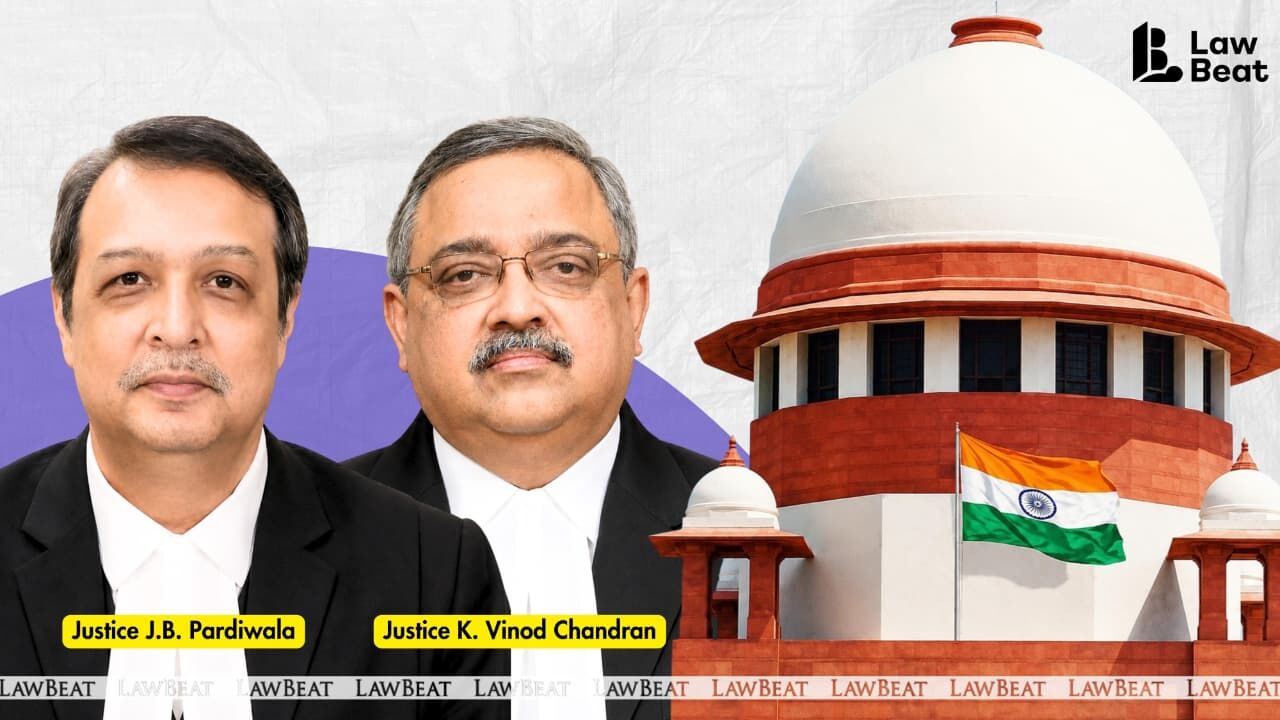
The Supreme Court, comprising Justices J B Pardiwala and K Vinod Chandran, underscored that a bidder who participates in an auction with full knowledge of its terms and conditions is bound by those conditions. The Court emphasized that a failure to pay the balance sale consideration constitutes a clear breach of the auction terms, thereby justifying the automatic forfeiture of deposited amounts, provided such a condition is clearly stipulated in the tender.
Upholding Liquidator's Authority and Bidder Responsibility
Central to the Supreme Court's decision was the question of a liquidator's authority to include forfeiture clauses in e-auction notices within the IBC framework. The Court unequivocally held that liquidators possess the power to incorporate specific forfeiture terms in their e-auction notices. While Schedule I of the Insolvency and Bankruptcy Board of India (Liquidation Process) Regulations, which became effective on September 30, 2021, stipulates that the `earnest money deposit forfeiture India` should not exceed 10% of the reserve price, this provision does not preclude a liquidator from including explicit forfeiture conditions for `IBC liquidation bidder default` in the auction document itself.
The Court reasoned that the regulations' silence on forfeiture in the event of non-payment does not override specific contractual terms agreed upon by bidders. It highlighted that a bidder enters the auction process with "open eyes," implying an understanding and acceptance of all stated conditions. Consequently, such a bidder cannot later seek a refund by citing external excuses or the absence of a specific forfeiture provision within the broader procedural regulations, especially when the tender terms expressly provide for such forfeiture. This ruling strengthens the `liquidator forfeiture clause validity` and provides clarity on the enforceability of such conditions in `Supreme Court IBC e-auction EMD forfeiture` scenarios.
Implications for Future Auctions and Due Diligence
The Supreme Court's judgment has significant implications for future e-auctions conducted under the IBC, particularly concerning `IBC liquidation bidder default`. By rejecting the appellant's arguments, the Court reinforced the principle of contractual sanctity in auction processes. M/s ASJ Finsolutions Pvt Ltd had attempted to argue that the absence of an express forfeiture provision in the Liquidation Process Regulations should prevent the forfeiture of their EMD. However, the Supreme Court dismissed this contention, reiterating that the specific terms of the e-auction notice govern the transaction.
Furthermore, the Court noted that the appellant had not undertaken due diligence, such as verifying title deeds, before making their bid or depositing the EMD. This observation underscores the expectation that bidders conduct thorough checks and understand all associated risks prior to participation. The ruling clarifies that the `Supreme Court IBC e-auction EMD forfeiture` is a legitimate consequence of a bidder's failure to adhere to payment obligations, even if the regulations themselves do not explicitly detail forfeiture.
This decision provides clear guidance to liquidators, empowering them to enforce auction terms, and serves as a strong reminder to potential bidders about the critical importance of meticulous due diligence and strict adherence to payment schedules in `Insolvency and Bankruptcy Code 2016 auction` processes.
Practical Implications
This ruling clarifies and strengthens the enforceability of forfeiture clauses in e-auction notices issued by liquidators under the IBC. Lawyers advising bidders must emphasize meticulous due diligence and strict adherence to payment terms, while liquidators now have clearer authority to enforce such clauses against defaulting successful bidders.
Source
How does this affect you?
Get an AI analysis of this article grounded in your jurisdictions, practice areas, and any policy documents you've uploaded to Wansom.
Finish Reading the Full Story and the Expert Analysis.
Get the latest legal & regulatory intelligence in India
Wansom is AI and can make mistakes.