
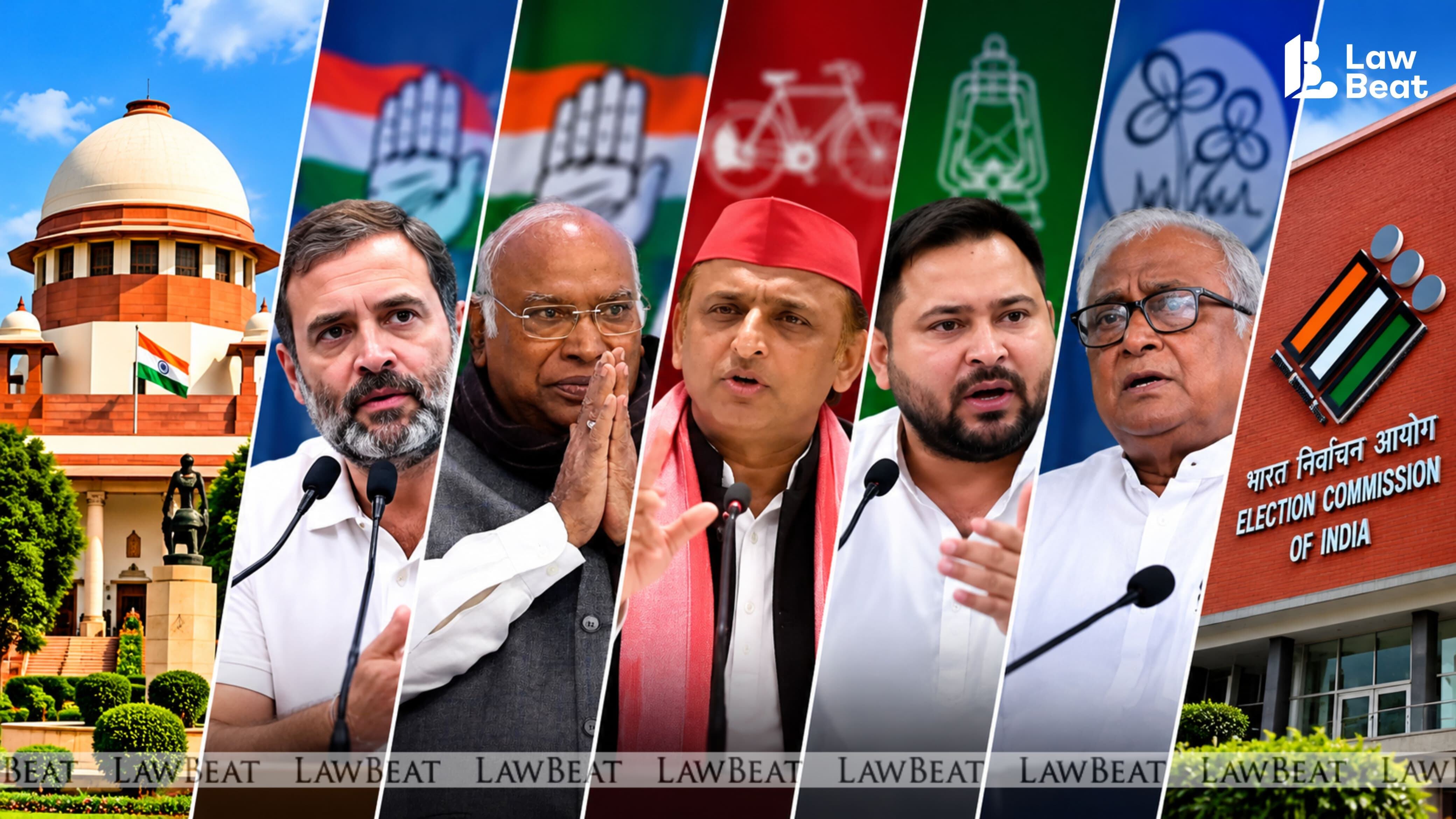
Rahul Gandhi Supreme Court: ECI SIR Petition Filed Over Electoral Irregularities
Summary
- Rahul Gandhi and other opposition leaders filed a writ petition against the Election Commission of India in the Supreme Court on October 12, 2026.
- The petition alleges irregularities in the Special Intensive Revision (SIR) process of electoral rolls.
- The filing coincided with an INDIA bloc protest march led by Rahul Gandhi to the Supreme Court, protesting ECI functioning.
- Chief Justice of India Surya Kant had previously declined to meet opposition leaders regarding electoral irregularities, citing the principle of Separation of Powers.
- The petition, titled "Rahul Gandhi vs Election Commission of India," invokes the Supreme Court's writ jurisdiction to address the ECI's constitutional duties.
Opposition Challenges Electoral Process in Supreme Court
This Rahul Gandhi Supreme Court Election Commission SIR petition represents a significant challenge to the Election Commission's processes, particularly concerning the Special Intensive Revision of electoral rolls.
On October 12, 2026, a writ petition was lodged with the Supreme Court of India by prominent opposition figures, including Rahul Gandhi, against the Election Commission of India (ECI). The core of the complaint centers on alleged irregularities identified within the ECI's Special Intensive Revision (SIR) process. This legal action, formally titled "Rahul Gandhi vs Election Commission of India," seeks to address concerns regarding the integrity of electoral roll preparations.
Among the petitioners are Rahul Gandhi, who serves as the Leader of Opposition in the Lok Sabha, Congress president Mallikarjun Kharge, Trinamool Congress Member of Parliament Saugata Roy, Samajwadi Party chief Akhilesh Yadav, and Rashtriya Janata Dal leader Tejashwi Prasad Yadav. The petition was submitted through Advocate-on-Record S Prasanna just moments before the Supreme Court's filing counter closed for the day. This legal move coincided with a "Chalo Dilli" march organized by the INDIA bloc, which was led by Gandhi from Connaught Place to the Supreme Court, protesting the ECI's operational conduct.
A delegation comprising 10 to 15 Congress leaders was granted permission to access the filing counter area within the Court premises. Reports indicated that this delegation intended to present a petition specifically targeting Chief Election Commissioner Gyanesh Kumar, alleging instances of vote theft, though they remained outside the high-security zone. As of now, the precise grounds for the petition, the specific prayers made, and the relief sought by the petitioners have not been publicly disclosed, and the date for the matter to be listed before a Supreme Court Bench remains unannounced.
Legal Framework and Judicial Oversight
The legal challenge against the Election Commission of India leverages the Supreme Court's writ jurisdiction, a powerful constitutional remedy. The ECI, as a constitutional body, holds the crucial responsibility for both the preparation of electoral rolls and the conduct of elections across the nation. The central contention of the petitioners is that the Special Intensive Revision process, vital for maintaining accurate voter lists, has been compromised by significant irregularities.
Prior to the petition's filing, Chief Justice of India Surya Kant had already declined a request to meet with Opposition Members of Parliament on October 12, 2026, to discuss the issues at hand. This refusal followed an earlier instance on October 11, when the CJI had similarly declined to meet with Rahul Gandhi, Mallikarjun Kharge, and other opposition leaders who sought to discuss allegations of electoral irregularities. The leaders had requested an appointment for October 12 to submit a memorandum covering a range of concerns, including the Chief Election Commissioner and the ECI, arbitrary student arrests, metro station closures, and train cancellations.
In a formal letter, Justice Kant articulated his reasons for not holding the meeting, stating that engaging in discussions about matters already sub judice before the Supreme Court would fundamentally contravene the principle of Separation of Powers. He emphasized that this principle is an intrinsic facet of the basic structure doctrine of the Constitution of India and that such a meeting would be incompatible with established judicial ethics and propriety. Furthermore, the CJI clarified that the Supreme Court is not vested with administrative powers to address the issues raised by the leaders, advising them instead to invoke the Court's judicial powers rather than submitting a memorandum on the administrative side.
Implications for Electoral Integrity
This Rahul Gandhi Supreme Court Election Commission SIR petition represents a significant challenge to the Election Commission's processes, particularly concerning the Special Intensive Revision of electoral rolls. The outcome of this case could establish important precedents regarding the scope of judicial review over the ECI's administrative functions and the mechanisms available for political parties to contest alleged systemic electoral irregularities within India's democratic framework.
The case underscores the critical role of the Supreme Court as the ultimate arbiter in disputes involving constitutional bodies and fundamental democratic processes. The Court's eventual ruling will not only address the specific allegations raised by the INDIA bloc but also define the boundaries of judicial intervention in electoral matters, potentially influencing future challenges to election laws and procedures and shaping the landscape of electoral governance in the country.
Practical Implications
Lawyers should monitor this Supreme Court writ petition for developments concerning the Election Commission's Special Intensive Revision process, as the outcome could set precedents for challenging electoral procedures and the scope of judicial oversight on constitutional bodies in India. This case highlights the use of writ jurisdiction to address alleged systemic irregularities in electoral rolls.
Source
How does this affect you?
Get an AI analysis of this article grounded in your jurisdictions, practice areas, and any policy documents you've uploaded to Wansom.
Finish Reading the Full Story and the Expert Analysis.
Get the latest legal & regulatory intelligence in India
Wansom is AI and can make mistakes.