
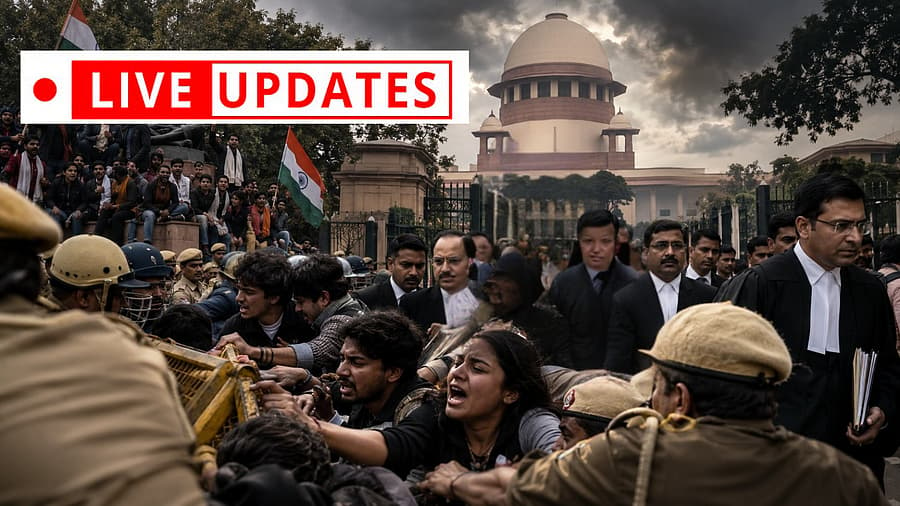
Supreme Court: Hears Rahul Gandhi Petition on SIR Electoral Rolls
Summary
- The Supreme Court is hearing petitions challenging alleged irregularities in India's Special Intensive Revision of electoral rolls.
- Leader of Opposition Rahul Gandhi and other opposition leaders have filed petitions against large-scale voter deletions.
- Petitions also address Delhi protests against the electoral roll revision and seek the resignation of Chief Election Commissioner Gyanesh Kumar.
- Concerns include alleged unilateral decisions by CEC Gyanesh Commissioner and police actions against lawyers, journalists, and protestors during demonstrations.
- The cases are being heard by a bench comprising Chief Justice of India Surya Kant and Justice Joymlaya Bagchi.
Supreme Court Examines Electoral Roll Integrity and Protest Rights
Ensuring the integrity of the Special Intensive Revision electoral rolls India is paramount for maintaining public trust in the democratic system.
India's Supreme Court is currently engaged in hearing a series of petitions that address significant concerns regarding the nation's electoral processes and the right to protest. A key aspect of these proceedings involves a petition filed by Leader of Opposition Rahul Gandhi, alongside other opposition figures, challenging alleged widespread voter deletions and various irregularities observed during the ongoing Special Intensive Revision (SIR) of electoral rolls across India. These critical matters are being deliberated by a bench comprising Chief Justice of India (CJI) Surya Kant and Justice Joymlaya Bagchi.
Concurrently, the apex court is also reviewing a separate set of petitions related to recent protests in Delhi. These demonstrations were primarily organized to voice opposition against the alleged irregularities within the Special Intensive Revision of electoral rolls and to demand the resignation of Chief Election Commissioner (CEC) Gyanesh Kumar. The petitions brought before the Supreme Court highlight several grievances stemming from these protests, including restrictions on public transport and movement, claims of illegal detentions, and alleged police actions targeting lawyers, journalists, and other protestors.
Unilateral Decisions and Mass Detentions Spark Controversy
The catalyst for the public outcry and subsequent legal challenges appears to be a report published by the Indian Express. This report alleged that Chief Election Commissioner Gyanesh Kumar had made several decisions concerning the Special Intensive Revision of electoral rolls unilaterally, reportedly overriding objections raised by two other Election Commissioners. This alleged disregard for collective decision-making within the Election Commission of India has fueled demands for his resignation and cast a shadow over the integrity of the electoral roll revision process.
In response to the demonstrations, the Delhi police undertook measures to curb the protests, resulting in the detention of numerous individuals over a recent weekend. These en masse detentions subsequently led to the filing of several petitions before the Supreme Court. Among the most concerning allegations within these petitions are claims that even legal professionals and journalists were detained, thereby impeding their ability to perform their professional duties. Furthermore, some petitions allege a defiance of judicial directions by authorities in their handling of these protest-related incidents.
Safeguarding Democratic Principles and Civil Liberties
The ongoing Supreme Court hearings carry substantial weight for the future of democratic processes in India. The petitions challenging large-scale voter deletions, particularly those brought by Rahul Gandhi and other opposition leaders, underscore fundamental questions about the accuracy and fairness of the electoral rolls, which are the bedrock of free and fair elections. Ensuring the integrity of the Special Intensive Revision electoral rolls India is paramount for maintaining public trust in the democratic system.
Beyond electoral integrity, the cases concerning the Delhi protests raise critical issues regarding civil liberties and the right to peaceful assembly. Allegations of restrictions on movement, illegal detentions, and police action against professionals like lawyers and journalists during demonstrations directly impinge upon constitutional rights. The Supreme Court's deliberations on these matters, presided over by CJI Surya Kant and Justice Joymlaya Bagchi, will be crucial in clarifying the boundaries of state power in managing public dissent and upholding the rights of citizens, including their ability to challenge perceived governmental irregularities.
Practical Implications
Lawyers advising on election law, civil liberties, or public assembly should closely monitor these Supreme Court proceedings, as they could set precedents regarding the integrity of electoral processes, the scope of protest rights, and the legality of detentions, particularly concerning professionals like lawyers and journalists during demonstrations.
Source
How does this affect you?
Get an AI analysis of this article grounded in your jurisdictions, practice areas, and any policy documents you've uploaded to Wansom.
Finish Reading the Full Story and the Expert Analysis.
Get the latest legal & regulatory intelligence in India
Wansom is AI and can make mistakes.