
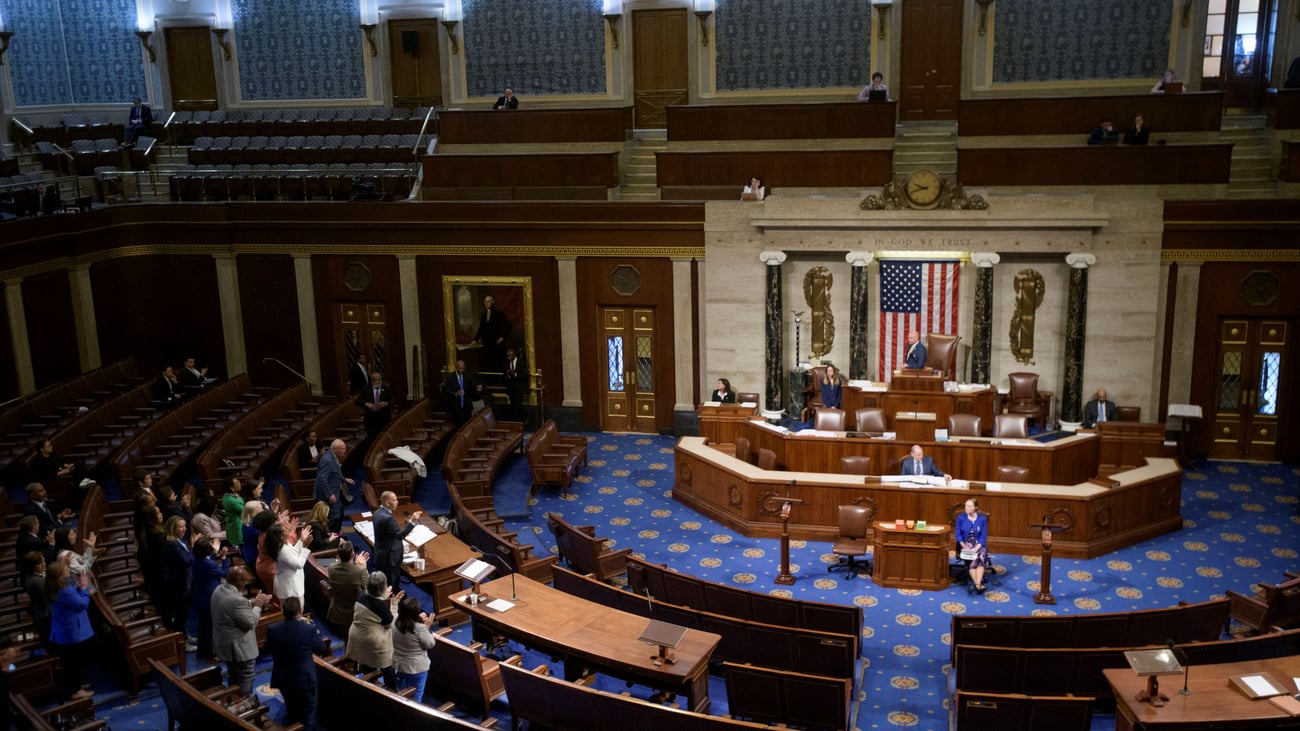
Quinnipiac Poll: Voters Favor Democrats 51%-39% for US House Control
Summary
- A recent Quinnipiac poll shows 51% of voters prefer Democrats to win control of the U.S. House, compared to 39% for Republicans.
- Despite 69% disapproval of Democrats' job performance in Congress, voters generally trust Democrats more on major issues.
- Former President Donald Trump's job disapproval rating reached 61%, matching a previous high, and 65% disapproved of his handling of the economy.
- Most voters (71%) would support candidates advocating for stricter AI development guardrails, with 79% prioritizing safety over innovation.
- A majority of voters from both parties, 85% of Democrats and 55% of Republicans, oppose building an AI data center in their community.
Voter Preferences for Congressional Control
Tim Malloy, a polling analyst for Quinnipiac University, characterized these findings as a critical signal for the Republican party.
A recent Quinnipiac University poll, conducted just five weeks before the upcoming midterm elections, indicates a significant preference among voters for Democratic control of the U.S. House of Representatives. The survey, which gathered responses from 1,032 self-identified registered voters between September 24 and 27, revealed that 51% expressed a desire for Democrats to secure victory in the House. In contrast, only 39% of respondents favored a Republican win, with 9% offering no opinion on the matter.
This sentiment extended to independent voters, a crucial demographic, where 54% indicated a preference for a Democratic majority in the House. Despite this clear lean towards Democratic control, the poll also highlighted a widespread dissatisfaction with the performance of current Democratic lawmakers, with 69% of voters disapproving of how Democrats in Congress are handling their responsibilities. However, pollsters noted that voters generally place more trust in Democrats across a majority of key policy areas.
Tim Malloy, a polling analyst for Quinnipiac University, characterized these findings as a critical signal for the Republican party. He observed that independent voters are aligning with Democrats on various issues, ranging from economic concerns to international affairs and even artificial intelligence, despite their general disapproval of the Democrats' current congressional performance. This suggests a complex interplay of voter preference Democrats Republicans, where overall job approval does not directly translate to party preference for legislative control.
Broader Political Landscape and Key Issues
Beyond the question of US House control, the Quinnipiac poll also delved into public opinion regarding prominent political figures and specific policy debates. Former President Donald Trump's job performance registered a high level of disapproval, with 61% of voters expressing dissatisfaction with his handling of the presidency. This figure matches an all-time high disapproval rating previously recorded in a Quinnipiac poll from January 18, 2021, which followed the January 6, 2021, attack on the U.S. Capitol.
Furthermore, the survey indicated a record-high Donald Trump disapproval rating concerning his economic stewardship, with 65% of voters disapproving of his approach to the economy. On the issue of immigration, often considered a strength for Republicans, voters showed a slight preference for Democrats, with 47% favoring their approach compared to 44% for Republicans. This difference falls within the survey's margin of error of 3.8 percentage points, indicating a closely divided public on this topic.
Public Opinion on Emerging Technology and Local Development
The Quinnipiac poll also explored public sentiment on contemporary issues such as AI development public opinion and the construction of data centers. A significant majority of voters, 71%, stated they would be more inclined to support a candidate who advocates for stricter regulations and guardrails in the development of artificial intelligence. This preference underscores a broader concern for safety, as 79% of respondents believe that safety should take precedence over leading innovation when it comes to AI advancements.
Regarding infrastructure, the survey revealed a strong data center NIMBY sentiment. When asked about the prospect of an AI data center being built in their own community, a majority across both major parties expressed opposition. Specifically, 85% of Democrats and 55% of Republicans indicated they would oppose such construction. Malloy commented on this trend, noting that data centers, once vaguely understood as necessary for emerging industries, are now frequently met with a 'not in my backyard' response from voters.
Practical Implications
This article reports on political polling data regarding voter preferences for congressional control, presidential approval, and public sentiment on AI and data centers. While these insights can inform broader strategic planning or public policy engagement, the article itself does not present a direct, actionable legal implication for lawyers or compliance officers in terms of new laws, regulations, or immediate compliance requirements.
Source
How does this affect you?
Get an AI analysis of this article grounded in your jurisdictions, practice areas, and any policy documents you've uploaded to Wansom.
Finish Reading the Full Story and the Expert Analysis.
Get the latest legal & regulatory intelligence in United States
Wansom is AI and can make mistakes.