
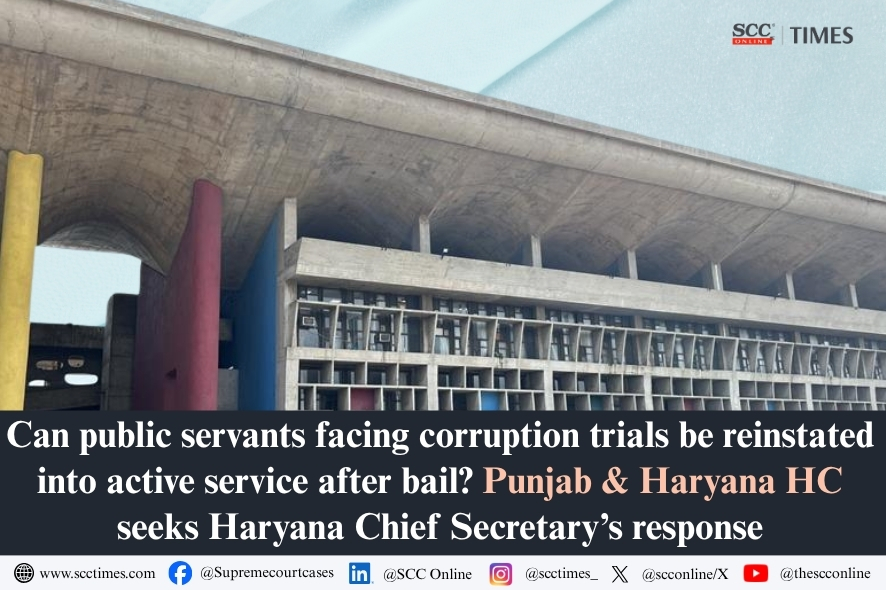
Punjab Haryana HC: Orders Rules for Public Servant Reinstatement Corruption Bail
Summary
- The Punjab and Haryana High Court granted interim bail to a police Sub-Inspector involved in a Prevention of Corruption Act case.
- The court directed the Haryana Chief Secretary to explain the rules for reinstating public servants facing corruption trials.
- The directive specifically requested details on safeguards against witness tampering and evidence manipulation.
- This judicial intervention aims to clarify the employment status of public servants on bail in corruption cases.
Judicial Directive on Public Servant Reinstatement
For legal professionals advising public servants accused of corruption, or for government departments managing such employees, closely monitoring the Haryana Chief Secretary's response is crucial.
The Punjab and Haryana High Court recently addressed a critical issue concerning public servants accused of corruption, granting interim bail to a police Sub-Inspector implicated in a Prevention of Corruption Act case. Alongside this grant of interim bail, the court issued a direct order to the Haryana Chief Secretary. This judicial intervention highlights the complex interplay between legal proceedings and administrative service regulations, especially in cases involving allegations of malfeasance.
The directive specifically seeks clarification on the established rules and procedures for the reinstatement of public servants who are facing corruption trials, particularly after being released on bail. This move by the Punjab Haryana HC regarding public servant reinstatement corruption bail cases underscores a need for transparent and consistent guidelines. Crucially, the High Court's order also emphasized the necessity for robust safeguards designed to prevent witness tampering and the manipulation of evidence, ensuring the integrity of ongoing investigations and trials. This aspect of the directive underscores the judiciary's concern for maintaining fairness and preventing undue influence in cases where public officials are involved, particularly in an interim bail public servant corruption case.
Legal and Administrative Context
The legal framework surrounding public servants accused under the Prevention of Corruption Act in India often presents a dilemma regarding their employment status during trial. While an accusation does not equate to guilt, the nature of corruption charges frequently leads to suspension or removal from active duty. The question of reinstatement, especially after a public servant secures bail, becomes a nuanced administrative and legal challenge. The Punjab and Haryana High Court's request for the Haryana Chief Secretary to outline specific corruption reinstatement rules is therefore a significant step towards clarifying these often ambiguous situations.
This move could potentially lead to more defined India public servant reinstatement guidelines, which are currently subject to varying interpretations across different departments and states. Ensuring that any reinstatement process includes stringent witness tampering corruption trial safeguards is paramount. The court's explicit mention of these safeguards reflects a recognition of the potential for individuals in positions of power to influence investigations or intimidate witnesses, thereby undermining the judicial process. Clear guidelines from the Haryana Chief Secretary on this matter would not only protect the integrity of trials but also uphold public trust in the administration of justice.
Implications for Governance and Justice
The directive from the Punjab and Haryana High Court to the Haryana Chief Secretary carries substantial implications for both public administration and the legal community. The response from the Chief Secretary is anticipated to provide much-needed clarity on the protocols governing the employment status of public servants facing corruption charges who have been granted bail. This could lead to the development of new, or the refinement of existing, Haryana Chief Secretary corruption reinstatement rules, setting a precedent for how similar cases are handled across the state and potentially influencing broader India public servant reinstatement guidelines.
For legal professionals advising public servants accused of corruption, or for government departments managing such employees, closely monitoring the Haryana Chief Secretary's response is crucial. The outcome could significantly impact employment terms, departmental policies, and the implementation of safeguards against interference with investigations. The court's proactive stance in seeking these explanations underscores the judiciary's commitment to balancing the rights of the accused with the imperative of maintaining public integrity and ensuring fair trials.
Practical Implications
Lawyers advising public servants accused of corruption, or government departments dealing with such employees, should closely monitor the Haryana Chief Secretary's response to the Punjab & Haryana High Court. This development could lead to clarified or new guidelines regarding the reinstatement of public servants on bail, impacting employment status and potential safeguards against interference with investigations.
Source
How does this affect you?
Get an AI analysis of this article grounded in your jurisdictions, practice areas, and any policy documents you've uploaded to Wansom.
Finish Reading the Full Story and the Expert Analysis.
Get the latest legal & regulatory intelligence in India
Wansom is AI and can make mistakes.