
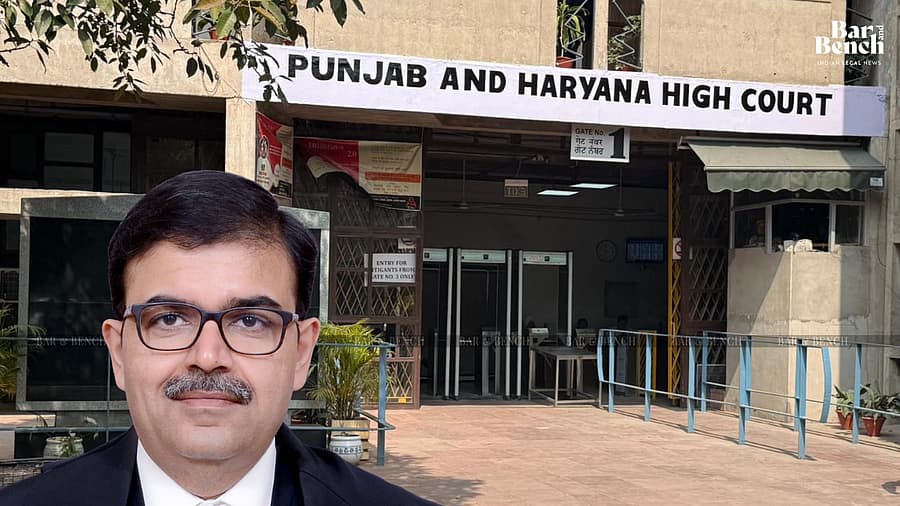
Punjab Govt: Opposes Justice Ashwani Kumar Mishra Elevation
Summary
- The Punjab cabinet passed a resolution opposing the Central government's notification of Justice Ashwani Kumar Mishra as Chief Justice of the Punjab and Haryana High Court.
- The Supreme Court Collegium had recommended Justice Mishra's elevation on August 6, with the Central government clearing it on Saturday night.
- The state government alleges the appointment was made without its consent, citing the 'Memorandum of Procedure for Appointment and Transfer of Chief Justices and Judges of High Court'.
- An emergency cabinet meeting urged the Governor to postpone Justice Mishra's oath, scheduled for Monday, until Punjab's views are obtained and duly considered.
- This development signals a potential Centre-State conflict regarding the established process for high court judicial appointments in India.
State Government Challenges Judicial Appointment
This development highlights a significant procedural disagreement between the state and central authorities regarding the established process for high court judicial appointments.
The Punjab cabinet recently passed a resolution expressing its strong opposition to the Central government's decision to formalize the appointment of Justice Ashwani Kumar Mishra as the Chief Justice of the Punjab and Haryana High Court. This significant development unfolded on a Sunday, just hours before Justice Mishra was scheduled to take his oath of office.
The Supreme Court Collegium had initially put forward its recommendation for Justice Mishra's elevation on August 6. Subsequently, the Central government proceeded to clear this recommendation on Saturday night, officially notifying his appointment. However, the state government has voiced serious objections, asserting that this crucial decision was made without its necessary consent.
Emergency Meeting and Demand for Delay
With Justice Mishra's oath ceremony slated for Monday at Punjab Lok Bhavan in Chandigarh, the Punjab cabinet convened an emergency meeting via video conference. This urgent gathering was held specifically to protest the Central government's action regarding the Chief Justice appointment.
Following the deliberations, the cabinet issued a resolution that directly urged the Governor to refrain from administering the oath to Justice Mishra. The resolution explicitly stated that the oath should be withheld until the Punjab government provides its consent for the appointment. The government's official statement underscored its strong disapproval, indicating that the appointment and oath should be paused until the state's perspectives are obtained and thoroughly considered, given that the decision was made without awaiting Punjab's views.
Procedural Dispute Over Consent
At the heart of the Punjab government's challenge lies a procedural contention, specifically referencing the 'Memorandum of Procedure for Appointment and Transfer of Chief Justices and Judges of High Court'. The state government's stance implies that this established framework mandates consultation with, or consent from, the state government in such appointments, particularly highlighting the role of the Union Minister of Law in this process.
By invoking the Memorandum of Procedure, the Punjab government is essentially questioning the legitimacy of the Central government's notification without what it perceives as due process involving state-level input. This sets the stage for a potential constitutional or procedural dispute regarding the established norms for judicial appointments in India.
Broader Implications for Judicial Appointments
This development highlights a significant procedural disagreement between the state and central authorities regarding the established process for high court judicial appointments. The Punjab government's opposition to Justice Ashwani Kumar Mishra's elevation could signal a growing Centre-State dispute over the autonomy and consultation required in such critical decisions.
The challenge to the appointment, particularly citing the lack of state government consent, could have far-reaching implications for future judicial appointments across India. It underscores the complex interplay between different levels of government in the judicial selection process and raises questions about the interpretation and adherence to the 'Memorandum of Procedure' for judicial appointments.
Practical Implications
This development highlights a potential constitutional or procedural dispute regarding judicial appointments in India, specifically concerning the role of state governments in the elevation of High Court Chief Justices. Lawyers should monitor how this challenge to the 'Memorandum of Procedure' unfolds, as it could influence future judicial appointments and the perceived independence of the judiciary, potentially impacting court administration and the stability of legal processes.
Source
How does this affect you?
Get an AI analysis of this article grounded in your jurisdictions, practice areas, and any policy documents you've uploaded to Wansom.
Finish Reading the Full Story and the Expert Analysis.
Wansom is AI and can make mistakes.