
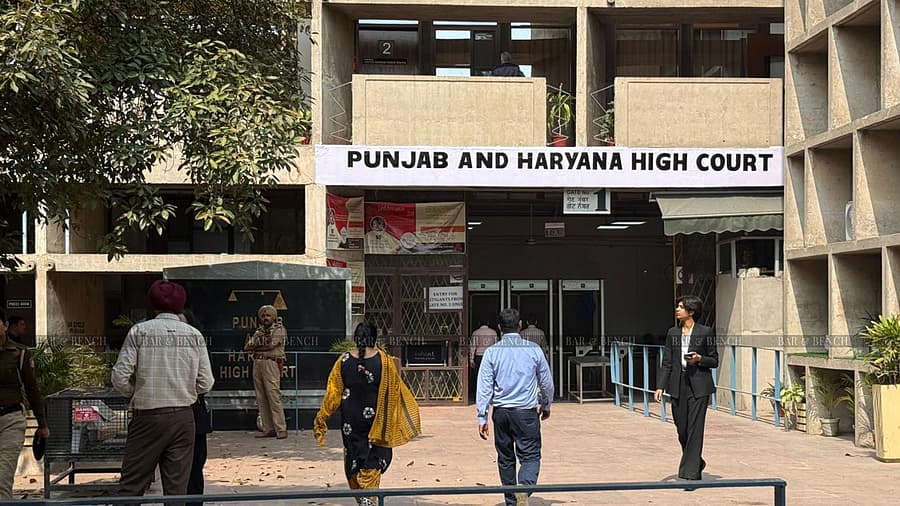
Punjab and Haryana High Court: Collegium Recommendation for Haryana AG Upheld
Summary
- The Punjab and Haryana High Court dismissed a PIL petition challenging the Collegium's recommendation to appoint Pravindra Singh Chauhan as a High Court judge.
- Chauhan is currently the Advocate General of Haryana, and his name was recommended for appointment in May along with nine other advocates.
- The Central government has not yet approved any of the names recommended by the Collegium.
- The High Court upheld the Collegium's recommendation, citing the exhaustive process of appointing judges and the authority of the Collegium in making judicial appointments.
Collegium Recommendation Under Scrutiny
Appointments to a high constitutional office cannot be questioned or examined at the mere asking of a petitioner.
In May, the Supreme Court Collegium recommended the appointment of Senior Advocate Pravindra Singh Chauhan as a High Court judge, along with nine other advocates. This recommendation has been pending approval from the Central government, which has not yet acted on it. The Collegium's decision was based on Chauhan's expertise and experience as the Advocate General of Haryana. However, a public interest litigation (PIL) petition challenged this recommendation, seeking its recall. The petitioners argued that the Collegium's decision was flawed and should be reviewed. But the Punjab and Haryana High Court recently dismissed this plea, upholding the Collegium's recommendation.
The Appointment Process
The process of appointing a High Court judge is complex and involves multiple stakeholders. It begins with the High Court Collegium, which initiates the proposal for appointment. The proposal is then sent to the State government, which receives inputs from various intelligence agencies. After this, the State Government makes a recommendation in the matter, and the proposal is taken to the Ministry of Law and Justice. Here, further intelligence inputs are collected, and reports are obtained from relevant quarters before a final decision is made. This exhaustive process ensures that only suitable candidates are appointed as High Court judges.
Implications for Future Challenges
The dismissal of the PIL petition has significant implications for future challenges to Collegium recommendations. Lawyers should take note that this decision sets a precedent, indicating that appointments to high constitutional offices cannot be questioned or examined at the mere asking of a petitioner. This means that any future challenges to Collegium recommendations will face an uphill battle in court. The Punjab and Haryana High Court's decision underscores the importance of upholding the Collegium's authority in making judicial appointments.
Practical Implications
Lawyers should watch for the implications of this decision on future challenges to Collegium recommendations, which may impact their clients' prospects for judicial appointments.
Source
Source: Original reporting via [Source]
How does this affect you?
Get an AI analysis of this article grounded in your jurisdictions, practice areas, and any policy documents you've uploaded to Wansom.
Wansom is AI and can make mistakes.