
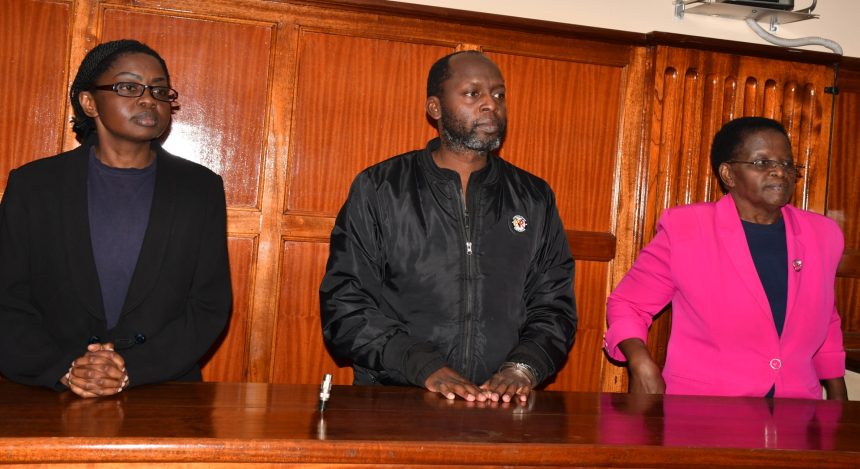
Kenya High Court: Prof Ndetei Cross-Examination Allowed in Dr Mutiso Murder
Summary
- High Court Judge Alexander Muteti has permitted the cross-examination of Prof. Ndetei.
- This decision follows an application by Rose Mbithe and her two children in the Dr. Mutiso murder case.
- The applicants are challenging the authenticity of Prof. Ndetei's affidavit, dated October 5, 2026.
- Prof. Ndetei's affidavit was submitted to oppose the release of Mbithe and her children on bail.
- The ruling emphasizes that expert testimony in Kenyan courts, even in bail proceedings, is subject to rigorous scrutiny and direct questioning.
What Happened
This development signals that courts are prepared to delve deeply into the foundations of expert opinions, demanding transparency and verifiability.
The Kenyan High Court has issued a significant ruling in the ongoing Dr. Mutiso murder case, granting an application that permits the cross-examination of an expert witness. Justice Alexander Muteti presided over the proceedings, where he allowed a request put forth by Rose Mbithe and her two children. This decision directly impacts their ongoing bail application in Kenya.
The core of the application centered on a challenge to the authenticity of an affidavit submitted by Prof. Ndetei. This particular affidavit, dated October 5, 2026, was presented to the court with the explicit purpose of opposing the release of Rose Mbithe and her children on bail. The High Court's determination to allow the challenge means that Prof. Ndetei will now be subjected to cross-examination regarding the contents and veracity of his expert statement.
Legal Context of the Challenge
In criminal proceedings within Kenya, particularly in high-profile matters such as the Dr. Mutiso murder case before the High Court, affidavits play a crucial role in informing judicial decisions, including those pertaining to bail. An affidavit serves as a sworn statement of fact, and its authenticity is paramount to its evidentiary value. When an affidavit's genuineness is called into question, as in this instance, it triggers a legal process designed to ascertain its reliability.
The challenge to Prof. Ndetei's affidavit underscores the rigorous standards applied to evidence presented in court. The ability to conduct an affidavit authenticity challenge in a criminal case allows the defense to scrutinize the foundation of expert opinions that could significantly influence a judge's decision on a defendant's liberty. This mechanism ensures that all evidence, especially that which seeks to deny bail, is thoroughly vetted for its integrity and factual basis.
Implications for Expert Testimony
The ruling by Justice Muteti, allowing the Prof Ndetei cross-examination in the Dr Mutiso murder case, carries substantial implications for expert witnesses and the presentation of their evidence in Kenyan courts. It reinforces the principle that expert testimony, even when submitted in the form of an affidavit during a bail application, is not immune from intense scrutiny and direct questioning. This development signals that courts are prepared to delve deeply into the foundations of expert opinions, demanding transparency and verifiability.
This judicial stance highlights the critical importance for legal practitioners to ensure that any expert testimony they present is robust, well-supported, and prepared to withstand rigorous challenge. The authenticity of such evidence can be directly questioned, potentially impacting crucial decisions like bail. Consequently, experts providing affidavits must be ready to defend their findings and methodologies under cross-examination, emphasizing the need for meticulous preparation and verifiable data in all expert submissions. This precedent underscores the judiciary's commitment to upholding due process and ensuring that all evidence, particularly that which could affect a defendant's freedom, is held to the highest standards of integrity and truthfulness.
Practical Implications
This development signals that expert affidavits, even in bail proceedings, are subject to rigorous challenge and cross-examination in Kenyan courts. Lawyers should advise clients that expert testimony must be robust and prepared for scrutiny, as its authenticity can be directly questioned, potentially impacting critical decisions like bail.
Source
How does this affect you?
Get an AI analysis of this article grounded in your jurisdictions, practice areas, and any policy documents you've uploaded to Wansom.
Finish Reading the Full Story and the Expert Analysis.
Get the latest legal & regulatory intelligence in Kenya
Wansom is AI and can make mistakes.