
Tambacounda High Court: Procès Actes Contre Nature Faces Vice Procédure
Summary
- Seven individuals are on trial in Tambacounda for actes contre nature, voluntary HIV transmission, and endangering others.
- Defense lawyers challenged the procedure, citing police interrogation of clients without legal counsel present.
- Ababacar Diongue retracted his initial testimony, claiming fear during police questioning.
- Ibrahima Ba, a key defendant, stated he learned of his HIV status only during the investigation and denied unprotected sex.
- The prosecution has requested prison sentences of up to seven years for the accused.
The Tambacounda Trial and Allegations
Their primary contention centered on the alleged absence of legal counsel during police interrogations of their clients.
Seven individuals recently appeared before the Tambacounda High Court, facing serious charges including actes contre nature, voluntary transmission du VIH/Sida, and endangering the lives of others. Their legal representatives have sought their acquittal, with a decision from the court anticipated on October 21. This high-profile procès Tambacounda actes contre nature has drawn significant attention, particularly due to the nature of the accusations and the procedural challenges raised by the defense.
A central point of contention emerged as the defendants disavowed statements they had previously made to police officers and the public prosecutor during the initial investigation. Notably, Ababacar Diongue, who had initially claimed to have engaged in sexual relations with two of the accused, recanted his testimony during the court hearing. He explained, as reported by dakar92, that his earlier statements were made under duress and fear during police questioning, highlighting a potential vice procédure in the investigative phase.
Procedural Irregularities and Legal Strategy
Before the court proceeded to examine the substance of the charges, the defense attorneys strategically raised exceptions de nullité, arguing that the legal proceedings were tainted by significant procedural defects. Their primary contention centered on the alleged absence of legal counsel during police interrogations of their clients. This challenge underscores the critical importance of the right to legal representation during questioning, a fundamental aspect of droit pénal Sénégal actes contre nature and due process.
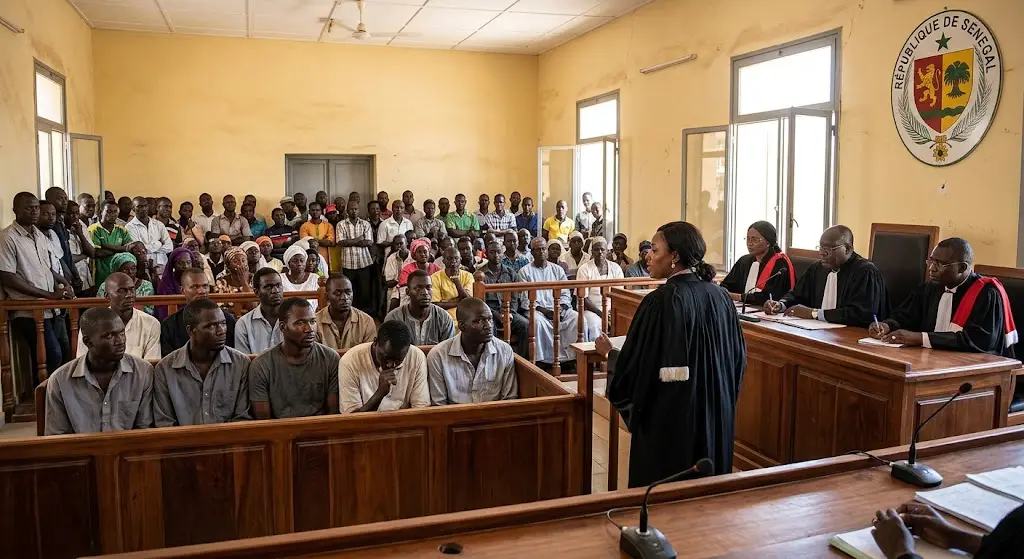
The lawyers asserted that judicial police officers conducted these interrogations without their presence, thereby compromising the integrity of the evidence obtained. In response to the evidence presented and the procedural objections, the prosecution has requested substantial penalties. The state prosecutor has sought prison sentences for the accused that could extend up to seven years of firm imprisonment. The courtroom itself reflected the intense public interest and emotional stakes, with the hearing taking place in a crowded environment filled with relatives and family members of the defendants.
Contested Evidence and Public Health Implications
The retractions and denials presented by the defendants have introduced considerable complexity into the trial. Beyond Ababacar Diongue's reversal, another key figure, Ibrahima Ba, identified as a central member of the group, offered crucial testimony regarding the transmission VIH Sida aspect of the case. He stated that he only became aware of his HIV-positive status during the course of the investigation itself. Furthermore, Ba emphatically denied ever engaging in unprotected sexual intercourse, directly challenging one of the core accusations.
These denials and the Ababacar Diongue rétractation témoignage provoked noticeable reactions from both the prosecutor and the presiding judge. They speculated that the presence of the defendants' families in the packed courtroom might have influenced their reluctance to acknowledge the facts as initially presented. The case thus not only delves into actes contre nature but also touches upon sensitive public health issues related to Tambacounda transmission VIH Sida, making the procedural integrity of the investigation paramount for a just outcome.
Practical Implications
Lawyers should note the critical importance of challenging procedural irregularities, specifically the interrogation of suspects by police without legal counsel present, as a robust defense strategy to seek nullification of proceedings or evidence in sensitive cases like those involving 'actes contre nature' and public health charges in Senegal.
Source
Source: Original reporting via Senego
How does this affect you?
Get an AI analysis of this article grounded in your jurisdictions, practice areas, and any policy documents you've uploaded to Wansom.
Finish Reading the Full Story and the Expert Analysis.
Get the latest legal & regulatory intelligence in Senegal
Wansom is AI and can make mistakes.