
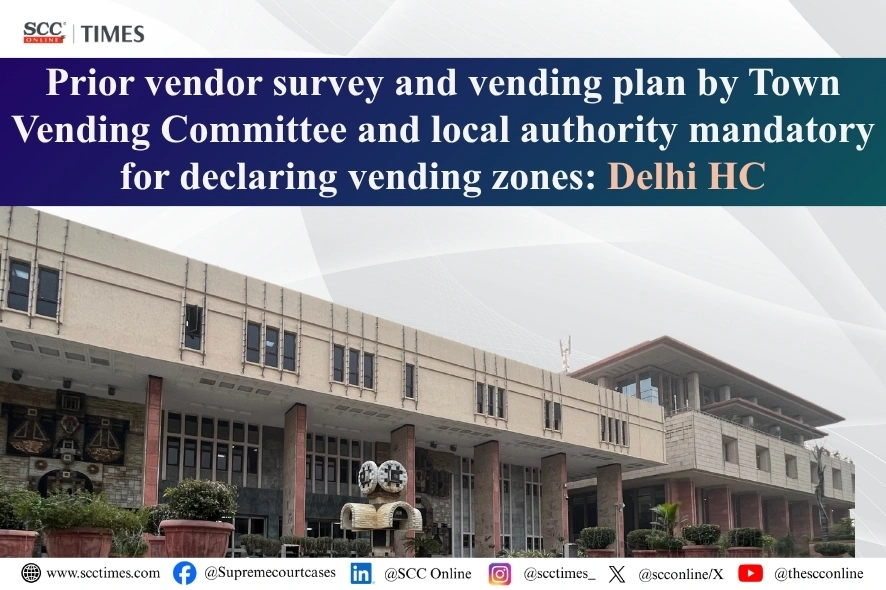
Prior Vendor Survey and Vending Plan by Town Vending Committee and Local Authority Mandatory for Declaring Ven
Summary
- The Delhi High Court has declared that a prior vendor survey and vending plan are mandatory for establishing street vending zones.
- These essential steps must be carried out by the Town Vending Committee (TVC) and the local authority.
- Street vendors do not have an inherent right to vend or squat until they receive a formal permission or certificate from the TVC.
- The TVC must consult with the local body before granting such permission or certificate.
- Any vending zones declared without these mandatory pre-requisites are considered invalid, impacting vendor rights.
Court Mandates Pre-Requisites for Vending Zones
The High Court explicitly ruled that a comprehensive vendor survey and a meticulously developed vending plan are not merely recommendations but mandatory pre-requisites.
The Delhi High Court has issued a significant directive, clarifying the essential steps required before any area can be officially designated as a street vending zone within the capital. The court explicitly ruled that a comprehensive vendor survey and a meticulously developed vending plan are not merely recommendations but mandatory pre-requisites.
These critical preparatory steps must be undertaken by the Town Vending Committee (TVC) in conjunction with the relevant local authority. The High Court's pronouncement establishes a clear procedural framework, emphasizing that the declaration of any Delhi HC vendor survey mandatory vending zones is contingent upon the completion of these foundational tasks.
Establishing Vendor Rights and Permissions
Delving into the legal framework governing street commerce, the High Court further clarified the conditions under which street vendors acquire legitimate operational rights. The ruling specifies that individuals are not automatically conferred the right to vend or squat in public spaces.
Instead, the entitlement to operate as a street vendor in Delhi is contingent upon the issuance of a formal permission or a certificate. This crucial document must be granted by the Town Vending Committee (TVC), following a necessary consultative process with the local body, thereby formalizing the vendor's presence and activities and defining street vendor rights Delhi permission.
Implications for Urban Planning and Vendor Legitimacy
This judicial pronouncement carries substantial weight for both municipal corporations and the extensive community of street vendors across Delhi. For local authorities, the ruling signifies that any existing or future declaration of street vending zones that has not been preceded by the mandatory vendor survey and vending plan by the Town Vending Committee is inherently invalid.
Consequently, legal professionals advising municipal corporations or street vendor organizations in Delhi must ensure strict adherence to these procedural mandates. The absence of these foundational steps directly impacts the legitimacy of declared vending zones and, crucially, affects the recognized street vendor rights Delhi permission, potentially leaving vendors vulnerable and operating without proper authorization. The court's stance reinforces the necessity of a structured and legally compliant approach to urban street vending, ensuring that the vending plan local authority Delhi is properly executed.
Practical Implications
Lawyers advising municipal corporations or street vendor organizations in Delhi must ensure that any declared vending zones are preceded by a mandatory vendor survey and vending plan by the Town Vending Committee and local authority, as the absence of these renders the declaration invalid and affects vendor rights.
Source
Source: Original reporting via SCC Times
How does this affect you?
Get an AI analysis of this article grounded in your jurisdictions, practice areas, and any policy documents you've uploaded to Wansom.
Finish Reading the Full Story and the Expert Analysis.
Get the latest legal & regulatory intelligence in India
Wansom is AI and can make mistakes.