
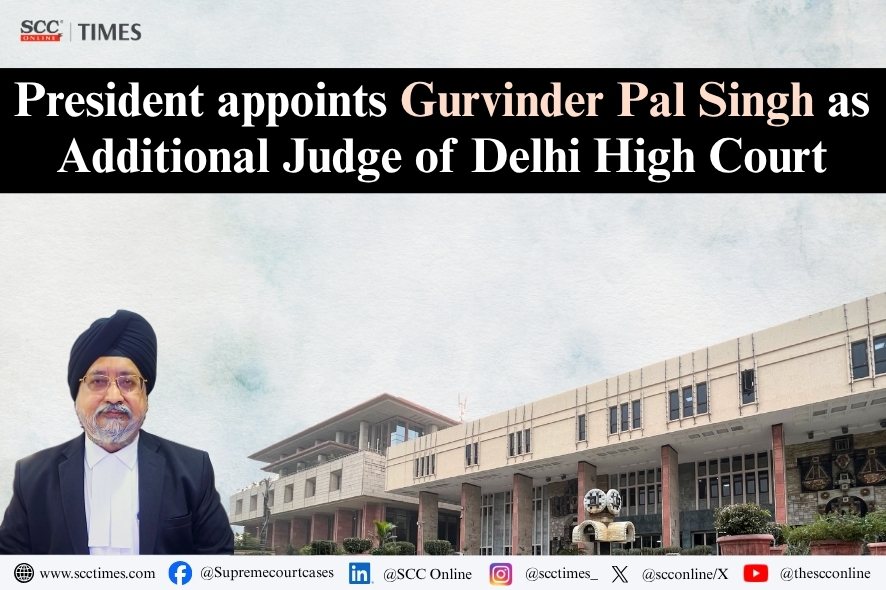
President Appoints Gurvinder Pal Singh as Delhi High Court Additional Judge
The President of India has appointed Gurvinder Pal Singh as an Additional Judge of the Delhi High Court, effective following the Supreme Court Collegium’s recommendation dated September 10, 2026.
This judicial appointment is a crucial development for the Delhi High Court, one of India's most significant High Courts. The addition of a new judge helps to bolster the court's capacity, potentially leading to improved case disposal rates and a reduction in the existing backlog of cases. For practitioners, this means a strengthened judiciary capable of handling the substantial volume of litigation in the capital. Additional judges are typically appointed for a fixed term, usually not exceeding two years, to address temporary increases in judicial workload or arrears, with the possibility of later elevation to permanent judgeship.
The appointment is made under Article 224(1) of the Constitution of India, which empowers the President to appoint Additional Judges to a High Court. This constitutional provision is invoked when there is a temporary increase in the business of the High Court or by reason of arrears of work. The process of appointment involves a recommendation from the Supreme Court Collegium, a system that has evolved through judicial pronouncements to ensure the independence of the judiciary in the appointment and transfer of judges. The key parties involved are the President of India, Gurvinder Pal Singh (the appointee), the Delhi High Court, and the Supreme Court Collegium.
Practitioners should take note of this appointment as it contributes to the overall judicial strength and composition of the Delhi High Court. Understanding the judicial landscape, including the number and experience of judges, is vital for strategic litigation planning. Attorneys should monitor the tenure and potential elevation of additional judges, as these changes can influence the court's functioning and the judicial approach to various legal issues. This appointment signifies the ongoing efforts to ensure the efficient administration of justice in the Indian judicial system.
How does this affect you?
Get an AI analysis of this article grounded in your jurisdictions, practice areas, and any policy documents you've uploaded to Wansom.
Finish Reading the Full Story and the Expert Analysis.
Get the latest legal & regulatory intelligence in India
Wansom is AI and can make mistakes.