
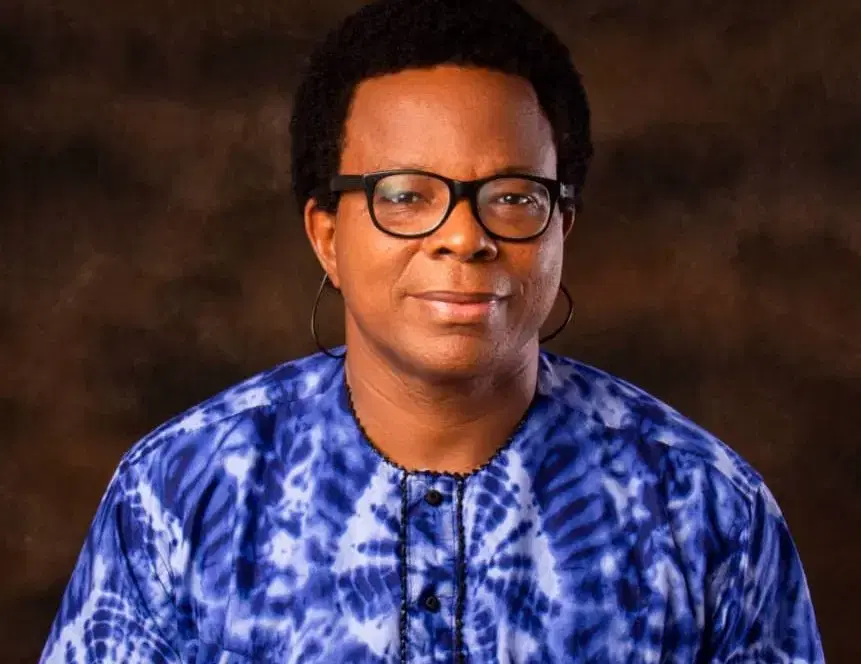
Please Tinubu, why can’t we all own Rifles? By Ugoji Egbujo
Abstract
Nigeria's legal framework for firearm ownership, primarily governed by the Firearms Act, Cap F28 LFN 2004, imposes stringent restrictions on civilian possession, particularly prohibiting military-grade rifles. Amid escalating insecurity across the nation, a fervent public and legislative debate has emerged, questioning the efficacy of these restrictive laws and advocating for a review to permit responsible citizens to own firearms for self-defense. This article delves into the statutory provisions, the types of firearms permitted and prohibited, the rigorous licensing regime, and the complex arguments surrounding the potential liberalization of gun ownership, highlighting the inherent tension between state monopoly on force and citizens' right to self-preservation.
Introduction
The recent lamentation in the Nigerian media, encapsulated by the query "Please Tinubu, why can't we all own Rifles?" by Ugoji Egbujo in Vanguard Nigeria, underscores a growing sentiment of exasperation among citizens grappling with pervasive insecurity. The tragic death of General Rabe, as highlighted in the excerpt, serves as a stark reminder of the vulnerability faced by ordinary Nigerians, prompting renewed calls for individuals to be empowered with the means for self-defense. This public outcry has ignited a critical national discourse on Nigeria's existing firearm laws and the feasibility of liberalizing gun ownership, particularly concerning rifles, in a bid to address the escalating threats of banditry, kidnapping, and terrorism.
Background
The legal landscape governing firearm ownership in Nigeria is primarily shaped by the Firearms Act, Cap F28 Laws of the Federation of Nigeria 2004 (formerly the Firearms Act of 1959 and 1990). This Act establishes a highly restrictive regime, centralizing the authority to grant licenses for firearms and ammunition in the President or the Inspector-General of Police (IGP). Crucially, the Act explicitly categorizes certain firearms as 'prohibited,' making their possession by civilians unlawful under almost all circumstances. This prohibited list includes artillery, rocket weapons, bombs, grenades, machine-guns, machine-pistols, revolvers, pistols, and, significantly, military rifles of specific calibres such as 7.62mm, 9mm, .300 inches, and .303 inches.
For firearms not on the prohibited list, such as certain shotguns (excluding automatic and semi-automatic types or those with mechanical reloading devices) and sporting rifles (of calibres other than those designated as military), civilian ownership is theoretically possible but subject to stringent licensing requirements. Applicants must be at least 17 years old (though some sources suggest 35) and undergo background checks to ensure they are not of unsound mind, have defective eyesight, possess intemperate habits, or have been convicted of a violent offense within the preceding five years. Licenses, if granted, are valid for only one year and require annual renewal, underscoring the discretionary and tightly controlled nature of firearm possession in Nigeria.
Analysis
The question "why can't we all own Rifles?" directly confronts the core tenets of Nigeria's Firearms Act. As established, military rifles are unequivocally prohibited for civilian ownership, reflecting a state policy aimed at maintaining a monopoly on lethal force. While 'sporting rifles' are technically not on the prohibited list if they fall outside the military calibres, obtaining a license for any firearm, including these, is not a right but a privilege granted at the discretion of the President or the Inspector-General of Police. This discretionary power, coupled with the rigorous background checks and annual renewal requirements, makes legal civilian ownership of even non-military rifles exceedingly difficult. In fact, the Nigeria Police Force temporarily suspended the issuance of small-arms licenses in August 2023 due to concerns over the proliferation of illegal weapons, further tightening the already restrictive regime.
Paradoxically, despite these stringent laws, Nigeria is widely recognized as the largest illicit small arms market in West Africa, with millions of illegal weapons reportedly in civilian hands. This proliferation of unlicensed firearms, often more sophisticated than what law-abiding citizens can legally acquire, fuels the argument for liberalized gun ownership. Proponents contend that if the state consistently fails in its constitutional duty to protect lives and property under Section 14(2)(b) of the 1999 Constitution, and given the constitutional right to life and self-defense under Section 33(1) and (2)(a), citizens should be permitted to arm themselves. This argument gains traction amidst rising incidents of banditry, kidnapping, and terrorism, where security forces are perceived as overstretched or ineffective.
However, the proposition to liberalize gun ownership faces strong opposition from security institutions and legal experts. They argue that expanding civilian access to firearms could exacerbate the existing security crisis, leading to increased accidental shootings, domestic violence, and suicides, thereby pushing the country further into instability. Critics also highlight that the current Firearms Act, enacted decades ago, is ill-equipped to address modern security challenges and that a heavily armed civilian population could undermine the state's monopoly on force, potentially creating unregulated parallel security structures inconsistent with the Constitution. Recent legislative efforts have reflected this ongoing debate, with some lawmakers proposing amendments to ease restrictions for responsible citizens, while others have pushed for stiffer penalties for illegal firearm possession and a comprehensive review to tighten controls. The Inspector-General of Police has also initiated a comprehensive audit of arms within police formations to enhance accountability and curb proliferation, indicating a focus on internal control rather than external liberalization.
Conclusion
The debate surrounding civilian ownership of rifles in Nigeria is a complex legal and policy conundrum, deeply intertwined with the nation's severe security challenges. While the Firearms Act, Cap F28 LFN 2004, clearly prohibits military rifles and imposes strict conditions on other firearms, the pervasive insecurity has fueled a compelling argument for a re-evaluation of these laws to empower citizens for self-defense. Legal practitioners must navigate this landscape by advising clients on the current stringent prohibitions and licensing requirements, emphasizing the severe penalties for illegal possession, which include a minimum of ten years imprisonment.
Looking ahead, the ongoing legislative proposals and the public's demand for greater self-protection suggest that the Firearms Act may be subject to significant amendments. However, any reform will necessitate a delicate balance between upholding the state's fundamental responsibility to provide security and acknowledging the citizens' inherent right to self-preservation. Practitioners should closely monitor legislative developments and policy shifts, as the outcome of this debate will profoundly impact individual rights, public safety, and the future of Nigeria's security architecture.
Citations
- 1.Firearms Act, Cap F28 Laws of the Federation of Nigeria 2004
- 2.Constitution of the Federal Republic of Nigeria 1999 (as amended)
- 3.The Punch, 'Explainer] Emefiele: What Nigerian Laws Say About Illegal Gun Possession' (27 July 2023)
- 4.An Overview of the Gun Regulations in Nigeria: The Current Stance and the Way Forward (11 July 2024)
- 5.Looser gun laws could deepen Nigeria's security crisis | ISS Africa (25 January 2024)
- 6.Importation and Possession of Guns for Security in Nigeria - Andi Daze Legal (22 October 2019)
- 7.Insecurity: Nigerian lawmakers consider reviewing firearm law to allow citizens to own guns (26 November 2025)
- 8.GUNS AND LICENSES: NIGERIAN FIREARMS ACT - Legalnaija (27 March 2013)
- 9.NIGERIA POLICE FORCE WARNS PERSONS IN POSSESSION OF PROHIBITED FIREARMS TO SURRENDER THEM - NPF | Home
- 10.Arming citizens: Nigeria's debate over gun rights and self-defence - Businessday NG (19 June 2026)
- 11.The Restricted and the Firearms Act Vis-À-Vis the Right to Life in Nigeria (11 July 2024)
- 12.PROCEDURE FOR ACQUIRING LICENCED FIREARMS IN NIGERIA. - Ace Juris (10 August 2017)
- 13.Firearms in Private Hands: The Pros and Cons - THISDAYLIVE (9 December 2025)
- 14.LAWS OF THE FEDERATION OF NIGERIA, 2004 - Law Nigeria (7 October 2025)
- 15.FIREARMS ACT PART I Introductory SECTION 1. Short title. 2. Interpretation. PART II Licensing 3. Prohibited firearms - The Complete 2004 Laws of Nigeria
- 16.The Loaded Debate - The Nextier Group (13 March 2024)
- 17.Nigeria: House Okays Bill Seeking Stiffer Penalties for Possession of Unlicenced Firearms (14 July 2021)
- 18.Legalising Gun Ownership - THISDAYLIVE (28 February 2026)
- 19.IGP Orders Comprehensive Audit of Arms, Ammunition Across Police Formations to Curtail Weapon Proliferation - THISDAYLIVE (5 May 2026)
How does this affect your business?
Get an AI analysis of this article grounded in your jurisdictions, practice areas, and any policy documents you've uploaded to Wansom.
Wansom is AI and can make mistakes.