
Pius Hadzide: Reopens 2018 Australia Visa Challenge, Seeks Exoneration
Summary
- Pius Enam Hadzide, the current Chief Executive Officer of the National Youth Authority and former Deputy Sports Minister, has challenged the "scandal" label associated with the 2018 Australia visa affair.
- Hadzide asserts that no one has publicly accused him of receiving funds for travel related to the 2018 Commonwealth Games.
- He was suspended in April 2018 but later exonerated and reinstated by then-President Akufo-Addo.
- Hadzide contrasts his case, which lacked direct evidence against him, with current 2026 World Cup visa allegations involving specific financial claims and documents.
- The 2018 incident involved reports of 60 Ghanaians attempting to enter Australia under false pretenses.
Reclaiming a Reputation
This sequence of events underscores a critical aspect of public official accountability in Ghana: the process of investigation and the eventual determination of culpability.
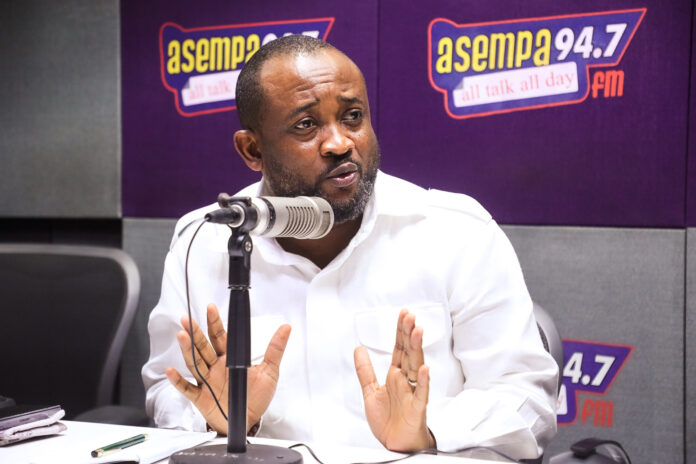
Pius Enam Hadzide, the current Chief Executive Officer of the National Youth Authority and former Deputy Sports Minister, has publicly challenged the persistent characterization of the 2018 Australia visa affair as a "scandal," asserting that no individual has ever come forward to identify him as a recipient of funds related to travel arrangements for the Commonwealth Games. Speaking on Joy News’ PM Express, the former appointee under then-President Akufo-Addo called for a comprehensive re-evaluation of the events that led to his temporary suspension. He drew a clear distinction between his past experience and the current allegations surrounding visa arrangements for the 2026 FIFA World Cup, noting that he felt he "carried the cross" without a clear basis for the initial accusations against him.
Hadzide emphasized that the passage of time has only strengthened his demand for clarity and a definitive resolution to the controversy. He articulated his belief that "vindication only lay in the womb of time," suggesting that the absence of concrete evidence against him over the years should lead to a revised public perception. His core argument rests on the fundamental question of why, after so many years, no one has presented proof of payment to him for Australian travel, urging that the incident should no longer automatically be listed among the Ghana Sports Ministry's purported scandals.
The 2018 Commonwealth Games Visa Incident
The 2018 Australia visa affair originated from reports alleging that approximately 60 Ghanaian individuals attempted to gain entry into Australia under false pretenses, coinciding with the Commonwealth Games. In response to these serious allegations, Pius Enam Hadzide, then Deputy Sports Minister, faced suspension in April of that year. However, a significant development followed when then-President Akufo-Addo publicly announced Hadzide's exoneration and subsequent reinstatement to his position.
This sequence of events underscores a critical aspect of public official accountability in Ghana: the process of investigation and the eventual determination of culpability. Despite the initial suspension, the presidential declaration of exoneration indicated a lack of substantiated evidence directly linking Hadzide to the alleged fraudulent activities. His current challenge to the "scandal" label is rooted in this official clearance, highlighting the importance of distinguishing between initial allegations and final findings.
Due Process and Evidentiary Standards
The case of Pius Hadzide serves as a pertinent example for legal professionals and compliance officers in Ghana, illustrating the due process and evidentiary requirements when allegations of misconduct are leveled against public officials. It highlights that initial suspensions, while often necessary for investigation, do not preclude later exoneration. This emphasizes the critical importance of thorough, evidence-based investigations and the potential for reputational rehabilitation, offering valuable insights for advising clients facing similar scrutiny. Hadzide himself contrasted his situation with the ongoing 2026 FIFA World Cup visa controversy, where he noted that criticisms from the opposition New Patriotic Party (NPP) are reportedly based on specific documents and accounts from individuals claiming to have made payments.
In the current World Cup visa allegations, approximately US$623,000 is alleged to have been collected from prospective travelers. This has led to the removal of National Sports Authority (NSA) Director-General Yaw Ampofo Ankrah on October 1, amidst an active police investigation, with Professor Emmanuel Osei Sarpong appointed as acting Director-General. Mr. Ankrah has denied receiving any visa-related funds, and the Sports Ministry has also refuted wrongdoing, clarifying that merely forwarding applicants' documents did not guarantee visa approval. Hadzide pointed to the existence of letters transmitted through the Sports and Foreign Affairs ministries to the embassy in the current context, and also questioned an appointment made outside the NSA’s established organizational structure. These distinctions, particularly the presence of documented claims and specific financial figures in the current case versus the absence thereof in his own, underscore the varying evidentiary landscapes in public service allegations.
Practical Implications
This case offers a practical example for lawyers and compliance officers in Ghana on the due process and evidentiary requirements when allegations of misconduct are leveled against public officials. It highlights that initial suspensions do not preclude later exoneration, emphasizing the importance of thorough investigation and the potential for reputational rehabilitation, which can inform advice to clients facing similar scrutiny.
Source
How does this affect you?
Get an AI analysis of this article grounded in your jurisdictions, practice areas, and any policy documents you've uploaded to Wansom.
Finish Reading the Full Story and the Expert Analysis.
Get the latest legal & regulatory intelligence in Ghana
Wansom is AI and can make mistakes.