
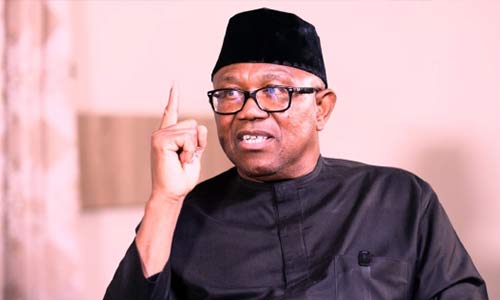
Peter Obi: Slams Tinubu US Records Sealing Over Transparency
Summary
- Peter Obi, presidential candidate for the Nigeria Democratic Congress, criticized President Bola Tinubu's past legal efforts to seal his US records, which were released in October 2023.
- Obi, a former governor of Anambra State, made his statement on Monday.
- He asserted that the controversy surrounding these documents raises serious questions about credentials.
- Obi indicated that President Tinubu's actions are detrimental to Nigeria's international standing.
Opposition to Record Sealing
The very act of a national leader attempting to keep US records sealed creates a perception that could be viewed as damaging to the nation's integrity and reputation.
Peter Obi, who stood as the presidential candidate for the Nigeria Democratic Congress, has publicly criticized President Bola Tinubu's past legal maneuvers aimed at preventing the release of his academic records from institutions in the United States. These records were released in October 2023, though disputes over their contents and new related legal challenges continue. Speaking in a statement issued on Monday, Obi, a former governor of Anambra State, conveyed his view that this development reflects poorly on Nigeria's image. He stressed that the ongoing debate surrounding these documents introduces serious questions that require definitive answers, particularly regarding the President's qualifications and educational background. This public stance from a prominent political figure underscores the heightened scrutiny on the transparency of public office holders.
Obi's remarks highlight a broader concern among political stakeholders regarding the accountability of national leaders. His direct challenge to President Tinubu's legal strategy signals a demand for greater openness, particularly when it pertains to the personal and professional history of individuals holding the highest office. The controversy, as framed by Obi, is not merely an administrative issue but one that touches upon fundamental principles of public trust and governmental integrity.
Legal Context and Transparency Demands
The core of the issue revolves around President Tinubu's legal challenge to requests for the disclosure of his US-based records. Such actions by a head of state invariably attract significant attention, especially from political opponents like Obi, who advocate for greater openness in governance. The demand for answers regarding credentials points to a broader expectation within the political landscape for elected officials to maintain complete transparency concerning their personal and professional histories. This includes educational attainments, which are often seen as foundational elements of a public servant's profile.
The legal process itself, in which a public figure seeks to seal information, becomes a focal point for discussions about accountability and the public's right to know. The dispute over the sealing of Tinubu's US records places a spotlight on the legal avenues available to public figures to control information about themselves, and the counter-arguments for public disclosure, particularly when such information pertains to qualifications for high office. This dynamic underscores the tension between individual privacy and the public's interest in transparency from its leaders.
Broader Implications for National Integrity
Obi's commentary highlights the profound impact such controversies can have on Nigeria's standing both domestically and internationally. He articulated that the very act of a national leader attempting to keep US records sealed creates a perception that could be viewed as damaging to the nation's integrity and reputation. This situation, in his assessment, extends beyond a simple administrative or personal matter, evolving into a significant concern for public trust and the perceived credibility of Nigeria's leadership.
The call for full disclosure on credentials is not merely a political tactic but reflects a fundamental principle of democratic governance, where citizens expect their representatives to be fully transparent about their qualifications. The controversy, therefore, raises serious questions about the standards of transparency expected from high-ranking public officials and the potential for such disputes to erode confidence in national institutions. It suggests that the public's right to information about its leaders' backgrounds is paramount, especially when those leaders are involved in legal efforts to restrict that information, potentially signaling a lack of openness that could undermine public confidence in the electoral process and the legitimacy of office.
Practical Implications
Lawyers should monitor the legal proceedings surrounding President Tinubu's US records for precedents on public figure transparency and the disclosure of international credentials. This could impact future due diligence requirements or electoral litigation strategies concerning candidates' qualifications.
Source
How does this affect you?
Get an AI analysis of this article grounded in your jurisdictions, practice areas, and any policy documents you've uploaded to Wansom.
Finish Reading the Full Story and the Expert Analysis.
Wansom is AI and can make mistakes.