
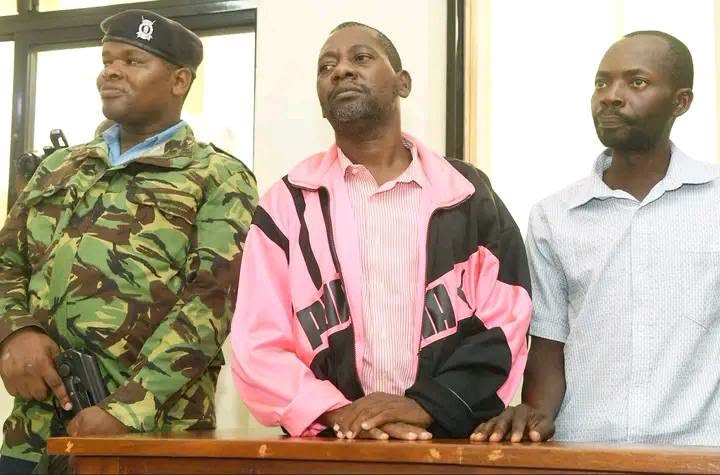
Mombasa High Court: Paul Mackenzie Shakahola Sentencing for 191 Murders
Summary
- The Mombasa High Court is set to sentence Pastor Paul Mackenzie and 28 co-accused.
- They were found guilty of 191 counts of murder related to the Shakahola killings.
- The victims include 190 children and one adult.
- The Director of Public Prosecution successfully proved the murder charges against the defendants.
- The sentencing proceedings are scheduled to take place on Friday morning.
Judicial Proceedings Conclude in Shakahola Case
The successful prosecution and impending sentencing in the Paul Mackenzie Shakahola case establish a significant precedent for how the Kenyan judiciary addresses large-scale criminal conspiracies.
The Mombasa High Court is poised to deliver its judgment regarding the sentencing of Pastor Paul Mackenzie and his 28 co-accused. This significant legal event, scheduled for Friday morning, marks a pivotal moment in a case that has drawn considerable national and international attention. The individuals involved arrived at the court to face the consequences of their actions following a successful prosecution by the Director of Public Prosecution Kenya.
This proceeding addresses the tragic deaths associated with the Shakahola incident, where a substantial number of lives were lost under deeply disturbing circumstances. The court's decision will formalize the penalties for those found culpable in this widespread criminal conspiracy, underscoring the gravity of the offenses committed. The presence of Pastor Mackenzie and his co-accused signifies the culmination of extensive legal efforts to bring justice to the victims and their families.
The Scope of the Convictions
The Director of Public Prosecution in Kenya successfully established 191 counts of murder against the defendants. These charges specifically relate to the deaths of 190 children and one adult, all of whom perished in connection with the Shakahola events. The successful prosecution underscores the meticulous work undertaken by the state to prove the culpability of each individual involved in these horrific crimes, leading to the Shakahola killings verdict.
The sheer volume of murder charges, successfully proven in court, highlights the devastating scale of the Shakahola killings. This outcome reflects a rigorous legal process that meticulously linked the accused to the deaths of a large number of victims, predominantly minors. The verdict against Pastor Paul Mackenzie and his co-accused on these 191 counts represents a definitive legal finding regarding their direct involvement and responsibility, setting the stage for their sentencing.
Precedent for Kenyan Criminal Law
The successful prosecution and impending sentencing in the Paul Mackenzie Shakahola case establish a significant precedent for how the Kenyan judiciary addresses large-scale criminal conspiracies. This is particularly relevant for those involving religious cults, where the dynamics of influence and control can complicate legal proceedings and the attribution of criminal responsibility. The Mombasa High Court's handling of this complex, high-profile case will serve as a benchmark for future similar situations within Kenya criminal law Shakahola, especially concerning mass murder charges.
Legal professionals, especially those practicing criminal law or human rights, should closely analyze the sentencing details emerging from this case. Understanding the judicial approach to such intricate circumstances, alongside the application of murder statutes in these specific contexts, is crucial for future legal practice. The Shakahola killings verdict demonstrates the state's capacity to secure convictions against multiple defendants for numerous murder charges, reinforcing the rule of law in instances of widespread harm and offering critical insights into the prosecution of complex criminal enterprises. This outcome will undoubtedly influence future legal strategies and judicial interpretations concerning mass criminal acts across the nation.
Practical Implications
The sentencing of Paul Mackenzie and his co-accused for mass murder in the Shakahola case establishes a significant precedent for how the Kenyan judiciary addresses large-scale criminal conspiracies, particularly those involving religious cults. Lawyers practicing criminal law or human rights should closely analyze the sentencing details to understand the judicial approach to such complex, high-profile cases and the application of murder statutes in these circumstances.
Source
How does this affect you?
Get an AI analysis of this article grounded in your jurisdictions, practice areas, and any policy documents you've uploaded to Wansom.
Wansom is AI and can make mistakes.