
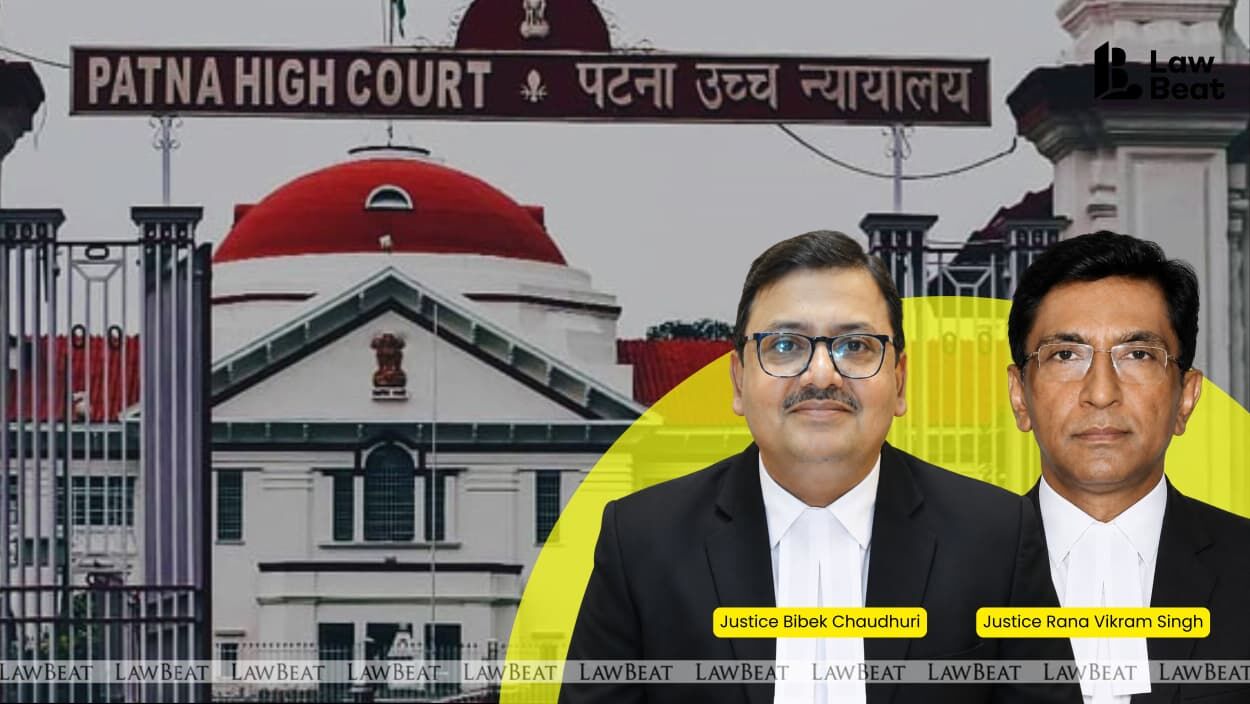
Patna HC: Muslim Husband Divorce At Will Without Specific Grounds
Summary
- The Patna High Court ruled that a Muslim husband can dissolve his marriage at will, without needing specific grounds or court intervention.
- The court clarified that this right persists despite the unconstitutionality of Triple Talaq, provided the divorce is pronounced in a legally valid form.
- The ruling cited `Mulla's Principles of Mahomedan Law`, stating no specific reason is necessary for a Muslim husband to effect a divorce.
- The husband's appeal was dismissed because his 'successive pronouncements of Talaq' were not deemed an irrevocable form like Talak ahsan or Talak hasan.
- This judgment distinguishes between the unconstitutional Triple Talaq and other valid forms of Talaq, refining the interpretation of the `Shayara Bano` judgment.
Patna High Court Clarifies Muslim Husband's Divorce Rights
The court unequivocally stated, "Therefore, in order to dissolve a marriage by Mahomedan Male, no ground of divorce is necessary."
The Patna High Court recently affirmed that a Muslim husband retains the prerogative to dissolve his marriage at will, without needing to establish specific grounds or seek judicial intervention. This significant clarification came in a ruling delivered on August 31, 2026, by a Division Bench comprising Justice Bibek Chaudhuri and Justice Rana Vikram Singh. The court's pronouncement emerged from an appeal filed by Md Sarif Anwar @ Shareef Anwar against his wife, Noorjahan Khatoon @ Noorjahan Khatun, challenging a Family Court's refusal to grant him a divorce decree.
The couple had married on April 7, 1999, according to Muslim rites. The husband asserted that his wife had treated him with cruelty and permanently departed their matrimonial home on October 14, 2008. He claimed she refused his attempts to reconcile and desired the marriage's dissolution. Subsequently, he stated he had divorced her through successive pronouncements of Talaq and initiated legal proceedings in 2021, over thirteen years after her alleged departure, seeking a formal decree of divorce. The wife did not appear in court despite receiving summons, leading the Family Court to proceed ex parte. Evidence presented also indicated that the wife had since remarried and was residing in Bangalore, while the husband had also entered into a second marriage following his pronouncements of Talaq.
Family Court's Misinterpretation and High Court's Correction
The Family Court had dismissed the husband's divorce petition, relying on the Supreme Court's landmark judgment in `Shayara Bano v. Union of India`, reported in (2017) 9 SCC 2. This precedent declared the practice of Triple Talaq, or Talaq-i-bidaat, unconstitutional. Consequently, the Family Court concluded that the husband's divorce was not effected in accordance with the law. However, the Patna High Court, in its review, found that the Family Court had misconstrued the scope of the `Shayara Bano` ruling.
In its examination, the High Court delved into the principles articulated in `Mulla's Principles of Mahomedan Law` (24th Edition, 2025). The court highlighted that, under Muslim law, a marriage can be dissolved by the husband at his will, without requiring court intervention, or through mutual consent, or by a judicial decree. Crucially, the Bench underscored that no specific reason for divorce is necessary for a Muslim husband to dissolve his marriage, a dissolution that can be achieved through either an oral pronouncement of Talaq or a written Talaknama. The court unequivocally stated, "Therefore, in order to dissolve a marriage by Mahomedan Male, no ground of divorce is necessary."
Distinguishing Valid Talaq Forms from Unconstitutional Practice
While affirming the right of a Muslim husband to divorce at will, the Patna High Court meticulously differentiated between various forms of Talaq. The court acknowledged Talak ahsan and Talak hasan as legally recognized forms, contrasting them with Talak-ul-bidaat, also known as Talaq-i-badai, which involves three successive pronouncements of Talaq and was declared unconstitutional by the Supreme Court in `Shayara Bano`. The husband in the present case had not claimed that his divorce was executed through either Talak ahsan or Talak hasan; instead, his plea was based on "successive pronouncements of Talaq."
This distinction proved pivotal, as the court concluded that a "declaration of divorce by successive pronouncement of Talak cannot be held to be irrevocable." The Bench further clarified that Talak ahsan becomes irrevocable and complete only upon the expiry of the Iddat period, while Talak hasan achieves irrevocability and completion upon its third pronouncement, irrespective of Iddat. The High Court also rejected the husband's alternative arguments for a divorce decree based on cruelty and desertion. Ultimately, the court dismissed the husband's appeal, upholding the Family Court's refusal to grant a divorce decree, but on the refined legal basis that his specific method of divorce pronouncement was not an irrevocable form.
Why This Ruling Matters for Muslim Marriage Dissolution
This judgment from the Patna High Court provides crucial clarity regarding the dissolution of Muslim marriages in India, particularly in the aftermath of the `Shayara Bano` ruling. It firmly establishes that while the practice of instant Triple Talaq (Talaq-i-bidaat) is unconstitutional, a Muslim husband's fundamental right to dissolve his marriage at will, without needing to provide a specific reason for divorce, remains intact. The ruling emphasizes that this right can be exercised without court intervention, provided the divorce is pronounced in a legally valid and recognized form, such as Talak ahsan or Talak hasan.
The decision serves as an important interpretation of the `Shayara Bano` judgment, clarifying that its scope was limited to the unconstitutionality of a specific, instantaneous form of Talaq, and did not abolish the broader principle of a Muslim husband's right to divorce. It highlights the necessity for legal practitioners and individuals alike to understand the precise forms of Talaq to ensure the validity and irrevocability of a divorce, thereby navigating the complexities of Muslim personal law in India with greater precision.
Practical Implications
This ruling clarifies for lawyers that while Triple Talaq is unconstitutional, a Muslim husband in India can still dissolve a marriage at will without specific grounds or court intervention, provided the divorce is pronounced in a legally valid form (e.g., Talaq ahsan or hasan). Legal practitioners must advise clients on the precise forms of Talaq to ensure validity and navigate Family Court proceedings that may misinterpret the scope of the Shayara Bano judgment.
Source
How does this affect you?
Get an AI analysis of this article grounded in your jurisdictions, practice areas, and any policy documents you've uploaded to Wansom.
Finish Reading the Full Story and the Expert Analysis.
Wansom is AI and can make mistakes.