
Patagonia Reopens Utah Monuments Lawsuit: Challenges Trump's Reduction
Summary
- A coalition led by Patagonia and Indigenous tribes has reopened a federal lawsuit challenging the Trump administration's 2017 reduction of Bears Ears and Grand Staircase-Escalante national monuments.
- The lawsuit argues that the Antiquities Act of 1906 grants presidents power to designate monuments, not to abolish or significantly reduce them.
- Former President Trump approved a 91% reduction across over 3 million acres, aiming to open the lands to corporate developers and the oil and gas industry.
- Despite President Biden restoring the monument protections in 2021, the coalition contends this action came too late to prevent new mining claims and destructive ground-disturbing activities.
- The case could clarify the limits of presidential authority under the Antiquities Act, impacting future federal land protections and executive power.
What Happened
The outcome could establish critical precedents regarding whether a president possesses the power to unilaterally reduce or abolish national monuments, a question central to the ongoing debate over executive power and land conservation.
A coalition comprising Patagonia, several Indigenous tribes, and conservation organizations has recently reactivated a federal lawsuit against the Trump administration. This legal action challenges the significant reduction of the Bears Ears and Grand Staircase-Escalante national monuments in Utah, a decision originally made by then-President Donald Trump in 2017. The initial lawsuit, first filed in 2017, was administratively stayed in 2021 after President Joe Biden reversed Trump's actions, restoring the monuments to their original protected status.
The current reopening of the case in the U.S. District Court for the District of Columbia seeks a judicial determination on the legality of presidential authority to diminish national monuments. The coalition, which includes the Hopi Tribe, the Navajo Nation, the Ute Indian Tribe, the Zuni Tribe, and groups led by the Natural Resources Defense Council, contends that Trump's 2017 directive, which approved a 91% reduction across more than 3 million acres of the two sites, exceeded the powers granted to the executive branch under the Antiquities Act of 1906. This move, according to the plaintiffs, was intended to facilitate access for corporate developers and the oil and gas industry.
Legal Challenge and Context
The core of the coalition's argument, detailed in a 50-page second amended complaint, asserts that the Antiquities Act of 1906 empowers presidents solely to designate and safeguard national monuments, not to abolish or substantially reduce them. They warn that without judicial intervention, the "rich history and scientific wonders" within these protected areas face irreversible harm. The lawsuit highlights that the 2017 reduction opened these lands to activities such as hard rock mining, oil and gas leasing, and other destructive uses typically permitted under federal land laws. Indeed, mining companies established claims on the excised lands following the 2017 "Dismantling Proclamation" and have reportedly done so again after the 2026 "Dismantling Proclamation."
U.S. District Judge Tanya Chutkan, an Obama appointee, had previously stayed the case on September 30, 2021, after President Biden's restoration of the monument protections on January 20, 2021, rendered the coalition's immediate claims moot. Despite the litigation being closed, joint status reports continued to be filed by the government and the coalition throughout 2022 and 2023. The plaintiffs emphasize that Biden's restoration, while welcome, occurred too late to prevent new hard rock mining claims and other ground-disturbing activities that had already commenced. They argue that presidential revocations lead to an "erratic ping-ponging" of monument designations, resulting in the "irreplaceable loss" of scientific and historic objects the Act aims to protect, asserting that Congress intended monuments to be durable unless Congress itself acts.
Significance of the Monuments
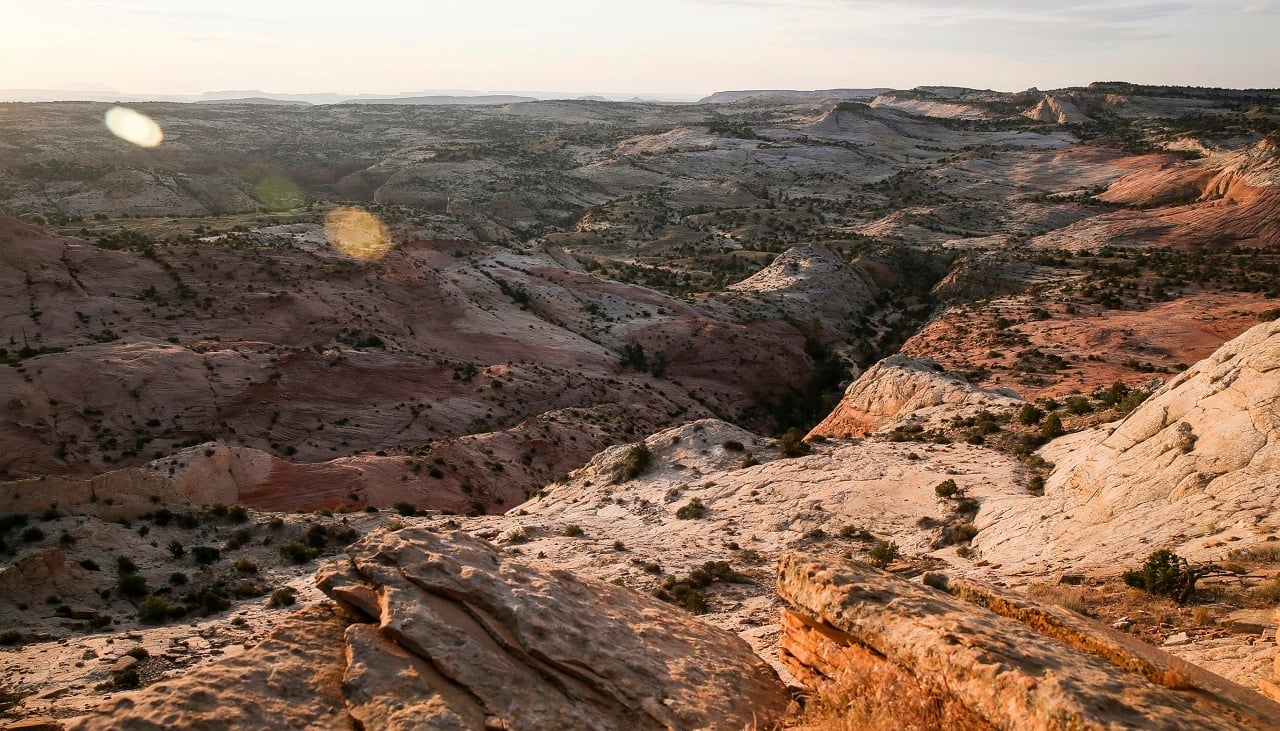
The national monuments at the heart of this legal dispute, Bears Ears and Grand Staircase-Escalante, hold immense ecological, scientific, and cultural value. Bears Ears, in particular, is recognized as one of the most ecologically intact and least-roaded regions within the contiguous United States. Its geological history is remarkably preserved, offering paleontologists a trove of fossils, from ancient freshwater sharks and massive amphibians to ferns the size of trees, illustrating the region's transformation from a tropical sea to a desert landscape over millennia.
Beyond their natural wonders, these lands are profoundly significant to Indigenous communities. The areas contain numerous cliff dwellings, ancient granaries, intricate rock paintings, and remnants of villages, all of which are deeply intertwined with the spiritual, historical, and cultural heritage of the Indigenous tribes. Former President Barack Obama originally designated these monuments in 2016 using the Antiquities Act, notably incorporating a co-stewardship model for Indigenous tribes, a practice that subsequently became common in later monument declarations.
Why It Matters
This renewed legal challenge, spearheaded by the Patagonia reopens Utah monuments lawsuit, carries substantial implications for the scope of presidential authority under the Antiquities Act and the long-term protection of federal lands. The outcome could establish critical precedents regarding whether a president possesses the power to unilaterally reduce or abolish national monuments, a question central to the ongoing debate over executive power and land conservation. The coalition explicitly asks the court to enforce the limits of Congress's narrow delegation of power to the president, underscoring the potential for this case to clarify a fundamental aspect of federal environmental and land-use policy.
Lawyers advising clients involved in land use, environmental policy, or Indigenous rights should closely monitor the proceedings. A ruling in favor of the coalition would reinforce the durability of monument designations and potentially constrain future presidential actions, thereby strengthening federal land protections. Conversely, a decision upholding the president's power to reduce monuments could set a precedent for more frequent and potentially politically motivated alterations to protected areas, impacting vast tracts of land and the communities, both human and ecological, that rely on them. Patagonia Chief Executive Ryan Gellert has publicly criticized former President Trump's comments surrounding his July 13 decision, highlighting the broader public and corporate interest in the stewardship of these invaluable natural and cultural sites.
Practical Implications
This case could clarify the limits of presidential authority under the Antiquities Act, particularly regarding the ability to reduce or abolish national monuments. Lawyers advising clients on land use, environmental policy, or indigenous rights should monitor the outcome for potential precedents on federal land protections and executive power.
Source
How does this affect you?
Get an AI analysis of this article grounded in your jurisdictions, practice areas, and any policy documents you've uploaded to Wansom.
Finish Reading the Full Story and the Expert Analysis.
Wansom is AI and can make mistakes.