
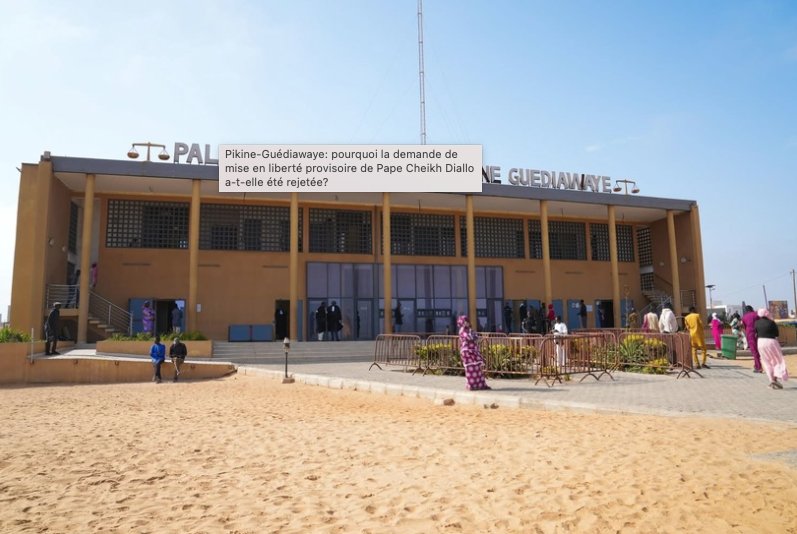
Chambre d’accusation: Rejet de la Liberté Provisoire de Pape Cheikh Diallo
Summary
- The Chambre d’accusation rejected Pape Cheikh Diallo's request for provisional release, citing potential disturbance to public order.
- This decision followed the Chambre d’accusation overturning a lower court's ruling that had deemed the request inadmissible due to filing deadlines.
- Diallo is among 14 individuals referred to the Chambre criminelle, while 19 others face a correctional judge in a broader case.
- Charges in the case include voluntary transmission of HIV/AIDS, criminal association, and endangering the lives of others.
- Initially, 51 people were implicated in the affair, with many held in provisional detention.
Chambre d’accusation Rejects Provisional Release
The Chambre d’accusation's decision to reject the demande liberté provisoire for Pape Cheikh Diallo, despite overturning the lower court's procedural objection, emphasizes the critical role of public order considerations in Senegalese jurisprudence concerning provisional release.
The Chambre d’accusation has denied the request for provisional release filed by prominent media personality Pape Cheikh Diallo. This significant decision was primarily based on the court's assessment that his release could potentially disrupt public order, a key consideration in such judicial matters.
This rejection by the Chambre d’accusation Pikine-Guédiawaye maintains Diallo's detention as legal proceedings continue. The ruling, which was reported to have occurred just days prior, underscores the judiciary's authority to prioritize societal stability when evaluating applications for provisional liberty.
Procedural Overturn on Admissibility
The path to this final decision involved a notable procedural dispute concerning the recevabilité recours liberté provisoire. Initially, the investigating judge in Pikine-Guédiawaye had declared Pape Cheikh Diallo's demande liberté provisoire Sénégal inadmissible, asserting that it had been submitted after the investigative phase of the case had concluded.
However, counsel for Diallo challenged this initial finding, appealing the decision to the Chambre d’accusation. Acting as a second-degree investigative jurisdiction, the Chambre d’accusation subsequently reversed the lower court's procedural ruling. It determined that the appeal was indeed admissible within the stipulated deadlines, thereby allowing for a substantive review of the provisional release request, even though the ultimate outcome was a rejection.
Broader Case Context and Charges
The case involving Pape Cheikh Diallo is part of a larger, complex legal action that initially implicated a substantial number of individuals. At the outset of the affair, 51 people were identified, with 49 of them placed in provisional detention and two others under judicial supervision.
A significant development in the broader affaire Pape Cheikh Diallo charges occurred with the publication of an order of referral on September 17. This order directed 14 individuals to the Chambre criminelle for trial, while 19 others were sent before a correctional judge. Additionally, some individuals initially implicated benefited from a total dismissal of charges.
The charges levied in this extensive case include serious allegations such as the voluntary transmission of HIV/AIDS, participation in a criminal association (association de malfaiteurs), and endangering the lives of others (mise en danger de la vie d’autrui). Both Pape Cheikh Diallo and Djiby Dramé are among those who have been referred to the trial courts to face these accusations.
Legal Implications of the Ruling
The Chambre d’accusation's decision to reject the demande liberté provisoire for Pape Cheikh Diallo, despite overturning the lower court's procedural objection, emphasizes the critical role of public order considerations in Senegalese jurisprudence concerning provisional release. This ruling demonstrates that even when a request for provisional release is found procedurally sound, the court retains the authority to deny it based on substantive concerns, particularly the potential for trouble ordre public détention provisoire.
This case serves as a notable example of how higher judicial bodies, like the Chambre d’accusation, exercise their oversight function, not only on procedural technicalities but also on the broader societal impact of judicial decisions. For legal practitioners, this highlights the importance of preparing for appellate review of provisional release applications and understanding the significant weight given to public order arguments in such proceedings.
Practical Implications
Lawyers handling criminal defense in Senegal should note the Chambre d’accusation's role in overturning lower court procedural rulings on provisional release applications and its emphasis on public order as a ground for rejection. This case highlights the importance of understanding the appellate review process for provisional release and the factors considered by higher courts, even when initial procedural objections are overcome.
Source
How does this affect you?
Get an AI analysis of this article grounded in your jurisdictions, practice areas, and any policy documents you've uploaded to Wansom.
Finish Reading the Full Story and the Expert Analysis.
Get the latest legal & regulatory intelligence in Senegal
Wansom is AI and can make mistakes.