
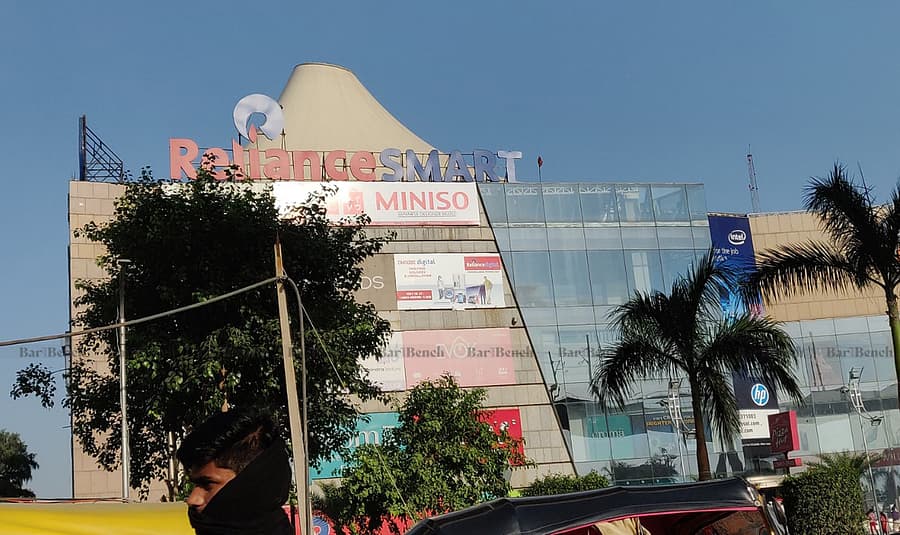
Panchkula Commission: Reliance Retail Dark Pattern Refund Unlawful
Summary
- The Panchkula District Consumer Commission penalized Reliance Retail for diverting ₹1 from two separate ₹19 refunds into a customer's reward wallet without consent.
- The customer, Nishtha Raghav, had ordered items on JioMart that were unavailable, leading to the partial refund discrepancy.
- The Commission ruled that this unilateral wallet adjustment constituted a deceptive 'dark pattern' and a 'deficiency in service' under the Consumer Protection Act, 2019.
- Reliance Retail was ordered to pay ₹2,500 in compensation to the complainant and ₹5,000 in punitive damages to the Free Legal Aid State Commission at Haryana.
- The ruling emphasizes the need for e-commerce platforms to obtain explicit consent for all refund processes and avoid unauthorized fund diversions.
The Core Issue
The ruling establishes that such a unilateral wallet adjustment penalty, even for a seemingly minor amount, is a violation of consumer rights.
A recent ruling by the Panchkula District Consumer Commission has brought to light a contentious practice by Reliance Retail Limited and its Reliance Smart Superstore, involving the partial diversion of customer refunds into a reward wallet without explicit consent. The case, initiated by Panchkula resident Nishtha Raghav against Reliance Smart Superstore & Reliance Retail Limited, centered on two separate grocery orders placed via the JioMart application on January 23 and January 25, 2026.
In both instances, a Munch Max chocolate bar, priced at ₹19, was unavailable. While JioMart informed Ms. Raghav that a full ₹19 refund for each item had been processed to her original payment method, she discovered a discrepancy. Only ₹18 from each transaction was credited back to her bank account, with the remaining ₹1 from each order unilaterally transferred to her Twid (Pay with Rewards) wallet. This transfer occurred without any prior disclosure or authorization from the customer.
Ms. Raghav initially attempted to resolve the matter through JioMart's internal grievance mechanism, but her in-app complaint was closed without any resolution. Following this, a legal notice was dispatched on February 14, which also failed to elicit a response. Consequently, Ms. Raghav escalated the issue by filing a complaint with the District Consumer Disputes Redressal Commission under Section 35 of the Consumer Protection Act, 2019, seeking redress for the unauthorized wallet adjustment.
Regulatory Scrutiny and Legal Classification
The Panchkula District Consumer Commission, comprising President Satpal and Members Dr. Sushma Garg and Dr. Suman Singh, meticulously reviewed the details of the complaint. Their findings were unequivocal: the unilateral diversion of a portion of the refund into a reward wallet, specifically the JioMart reward wallet refund, constituted a deceptive 'dark pattern.' This practice was also deemed a clear 'deficiency in service' under the provisions of the Consumer Protection Act, 2019.
The Commission's determination highlights a critical aspect of consumer protection in the digital age, where subtle mechanisms can be employed to influence consumer behavior or manage funds without explicit consent. The ruling establishes that such a unilateral wallet adjustment penalty, even for a seemingly minor amount, is a violation of consumer rights. The judgment in Nishtha Raghav vs Reliance Retail underscores the legal obligation of e-commerce platforms to ensure transparency and obtain explicit consent for any deviation from standard refund procedures.
Precedent and Penalties
As a result of their findings, the Commission held both Reliance Retail Limited and Reliance Smart Superstore jointly and severally liable for the breach. The judgment mandated a two-fold penalty. Firstly, the companies were directed to pay a lump-sum compensation of ₹2,500 to the complainant, Nishtha Raghav, acknowledging the inconvenience and unauthorized diversion of her funds. Secondly, a significant punitive damages amount of ₹5,000 was ordered to be paid to the Free Legal Aid State Commission at Haryana, emphasizing the broader public interest in deterring such practices.
This ruling, particularly concerning the Reliance Retail dark pattern refund, sets an important precedent for e-commerce and retail businesses operating in India. It clarifies that even small, unauthorized diversions of funds can lead to substantial penalties and legal liabilities. Companies are now on notice to rigorously review their refund and wallet credit policies to ensure full compliance with the Consumer Protection Act, 2019, and to avoid similar findings of 'dark patterns' and deficiencies in service. The directive for payment within 45 days further underscores the urgency and seriousness with which consumer commissions are treating such violations.
Practical Implications
Lawyers advising e-commerce or retail clients should note this ruling as it clarifies that unilateral diversion of refunds to reward wallets without explicit consent constitutes a 'dark pattern' and deficiency in service under the Consumer Protection Act, 2019. This sets a precedent for potential liability even for small amounts, requiring a review of refund and wallet credit policies to ensure compliance and avoid similar penalties.
Source
How does this affect you?
Get an AI analysis of this article grounded in your jurisdictions, practice areas, and any policy documents you've uploaded to Wansom.
Finish Reading the Full Story and the Expert Analysis.
Get the latest legal & regulatory intelligence in India
Wansom is AI and can make mistakes.