
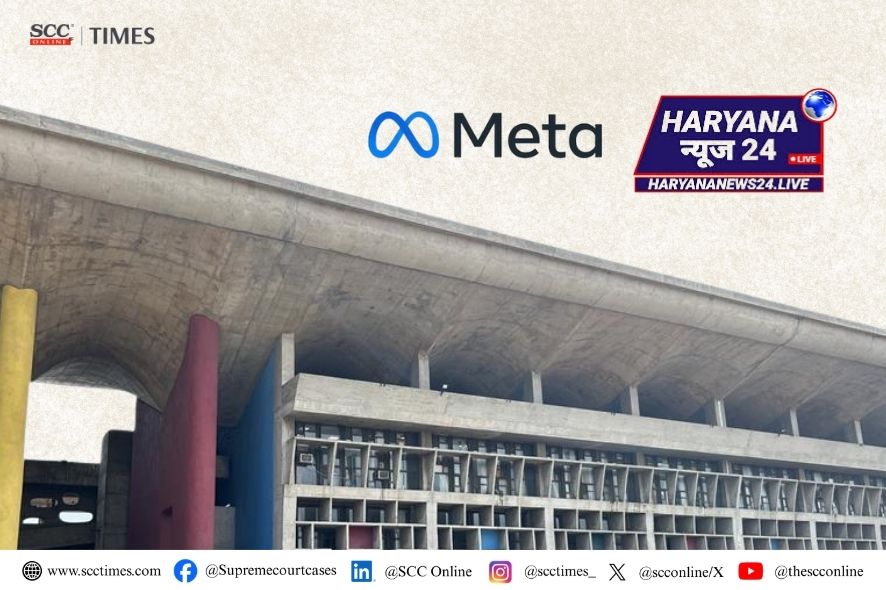
P&H HC: Police Facebook Blocking under IT Rules Invalidated
Summary
- The Punjab and Haryana High Court set aside an intimation from a Superintendent of Police to Meta Platforms Inc.
- The intimation sought to block a news channel’s Facebook page.
- The court ruled the SP acted without jurisdiction and violated Rule 3(1)(d) of the IT Rules, 2021.
- It was also held that a copy of any such blocking intimation must be provided to the affected user.
What Happened
The ruling clarifies that the power to issue such blocking orders is vested in designated authorities, not in individual police officers like an SP.
The Punjab and Haryana High Court recently intervened in a case concerning the blocking of a news channel's Facebook page, issuing a significant ruling that clarifies the procedural requirements for such actions. The court specifically invalidated an intimation that had been sent by a Superintendent of Police (SP) to Meta Platforms Inc., the parent company of Facebook. This intimation had directed Meta to block the content of a news channel's page on its social media platform.
The High Court's decision to set aside this intimation was based on a finding that the Superintendent of Police had acted beyond their legal authority. The court determined that the SP lacked the necessary jurisdiction to issue such a directive for content blocking. Furthermore, the ruling underscored a critical procedural flaw: the affected user, in this case, the news channel, was not provided with a copy of the blocking intimation. This omission was deemed a violation of established legal principles governing content moderation.
Legal Framework and Due Process
Central to the Punjab and Haryana High Court's judgment was the interpretation and application of the Information Technology (Intermediary Guidelines and Digital Media Ethics Code) Rules, 2021, specifically Rule 3(1)(d). The court explicitly stated that the intimation issued by the Superintendent of Police contravened this particular rule, which outlines the proper channels and authorities for requesting the blocking of online content. The ruling clarifies that the power to issue such blocking orders is vested in designated authorities, not in individual police officers like an SP. Under the Information Technology (Intermediary Guidelines and Digital Media Ethics Code) Amendment Rules, 2025, which came into effect on November 15, 2025, the authority for police to issue such directions is restricted to officers of the rank of Deputy Inspector General (DIG) or above.
The High Court's pronouncement reinforces the principle of due process in the context of social media blocking in India. By mandating that a copy of any blocking intimation must be furnished to the affected user, the court ensures transparency and allows the content creator or platform user to understand the basis for the action taken against their content. This requirement is crucial for upholding fundamental rights and providing an opportunity for redress, preventing arbitrary actions by authorities.
Implications for Content Moderation
This ruling from the Punjab and Haryana High Court carries substantial implications for the landscape of social media blocking in India, particularly for platforms like Meta and content creators. It firmly establishes that requests for content blocking must originate from the legally prescribed authorities and adhere strictly to the procedures outlined in the IT Rules, 2021. The judgment serves as a clear directive that a Superintendent of Police does not possess the inherent authority to unilaterally order the blocking of a Facebook page through direct intimation to Meta.
The decision highlights the importance of understanding the specific "Facebook page blocking India authority" and the "due process social media blocking India" requires. It provides a crucial precedent for challenging blocking orders that do not comply with the established legal framework, offering a safeguard against overreach by non-designated officials. For social media platforms, it clarifies that they are not obligated to comply with blocking requests that do not emanate from the correct jurisdictional authority, thereby strengthening their position in upholding user rights against improper governmental demands.
Practical Implications
Lawyers advising social media platforms or content creators in India should note that only designated authorities, not a Superintendent of Police, can issue blocking orders under IT Rules, 2021, and affected users must be provided a copy of such intimation. This provides grounds to challenge improperly issued blocking orders and ensures procedural compliance.
Source
Source: Original reporting via SCC Times
How does this affect you?
Get an AI analysis of this article grounded in your jurisdictions, practice areas, and any policy documents you've uploaded to Wansom.
Finish Reading the Full Story and the Expert Analysis.
Get the latest legal & regulatory intelligence in India
Wansom is AI and can make mistakes.