
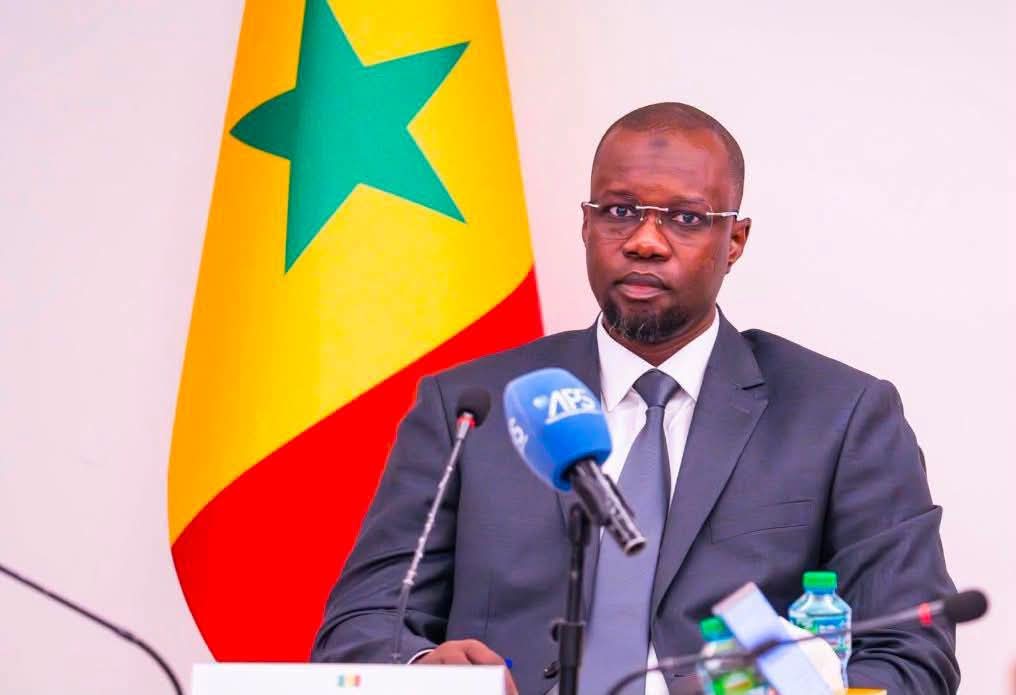
Ousmane Sonko: Demands Full Transparency for FMI Accord Sénégal
Summary
- Ousmane Sonko, now President of Senegal's National Assembly, has demanded full transparency regarding a technical agreement between Senegal and the International Monetary Fund (FMI).
- Sonko seeks detailed explanations on critical issues including debt treatment, public finance viability, social protection, resource mobilization, and public spending control.
- He specifically requested the public release of the `mémorandum de politiques économiques et financières` or its submission to parliament for debate.
- Sonko believes these commitments, made on behalf of all Senegalese, could burden public finances and future generations, warning against repeating "past errors."
- He proposes integrating the agreement's key points into future finance laws, including the 2027 budget bill due in October 2026.
What Happened
His public stance, articulated via social media, underscores the conviction that these commitments are made on behalf of all Senegalese citizens and could significantly burden both current public finances and future generations.
Former Senegalese Prime Minister Ousmane Sonko, now serving as President of the National Assembly, has publicly called for full transparency regarding a technical agreement recently announced between Senegal and the International Monetary Fund (FMI). While the two parties have concluded this technical arrangement, its definitive validation remains contingent upon the approval of the FMI's Board of Directors. Sonko's demand for greater clarity stems from his belief that the official pronouncements made thus far do not adequately detail the precise commitments undertaken by Senegal.
Before his replacement as Prime Minister on May 25, 2026, Ousmane Sonko had been actively involved in several months of discussions pertaining to this very agreement. His current position as head of the legislative body now empowers him to advocate for a more comprehensive public understanding of the terms. The core of his appeal centers on ensuring that the details of the `accord FMI Sénégal` are made accessible to all citizens, emphasizing that any commitments made will ultimately impact the nation's financial future.
Key Areas of Concern
Sonko's demand for transparency extends to several critical aspects of Senegal's economic governance and its relationship with the FMI. He has specifically sought detailed explanations concerning the treatment of the nation's debt, the long-term viability of public finances, and the mechanisms in place for the protection of vulnerable households. Furthermore, he has requested clarification on strategies for mobilizing domestic resources and ensuring the effective control of public spending.
Beyond these broad financial concerns, Sonko has also highlighted the importance of social safety nets, the oversight of public enterprises, and the implementation of reforms designed to enhance the overall business environment in Senegal. A particular point of interest for him is the fate of international audits of the national debt, which were previously presented as a crucial requirement. His public stance, articulated via social media, underscores the conviction that these commitments are made on behalf of all Senegalese citizens and could significantly burden both current public finances and future generations. He cautioned that certain policy directions under consideration risk repeating "past errors," reinforcing his call for comprehensive public scrutiny.
Call for Public Disclosure
To address these concerns and ensure the requested `transparence finances publiques Sénégal`, Ousmane Sonko has urged the government to make public the `mémorandum de politiques économiques et financières` associated with the FMI agreement. This document, he argues, contains the crucial details necessary for an informed public debate. Should the government decline to release the memorandum publicly, Sonko has proposed an alternative: its transmission directly to the deputies of the National Assembly, thereby facilitating a parliamentary discussion.
Sonko further suggested that the principal elements of these commitments should be formally incorporated into an eventual rectifying finance law or, at the very least, be included within the draft finance bill for 2027. This latter bill is scheduled for submission to the National Assembly in October 2026. This approach would ensure that the `Sénégal FMI mémorandum politiques économiques` undergoes legislative scrutiny and public debate, aligning with his broader objective of ensuring accountability for `Ousmane Sonko dette publique Sénégal` and other economic policies. EMedia notably reported his direct request for the government to publish this pivotal memorandum.
Practical Implications
Lawyers should monitor the public disclosure of the Senegal-IMF agreement's terms, particularly the 'mémorandum de politiques économiques et financières,' as its details could impact public finance, debt management, and business environment reforms, potentially affecting clients involved in public contracts or financial operations in Senegal. This political pressure for transparency may lead to legislative scrutiny and public debate that could influence future economic policies.
Source
Source: Original reporting via EMedia.
How does this affect you?
Get an AI analysis of this article grounded in your jurisdictions, practice areas, and any policy documents you've uploaded to Wansom.
Finish Reading the Full Story and the Expert Analysis.
Wansom is AI and can make mistakes.