
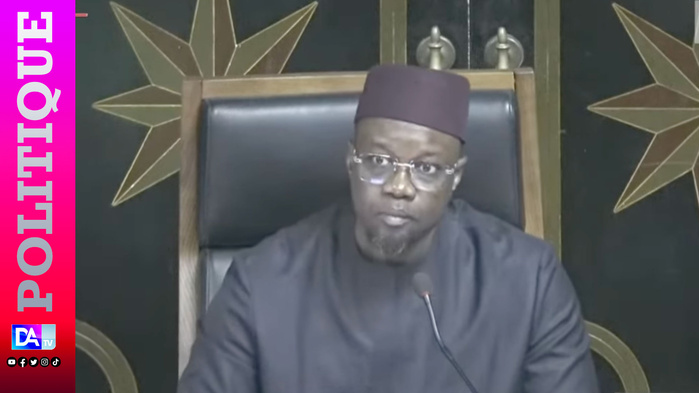
Ousmane Sonko: FMI Ingérence in Sénégal Parliament Criticized
Summary
- Ousmane Sonko, President of Senegal's National Assembly, criticized the International Monetary Fund (FMI) for excluding parliamentarians from discussions.
- His remarks followed the rejection of the 2027 budget by deputies on November 18.
- Sonko denounced the FMI's approach as interference and inconsistent with democratic functioning, demanding respect for parliamentary prerogatives.
- Minister of Economy, Finance and Budget, Cheikh Diba, warned that prolonged budget uncertainty could complicate the mobilization of a $2.2 billion FMI program.
- Sonko clarified he does not reject an FMI agreement but insists it must be based on clear principles and sincerity, affirming the Assembly's readiness for dialogue.
Legislative Scrutiny Over International Finance
The President of the National Assembly, Ousmane Sonko, has vocally criticized the International Monetary Fund's engagement process in Senegal, particularly its perceived disregard for the legislative body's role.
Following the National Assembly's rejection of the 2027 budget on November 18, Ousmane Sonko, the President of the legislative body, voiced strong criticism regarding the International Monetary Fund's (FMI) engagement process in Senegal. Sonko specifically highlighted what he perceived as a significant oversight: the FMI had conducted discussions with various stakeholders across the nation but conspicuously excluded members of parliament. This exclusion, according to Sonko, represents a departure from the operational norms expected within a democratic framework.
The President of the National Assembly further condemned this approach as an act of interference by the FMI in Senegal's internal affairs. This stance underscores a growing concern within the Senegalese parliament regarding its role in critical national financial decisions. The rejection of the budget and Sonko's subsequent remarks bring to the forefront the delicate balance between international financial partnerships and domestic legislative authority.
Amidst these developments, Cheikh Diba, the Minister of Economy, Finance and Budget, issued a cautionary statement during the plenary session. He warned that an extended period of uncertainty surrounding the budget could significantly impede the mobilization of a crucial program envisioned with the FMI, which is valued at 2.2 billion dollars. Sonko also referenced comments made by the delegated minister concerning the possibility of renewing certain options, indicating ongoing discussions and potential alternatives.
Demanding Respect for Parliamentary Prerogatives
The core of Ousmane Sonko's argument centers on the imperative to respect the prérogatives parlementaires Sénégal, emphasizing that the National Assembly's role is fundamental to the nation's governance. He clarified, as reported by dakaractu, that his critique was not an outright rejection of an agreement with the FMI. Instead, Sonko articulated a desire for any such accord to be established "on clear bases and a sincerity," signaling a demand for greater transparency and equitable terms in international financial dealings.
Sonko's position underscores the principle that while international partnerships are vital, they must not bypass or diminish the authority of elected representatives. He affirmed the National Assembly's continued readiness to engage in dialogue, provided that viable solutions could still be explored. This willingness to negotiate, coupled with a firm stance on parliamentary rights, highlights the institution's commitment to its constitutional duties.
In a powerful statement reflecting his dedication to national interests, Sonko declared, "No one can love the country more than anyone else." This assertion encapsulates the sentiment that the parliamentarians, in their scrutiny of the FMI's involvement and the budget, are acting in the best interests of the Senegalese populace, ensuring that external influences align with national sovereignty and democratic principles.
Implications for Future Financial Engagements
The current dispute, marked by Sonko critique FMI budget 2027, carries significant implications for how Senegal will navigate future financial agreements with international bodies like the Fonds monétaire international Sénégal. The Minister of Economy, Finance and Budget's warning about the potential complications for the $2.2 billion program underscores the immediate financial stakes involved. A prolonged impasse could jeopardize access to vital funds intended to support the nation's economic stability and development initiatives.
Beyond the immediate financial concerns, this episode sets a precedent for the engagement between Senegal's legislative branch and international financial institutions. The demand for greater parliamentary involvement and respect for its prerogatives suggests that future negotiations will likely face increased scrutiny from the National Assembly. This could lead to more robust national debate and potentially more stringent conditions for the ratification of international financial agreements, ensuring that such deals are perceived as genuinely serving national interests.
The rejection of the budget 2027 Assemblée nationale and the subsequent call for respecting parliamentary authority signal a maturing democratic process in Senegal, where legislative oversight is increasingly asserted over executive decisions, particularly those with significant economic ramifications. This development highlights the ongoing evolution of governance in Senegal and its commitment to ensuring that all agreements, especially those with international partners, are subject to thorough democratic review.
Practical Implications
This development highlights potential constitutional and procedural challenges regarding the approval and implementation of international financial agreements in Senegal. Lawyers advising on public finance, legislative affairs, or international law should monitor how the government addresses parliamentary prerogatives in future negotiations with institutions like the IMF, as a lack of proper parliamentary engagement could lead to legal disputes or delays in the ratification and execution of such agreements.
Source
Source: Original reporting via dakaractu
How does this affect you?
Get an AI analysis of this article grounded in your jurisdictions, practice areas, and any policy documents you've uploaded to Wansom.
Finish Reading the Full Story and the Expert Analysis.
Get the latest legal & regulatory intelligence in Senegal
Wansom is AI and can make mistakes.