
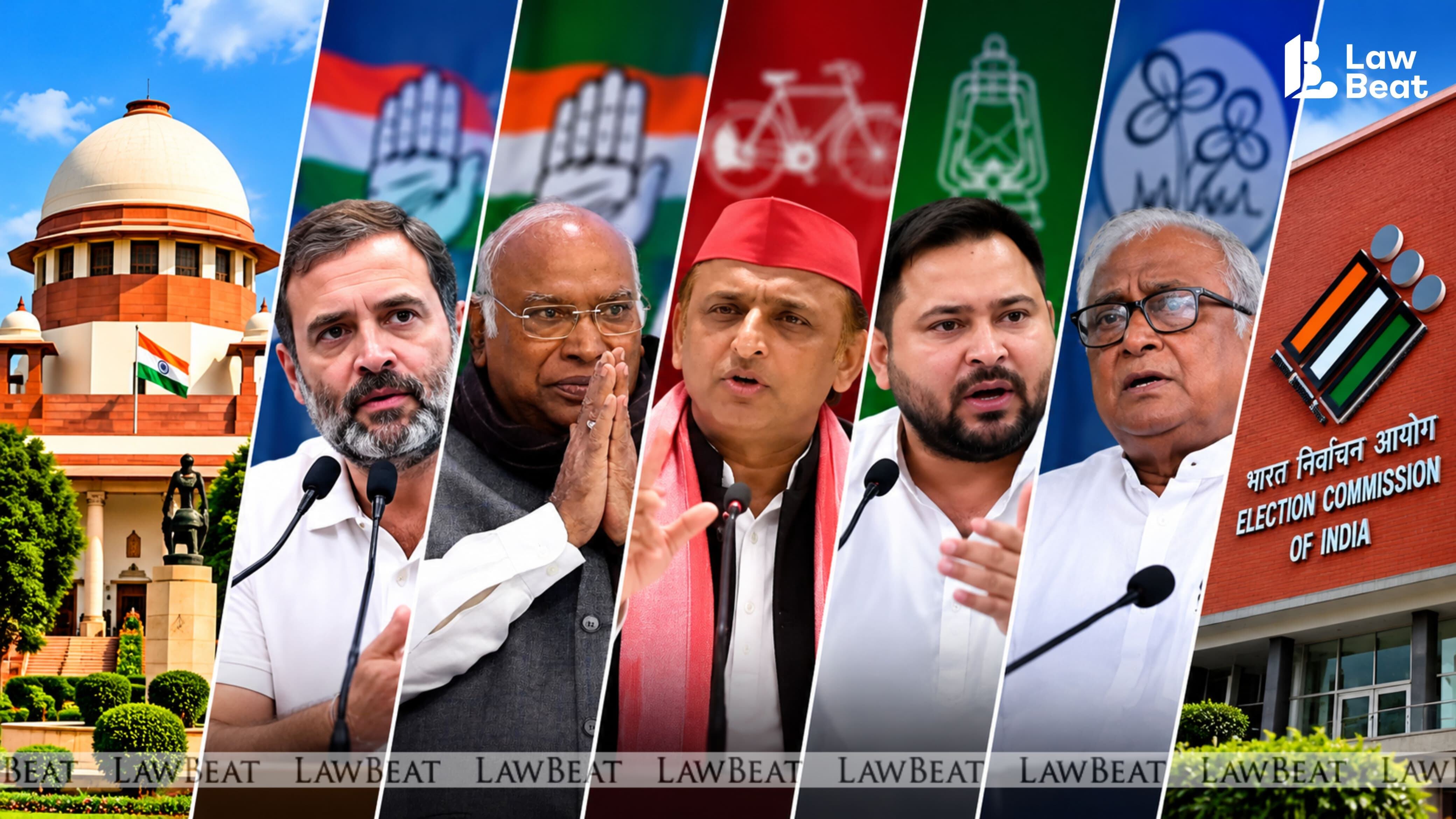
Opposition Leaders: Move Supreme Court Against Election Commission Over SIR Irregularities
On October 12, 2026, Leader of Opposition in the Lok Sabha Rahul Gandhi, along with other prominent opposition leaders including Mallikarjun Kharge and Akhilesh Yadav, filed a writ petition in the Supreme Court of India against the Election Commission of India, alleging irregularities in the Special Intensive Revision (SIR) process.
This action by major opposition figures against the Election Commission of India (ECI) highlights significant concerns regarding the integrity of the electoral roll revision process, which is fundamental to democratic elections. For legal practitioners, it underscores the potential for high-stakes litigation challenging the ECI's functions and the importance of electoral transparency. The involvement of multiple political parties suggests a broad-based challenge to the ECI's conduct, potentially leading to significant judicial pronouncements on electoral law and administration, and could influence public perception of electoral fairness.
The petition invokes the writ jurisdiction of the Supreme Court of India, likely under Article 32 of the Constitution, which allows individuals to move the Supreme Court for the enforcement of fundamental rights. The Election Commission of India is a constitutional body established under Article 324 of the Constitution, tasked with the superintendence, direction, and control of elections. The SIR process refers to the Special Intensive Revision of electoral rolls, a critical exercise to update voter lists. The Supreme Court, as the apex judicial body, has the power to review the actions of constitutional bodies like the ECI, especially when fundamental rights, such as the right to vote, are implicated. The contents of the petition, including specific grounds and prayers, have not yet been made public, and the outcome of this matter is not yet reported.
The key parties involved are the petitioners: Rahul Gandhi (Leader of Opposition, Lok Sabha), Mallikarjun Kharge (Congress president), Saugata Roy (Trinamool Congress MP), Akhilesh Yadav (Samajwadi Party chief), and Tejashwi Prasad Yadav (Rashtriya Janata Dal leader), representing various opposition parties (INDIA bloc). The respondent is the Election Commission of India, and the petition was lodged through Advocate-on-Record S Prasanna. The Supreme Court of India is the adjudicating body.
Attorneys specializing in constitutional law, election law, and public interest litigation should closely monitor this case. The Supreme Court's eventual ruling could set important precedents regarding the ECI's powers, the scope of judicial review over electoral processes, and the rights of political parties to challenge electoral administration. Businesses and individuals involved in election-related activities or those whose rights might be affected by electoral roll accuracy should also pay attention to any directives or guidelines that may emerge from this litigation, as it could impact future election cycles and voter registration drives.
How does this affect you?
Get an AI analysis of this article grounded in your jurisdictions, practice areas, and any policy documents you've uploaded to Wansom.
Finish Reading the Full Story and the Expert Analysis.
Get the latest legal & regulatory intelligence in India
Wansom is AI and can make mistakes.