
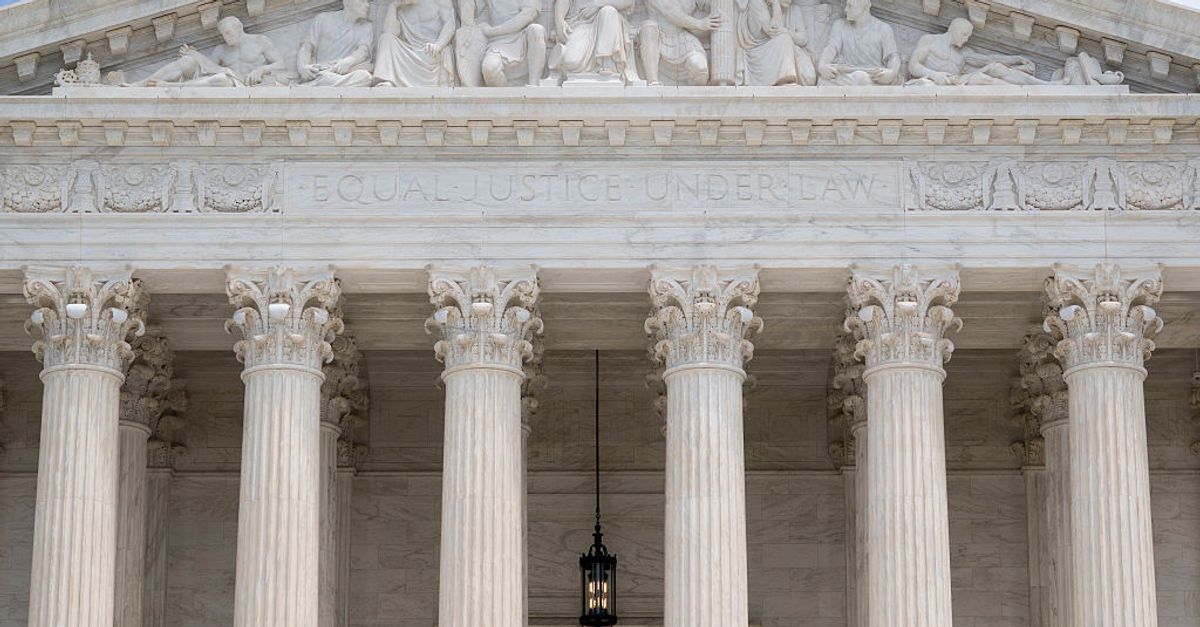
The Open Mind: Fostering Supreme Court Discourse for 70 Years
Summary
- The Supreme Court gained its ultimate authority over constitutionality through the 1803 Marbury v. Madison decision.
- Nine unelected justices on the Supreme Court can override other branches and lower courts, increasingly through a "shadow docket" without public argument.
- "The Open Mind," PBS's longest-running series, has provided discourse on the Supreme Court for 70 years, nearly one-third of the Court's asserted jurisdiction.
- Founded in 1956, "The Open Mind" has covered major legal issues from segregation to privacy and social media account blocking.
The Supreme Court's Enduring Constitutional Authority
This authority means that the nine unelected justices ultimately determine the legal framework governing American life, influencing national priorities in a manner arguably more profound than any president, legislative leader, or influential private citizen.
The Supreme Court formally established its power of judicial review in the landmark 1803 case of Marbury v. Madison. This foundational ruling cemented the Court's role as the ultimate arbiter of constitutionality, granting it the final say on the legality of laws passed by Congress and actions taken by the executive branch. This authority means that the nine unelected justices ultimately determine the legal framework governing American life, influencing national priorities in a manner arguably more profound than any president, legislative leader, or influential private citizen.
The Court's expansive jurisdiction allows it to overturn decisions made by the executive and legislative branches, as well as rulings from lower federal courts and state tribunals concerning federal law. In recent years, this power has been increasingly exercised through what is known as the "shadow docket." This mechanism involves significant decisions being rendered without the traditional public arguments or extensive deliberation that characterize the Court's regular docket, further highlighting the considerable influence wielded by the justices.
“The Open Mind”: A Consistent Forum for Supreme Court Discourse
For a substantial period of the Supreme Court's history, a dedicated platform has fostered public understanding and discussion surrounding its decisions. "The Open Mind," the longest-running series in PBS history, has provided a reliable and consistent forum for discourse on the Court and various other subjects for 70 years. This remarkable tenure represents nearly one-third of the 220 years since the Supreme Court first asserted its broad jurisdiction over American law, underscoring its long-standing commitment to informed public dialogue.
The program's origins trace back to 1956, when it was founded by the grandfather of its current host. Since the founder's passing in 2013, his grandson, Alexander Heffner, has continued the tradition of hosting, ensuring the continuity of The Open Mind Supreme Court discourse. This generational stewardship has maintained the show's focus on critical legal and societal issues, offering a consistent lens through which to examine the Court's evolving impact.
Illuminating Key Legal and Societal Debates
Throughout its extensive run, "The Open Mind" has meticulously tracked and analyzed a wide array of pivotal legal developments and societal challenges, many of which have ultimately reached the Supreme Court. Its coverage has spanned crucial deliberations concerning segregation and discrimination, complex litigation surrounding monopolies and anti-trust issues, and fundamental questions of privacy in America, including the implications of the Patriot Act. More recently, the program has addressed contemporary concerns such as the blocking of citizen accounts on social media platforms like Twitter/X, demonstrating its adaptability to emerging legal frontiers.
Similar to the detailed analysis provided by SCOTUSblog, "The Open Mind" has maintained a studious attentiveness to Supreme Court opinions and dissents. By delving into the nuances of these rulings, the program aims to elucidate what these judicial pronouncements truly signify for the nation's legal landscape and its citizens, fostering a deeper public comprehension of the Court's profound influence.
Source
How does this affect you?
Get an AI analysis of this article grounded in your jurisdictions, practice areas, and any policy documents you've uploaded to Wansom.
Finish Reading the Full Story and the Expert Analysis.
Get the latest legal & regulatory intelligence in United States
Wansom is AI and can make mistakes.