
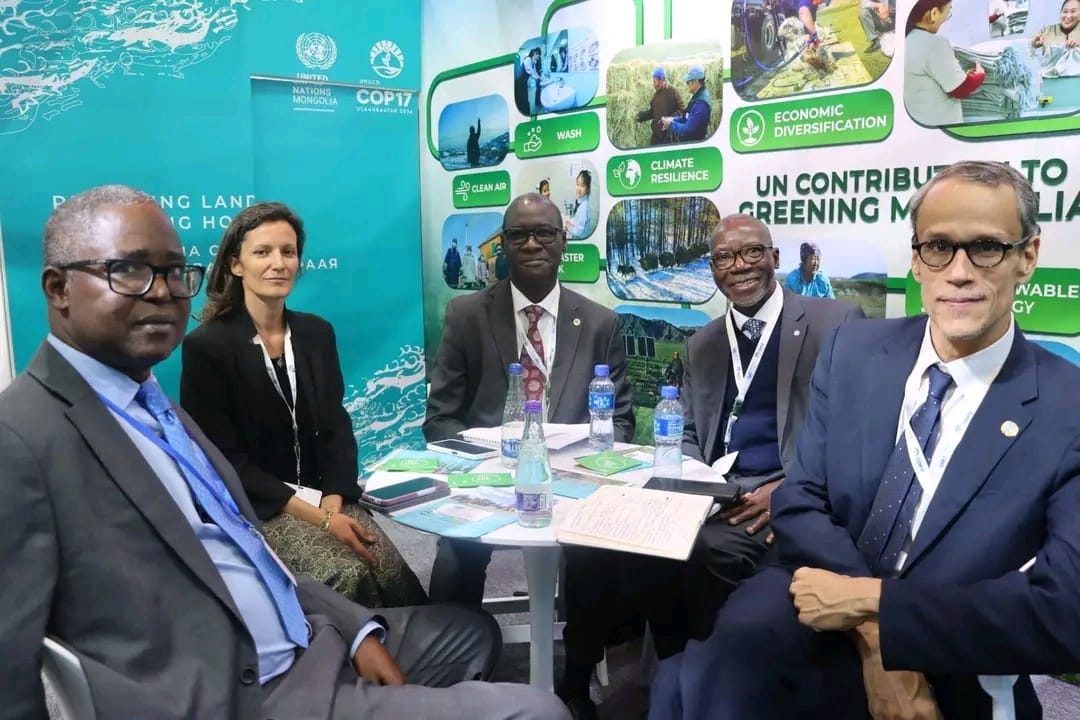
ONU, BAD: Alliance Désertification Cameroun Renforcée à la COP17
Summary
- A high-level bilateral meeting took place on August 25, 2026, during COP17 on desertification.
- United Nations Resident Coordinators for Cameroon and Gambia met with the African Development Bank.
- The purpose was to establish a reinforced partnership against desertification and land degradation.
- Both institutions reaffirmed their commitment to implementing transformative solutions.
- These solutions are aligned with the UN Sustainable Development Goals and the African Union's Agenda 2063.
A New Partnership Against Desertification
Legal professionals should therefore monitor these developments closely, advising clients on emerging policy frameworks and identifying potential investment opportunities within these critical sectors.
On August 25, 2026, a significant high-level bilateral session took place on the sidelines of COP17, the global conference focused on desertification. This gathering brought together Resident Coordinators from the United Nations (ONU) in both Cameroon and Gambia with representatives from the African Development Bank (AfDB). The primary objective of this crucial meeting was to establish the foundational elements for a strengthened collaborative effort aimed at combating desertification. This alliance between the ONU and AfDB signifies a concerted multilateral approach to addressing the pressing issue of land degradation.
Strategic Alignment for Sustainable Development
The collaborative initiatives stemming from this alliance are designed to be in direct alignment with two major international and continental frameworks. Specifically, the proposed transformative solutions are intended to support the United Nations' Sustainable Development Goals (SDGs) and the African Union's comprehensive Agenda 2063. This dual alignment ensures that efforts to combat desertification are integrated into broader global and regional development agendas, promoting a holistic approach to environmental and socio-economic progress.
By harmonizing their strategies with these overarching objectives, the Nations Unies and the Banque Africaine de Développement aim to maximize the impact of their joint actions. This strategic coherence is vital for ensuring that interventions are not only effective in mitigating land degradation but also contribute to long-term sustainable development in countries like Cameroon. The partnership emphasizes a forward-looking perspective, seeking to create lasting positive change through coordinated policy and investment.
Driving Transformative Solutions in Africa
The renewed determination expressed by the UN and AfDB to work hand-in-hand signals a significant push for transformative solutions across affected African nations. This commitment extends beyond mere mitigation, aiming for fundamental changes in how land resources are managed and protected. The focus on multilateralism in confronting land degradation highlights the understanding that such complex environmental challenges require coordinated international and regional responses.
For countries such as Cameroon and Gambia, this reinforced partnership against desertification holds substantial promise for advancing sustainable development. It implies potential for new environmental regulations, increased funding initiatives, and evolving compliance requirements related to land use and conservation. Legal professionals should therefore monitor these developments closely, advising clients on emerging policy frameworks and identifying potential investment opportunities within these critical sectors. The alliance between the ONU and BAD is set to drive significant shifts in environmental governance and resource management.
The Broader Fight Against Land Degradation
The high-level engagement at COP17 underscores the global recognition of desertification as a critical threat to ecological stability and human livelihoods. This specific alliance between the UN and AfDB represents a concrete manifestation of multilateralism actively working to counter the pervasive issue of land degradation. Such partnerships are essential for mobilizing the necessary resources, expertise, and political will to address environmental crises on a continental scale.
The commitment to developing transformative solutions, aligned with both the Sustainable Development Goals and the African Union's Agenda 2063, positions this collaboration as a key driver for long-term environmental resilience and economic growth. The ongoing efforts to combat desertification, particularly through robust international cooperation like this UN AfDB partnership, are crucial for securing a sustainable future for affected communities and ecosystems, especially in regions like Cameroon.
Practical Implications
This reinforced partnership between the UN and AfDB signals potential for new environmental regulations, funding initiatives, and compliance requirements related to land degradation and sustainable development in Cameroon and Gambia. Lawyers should advise clients on emerging policy frameworks and investment opportunities in these sectors.
Source
How does this affect you?
Get an AI analysis of this article grounded in your jurisdictions, practice areas, and any policy documents you've uploaded to Wansom.
Wansom is AI and can make mistakes.