
Ondonga Traditional Authority: Confirms Women's Salt Pan Ban
Summary
- The Ondonga Traditional Authority has prohibited women from accessing a salt pan within its jurisdiction.
- John Walenga, Chairperson of the Ondonga Traditional Authority Board, confirmed this gender-specific ban.
- The restriction followed a visit by a woman from the Khomas region to the salt pan in the Muntele constituency.
- Her visit occurred during an information-sharing program for camel farmers from Khomas and Oshikoto regions.
- This directive raises concerns about gender equality and women's access rights under Namibia's customary law framework.
Ondonga Authority Imposes Gender-Based Salt Pan Restriction
This development signals a potential conflict between customary law and national non-discrimination principles in Namibia.
The Ondonga Traditional Authority has issued a directive prohibiting women from accessing a specific salt pan located within its jurisdiction. This ban was formally confirmed by John Walenga, who serves as the Chairperson of the Ondonga Traditional Authority Board, marking a significant restriction on resource access for women in the area.
This new prohibition specifically targets female individuals, preventing them from visiting or utilizing the salt pan. The pronouncement by a senior official of the traditional authority underscores the formal nature of this new rule within the Ondonga community, raising immediate questions about women's access rights in Namibia under customary law.
The Incident Preceding the Ban
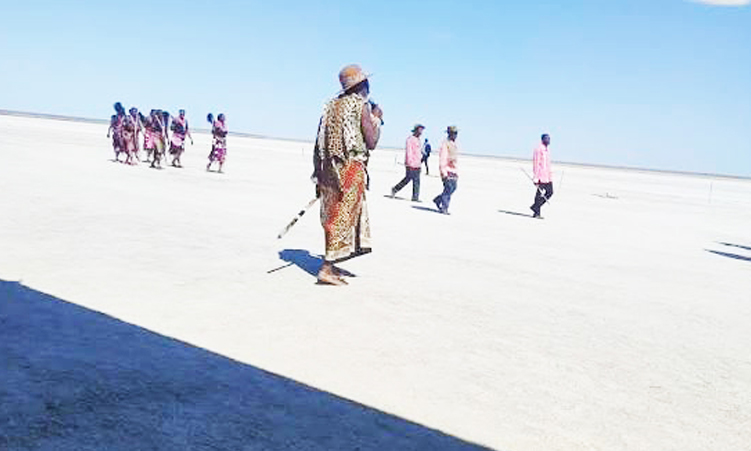
The imposition of this ban by the Ondonga Traditional Authority followed a particular incident involving a woman from the Khomas region. This individual had visited the salt pan, which is situated within the Muntele constituency of the Ondonga region. Her presence at the site appears to have been a direct catalyst for the subsequent restriction.
The woman's visit occurred during an information-sharing program. This program was designed to facilitate knowledge exchange among camel farmers, specifically those from the Khomas and Oshikoto regions. A video circulating showed a camel farmer, implicitly the woman in question, at the salt pan, further highlighting the event that led to the authority's decision.
Broader Implications for Customary Law and Rights
The Ondonga Traditional Authority's decision to ban women from the salt pan raises significant questions regarding the intersection of customary law and national principles of gender equality in Namibia. Such decrees from traditional authorities, particularly concerning resource access, often spark debate about their alignment with the country's constitutional provisions against discrimination. This incident highlights the ongoing tension between traditional governance structures and modern legal frameworks aimed at ensuring equal rights for all citizens.
The directive from the Ondonga Traditional Authority could be perceived as a form of discrimination traditional law Namibia, potentially impacting women's access rights to communal resources. While traditional authorities hold powers to manage communal lands and resources, these powers are generally expected to operate within the confines of the national constitution. The John Walenga Ondonga statement, confirming the ban, brings the Ondonga traditional authority powers into focus concerning their scope and limitations regarding gender-specific restrictions.
This development signals a potential conflict between customary law and national non-discrimination principles in Namibia. Legal practitioners should advise clients on the legality of such traditional authority decrees, particularly concerning resource access and gender equality, and monitor for potential legal challenges or policy responses. The situation underscores the importance of examining how traditional practices interact with the broader legal landscape, especially concerning fundamental human rights like gender equality and access to shared resources like the salt pan.
Practical Implications
This development signals a potential conflict between customary law and national non-discrimination principles in Namibia. Legal practitioners should advise clients on the legality of such traditional authority decrees, particularly concerning resource access and gender equality, and monitor for potential legal challenges or policy responses.
Source
How does this affect you?
Get an AI analysis of this article grounded in your jurisdictions, practice areas, and any policy documents you've uploaded to Wansom.
Finish Reading the Full Story and the Expert Analysis.
Wansom is AI and can make mistakes.