
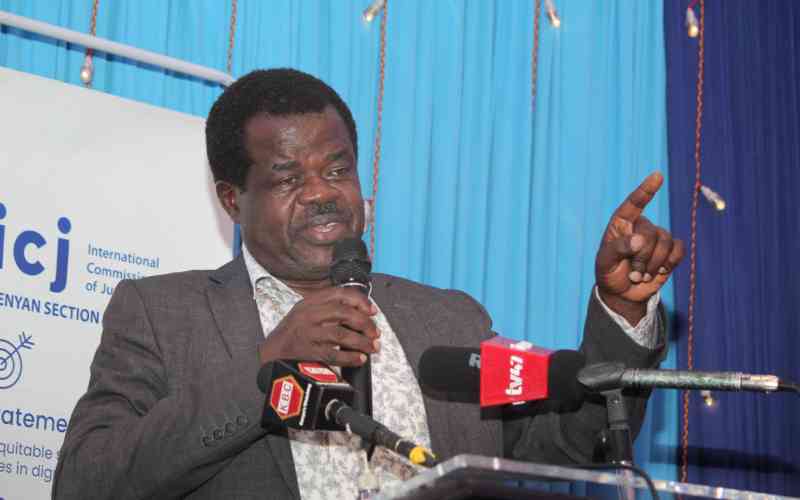
Omtatah: Savola Affordable Housing Payments Injunction Issued
Summary
- Busia Senator Okiya Omtatah has petitioned the High Court to halt payments for a multibillion-shilling Affordable Housing project.
- The payments are designated for Savola Investment Limited under Tender No. MLPWHUD/SDHUD/ESP/213/2023-2024 (Cluster 19).
- Omtatah argues that payments should cease until the company's ownership, directorship, and control are conclusively established.
- He cites violations of several constitutional articles and provisions from the Public Finance Management Act and Public Procurement and Asset Disposal Act.
- The Senator demands a current CR12 from the Registrar of Companies confirming undisputed lawful directors before any further disbursements.
Judicial Intervention Sought for Housing Project Payments
The ongoing disbursement of public funds for this tender, the Senator contends, would fundamentally compromise constitutional tenets of public finance, transparency, accountability, and procurement.
Busia Senator Okiya Omtatah has initiated legal proceedings in the High Court, seeking to prevent further financial disbursements related to a multibillion-shilling Affordable Housing project. The petition specifically targets payments intended for Savola Investment Limited, a private entity involved in the project under Tender No. MLPWHUD/SDHUD/ESP/213/2023-2024 (Cluster 19). Senator Omtatah’s primary objective is to secure a court order that would prohibit the government from making any additional payments to the firm until its ownership structure, directorship, and overall control are definitively and conclusively ascertained.
The Senator’s application before the High Court asserts that the Ministry of Lands, Public Works, Housing and Urban Development, identified as the first respondent in the case, bears a crucial obligation to safeguard public interest. This duty, he argues, necessitates the withholding of any further payments to Savola Investment Limited, the third respondent, until the ongoing dispute surrounding the company's ownership is fully resolved. The legal challenge underscores a growing demand for transparency in public procurement, particularly when significant public funds are at stake.
Constitutional and Statutory Framework Cited
In his petition, Senator Omtatah contends that the government's actions, or threatened actions, of processing or disbursing public funds while the ownership of Savola Investment Limited remains contested, constitute a violation of several constitutional provisions. He specifically seeks a judicial declaration affirming that the government has breached, or is poised to breach, Articles 10(2)(b) and (c), 47(1), 201(a), 201(b)(i) and (d), 226(5), and 227(1) of the Constitution. These articles collectively address principles of national values, fair administrative action, public finance, and public procurement.
Beyond the constitutional arguments, the Senator has also invoked specific legislative frameworks to bolster his case. He cites Section 68 of the Public Finance Management Act, 2012, which governs the management of public funds. Additionally, Regulation 96 of the Public Finance Management (National Government) Regulations, 2015, and Section 45 of the Public Procurement and Asset Disposal Act, 2015, are referenced. These statutory provisions provide detailed guidelines and requirements for public financial management and procurement processes, which Omtatah argues are being circumvented by the continued processing of payments under the current circumstances.
The Senator's Demands for Transparency
Central to Senator Omtatah's legal argument is the assertion that the government should not proceed with any payments when the true ownership, directorship, and control of Savola Investment Limited are subject to dispute and have not been definitively confirmed. He is seeking a prohibitory order from the court, which would effectively freeze all further payments to Savola, or to any associated individual, account, or entity linked to the contested tender. This injunction would remain in effect until the company's genuine ownership, directorship, and control are conclusively ascertained.
To ensure this clarity, the Senator has further demanded that a current CR12 document be issued by the Registrar of Companies. This official document, confirming the company's undisputed lawful directors, must be in place before any subsequent payments are authorized or disbursed. This specific requirement highlights the emphasis on verifiable corporate governance and beneficial ownership information as a prerequisite for the expenditure of public funds.
Broader Implications for Public Finance
The ongoing disbursement of public funds for this tender, the Senator contends, would fundamentally compromise constitutional tenets of public finance, transparency, accountability, and procurement. Omtatah's petition underscores the critical importance of upholding these principles, particularly in large-scale public projects where significant taxpayer money is involved. He argues that allowing payments to proceed amidst an ownership dispute sets a dangerous precedent and erodes public trust in governmental financial management.
By seeking judicial intervention, Senator Omtatah aims to compel the government to adhere strictly to established legal and constitutional safeguards for public funds. His action is a direct call for the judiciary to protect these resources until the ownership controversy surrounding Savola Investment Limited is definitively resolved. The case currently awaits a hearing, with its outcome poised to have significant implications for public procurement practices and the enforcement of transparency standards in Kenya.
Practical Implications
This case underscores the heightened scrutiny on public procurement processes in Kenya, particularly concerning vendor ownership transparency. Lawyers and compliance officers advising government agencies or companies involved in public tenders should review their due diligence protocols for beneficial ownership and be prepared for potential constitutional challenges to payment disbursements.
Source
How does this affect you?
Get an AI analysis of this article grounded in your jurisdictions, practice areas, and any policy documents you've uploaded to Wansom.
Finish Reading the Full Story and the Expert Analysis.
Wansom is AI and can make mistakes.