
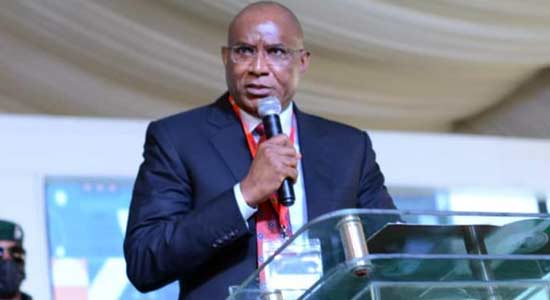
Omo-Agege Denies Supreme Court 2027 Disqualification for Senate Race
Summary
- Former Deputy Senate President Ovie Omo-Agege has refuted claims that a Supreme Court judgment disqualified him from the 2027 Delta Central senatorial election.
- His Special Adviser, Mr. Godwin Anaighe, issued a statement on Saturday, September 26, clarifying Omo-Agege's position.
- Omo-Agege asserts the Supreme Court's ruling focused solely on "relevant provisions of the Electoral Act 2026" and not his personal eligibility.
- He maintains that the judgment does not impede his potential candidacy for the 2027 Delta Central senatorial race.
Recent Developments
His assertion that the Supreme Court did not issue an Omo-Agege Supreme Court 2027 disqualification directly challenges narratives that might otherwise impede his political aspirations.
Former Deputy President of the Senate, Ovie Omo-Agege, has publicly addressed widespread speculation concerning his eligibility for the upcoming 2027 Delta Central senatorial election. Through a statement released on Saturday, September 26, the prominent political figure firmly rejected assertions that a recent Supreme Court judgment pertaining to the Electoral Act 2026 had disqualified him from participating in the future electoral contest. This clarification comes amidst ongoing discussions about the implications of judicial pronouncements on political aspirants.
The Core of the Legal Clarification
At the heart of Omo-Agege's rebuttal is a crucial distinction regarding the nature of the Supreme Court's intervention. According to his official communication, the Supreme Court's judgment was specifically focused on "relevant provisions of the Electoral Act 2026." This phrasing indicates that the court's decision was an interpretation or application of specific legal clauses within the electoral framework, rather than a direct ruling on Omo-Agege's personal standing or an explicit Omo-Agege Supreme Court 2027 disqualification.
The statement underscores that the Supreme Court's role in this instance was to clarify aspects of electoral law, thereby shaping the legal landscape for future elections, including the 2027 senatorial election. However, Omo-Agege maintains that this judicial interpretation of the Supreme Court Electoral Act provisions does not equate to a personal ban or disqualification from the Delta Central senatorial race. His team's position is that the judgment addressed statutory provisions, not individual candidacies.
This perspective highlights the often-complex interplay between general legal interpretations by the judiciary and their specific application to political actors. The former Deputy Senate President's office is keen to ensure that the public and political observers understand that the Supreme Court's pronouncement, while significant for electoral law, did not target Ovie Omo-Agege's eligibility for the 2027 senatorial election.
Implications for the 2027 Electoral Landscape
The Omo-Agege Godwin Anaighe statement carries significant weight for the political landscape, particularly concerning the 2027 Delta Central senatorial election. By clarifying his position, Omo-Agege aims to dispel any lingering doubts about his potential participation and to manage public perception regarding his political future. His assertion that the Supreme Court did not issue an Omo-Agege Supreme Court 2027 disqualification directly challenges narratives that might otherwise impede his political aspirations.
This clarification is vital for stakeholders involved in the Delta Central senatorial race, as it suggests that Omo-Agege views himself as a viable candidate for the 2027 senatorial election, unaffected by the Supreme Court's ruling on the Electoral Act 2026 interpretation. It emphasizes the importance of scrutinizing the precise wording and implications of judicial pronouncements rather than relying on secondary interpretations or rumors. The distinction drawn between a general ruling on law and a specific disqualification is central to his argument.
Ultimately, Ovie Omo-Agege's firm rejection of the disqualification claims sets the stage for his potential re-entry into the electoral fray for the 2027 Delta Central senatorial seat. His statement serves as a clear signal to his supporters and political rivals alike that he intends to remain a significant figure in the upcoming political cycle, unhindered by the specific Supreme Court Electoral Act provisions that were the subject of the recent judgment.
Practical Implications
Lawyers advising political clients or involved in electoral law should note this clarification regarding the Supreme Court's judgment on Electoral Act provisions, as it indicates that a ruling's scope may be narrower than popularly perceived, impacting eligibility for future elections. It highlights the importance of scrutinizing the precise wording and implications of judicial pronouncements rather than relying on secondary interpretations.
Source
How does this affect you?
Get an AI analysis of this article grounded in your jurisdictions, practice areas, and any policy documents you've uploaded to Wansom.
Finish Reading the Full Story and the Expert Analysis.
Get the latest legal & regulatory intelligence in Nigeria
Wansom is AI and can make mistakes.