
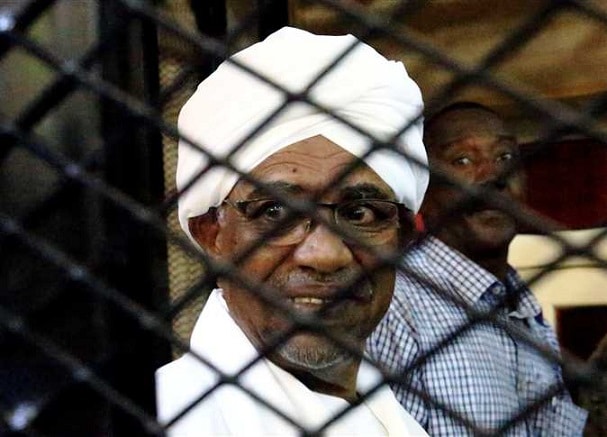
Omar al-Bashir Urgent Medical Transfer: Family Demands Action
Summary
- The family of former Sudanese President Omar al-Bashir requested his urgent medical transfer abroad on September 30, 2026, citing his critical health condition.
- Bashir's lawyers assert that necessary specialized medical treatments and examinations are unavailable in Sudan.
- Bashir was initially detained in 2019, held at Kober prison, and later moved between military hospitals in Omdurman and Merowe due to health issues and conflict.
- His health recently deteriorated, leading to his return to Al-Alia Military Hospital in Omdurman for monitoring and treatment.
- This case highlights legal and humanitarian questions regarding adequate medical care for high-profile detainees, potentially setting precedents for prisoner rights.
Urgent Medical Transfer Request
How this Bashir family medical request is addressed could establish a significant precedent for similar cases involving political prisoners and their access to specialized medical treatment, particularly in regions affected by conflict or with limited medical resources.
The family of former Sudanese President Omar al-Bashir issued a statement on Wednesday, September 30, 2026, asserting that his deteriorating health necessitates an immediate transfer for medical treatment outside Sudan. They emphasized that any delay in this Omar al-Bashir urgent medical transfer is unacceptable given the critical nature of his condition. This urgent appeal underscores growing concerns over the Sudan ex-president health status, which his legal team claims requires specialized care unavailable within the country.
According to Bashir's lawyers, the specific treatments and diagnostic examinations essential for his current medical needs cannot be provided by Sudanese medical facilities. This deficiency, they argue, makes his relocation abroad a critical requirement to ensure he receives appropriate medical attention. The Bashir family medical request, supported by these legal assertions, highlights a significant challenge in providing comprehensive medical care for high-profile detainees, particularly when local healthcare infrastructure may be strained or inadequate.
Detention and Health Trajectory
Omar al-Bashir was initially detained in 2019, following the popular revolution that began in December 2018 and ultimately led to the overthrow of his government. He was subsequently held at Kober prison for several months, where he faced trial alongside numerous senior associates. The charges against them included undermining the democratic system and orchestrating the 1989 coup.
During his detention, Bashir was transferred to the Military Medical Hospital in Omdurman to receive ongoing medical care. He remained at this facility until April 15, 2023, when widespread conflict erupted. The hospital where he was being treated became besieged, with intense fighting concentrated in its vicinity. After the Sudanese army reestablished control over Khartoum, Bashir was moved to Merowe city in northern Sudan. However, his health significantly declined in recent days, prompting his return to Omdurman, where he is now receiving monitoring, examinations, and necessary treatments at the Al-Alia Military Hospital.
Legal and Humanitarian Context
The current situation surrounding Omar al-Bashir's urgent medical transfer brings into sharp focus the complex legal and humanitarian considerations governing the rights of detainees, especially those of high political stature. International law and human rights principles generally mandate that all prisoners receive adequate medical care, and this obligation extends to ensuring access to specialized treatment when local facilities are insufficient. The family's and lawyers' insistence on Omar al-Bashir medical care abroad directly challenges the capacity of the Sudanese state to fulfill this duty under current circumstances.
How this Bashir family medical request is addressed could establish a significant precedent for similar cases involving political prisoners and their access to specialized medical treatment, particularly in regions affected by conflict or with limited medical resources. Legal experts will closely monitor the decision, as it touches upon fundamental aspects of humanitarian law and prisoner rights advocacy. The outcome will reflect on the balance between judicial accountability for alleged crimes and the universal right to health, even for those accused of grave offenses.
Broader Implications
The family's statement, rooted in medical reports and the progression of the Sudan ex-president health, unequivocally declares that the need for his treatment outside Sudan is both critical and urgent, asserting that further delay is unwarranted. This plea highlights the profound challenges faced by nations grappling with internal conflict and the subsequent strain on their healthcare systems. The inability to provide necessary specialized medical care domestically for a high-profile individual like Bashir underscores a broader systemic issue.
This development carries substantial weight, not only for Omar al-Bashir himself but also for the international community's understanding of prisoner welfare in post-conflict or unstable environments. The decision regarding his potential transfer abroad will be scrutinized for its adherence to humanitarian standards and its implications for the treatment of other detainees requiring advanced medical interventions. It serves as a stark reminder of the ongoing complexities in Sudan, where the legacy of past regimes intersects with present-day humanitarian concerns and the imperative to uphold basic human rights.
Practical Implications
This development highlights the legal arguments surrounding the rights of high-profile detainees to receive adequate medical care, particularly when local facilities are deemed insufficient. Lawyers should monitor how this request is handled as it could influence precedents for similar cases involving political prisoners and their access to specialized medical treatment, potentially impacting humanitarian law or prisoner rights advocacy.
Source
How does this affect you?
Get an AI analysis of this article grounded in your jurisdictions, practice areas, and any policy documents you've uploaded to Wansom.
Finish Reading the Full Story and the Expert Analysis.
Get the latest legal & regulatory intelligence in Sudan
Wansom is AI and can make mistakes.