
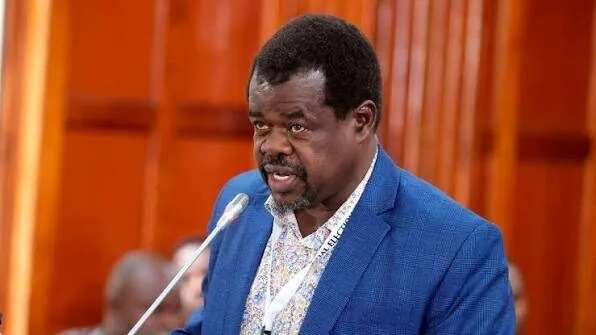
Okiya Omtatah: Kenya World Bank Borrowing Lacks Oversight, Complicity Alleged
Summary
- Senator Okiya Omtatah has criticized the World Bank's focus on procurement corruption, arguing it overlooks deeper issues in Kenya's government borrowing and public fund management.
- Omtatah contends that specific sections of the Bretton Woods Agreements Act, Cap 464, and the Public Finance Management Act, Section 49, allow the Kenyan Treasury and World Bank to bypass parliamentary oversight for substantial loans.
- He argues that the World Bank's immunity, combined with domestic legislation, makes it difficult to hold the institution accountable for its lending practices in Kenya.
- The senator asserts that these legal frameworks create a "closed system" where significant public borrowing can occur without adequate legislative approval or scrutiny.
- Omtatah urges the public to scrutinize government financial reports to identify loans not explicitly approved by Parliament, highlighting a critical accountability gap.
Challenging Kenya's Public Debt Accountability
The senator maintains that this framework effectively creates a 'closed system of financial governance,' where substantial borrowing and disbursements can proceed without sufficient parliamentary scrutiny.
Busia Senator Okiya Omtatah has recently issued a strong critique of the World Bank's assessment of corruption in Kenya, arguing that the international lender's focus on procurement irregularities diverts attention from a more profound issue: the management of government borrowing and public funds. Omtatah contends that corruption stemming from public expenditure represents only a fraction of the problem, asserting that questionable borrowing arrangements have enabled billions of shillings to be accessed and spent without effective parliamentary oversight.
The senator further questioned the World Bank's stance on corruption, suggesting that its emphasis on procurement allows the institution to sidestep scrutiny regarding its own lending agreements with the Kenyan government. He characterized the World Bank's expressions of concern over the opportunity cost of corruption as a distraction, inviting focus on what he terms "the lesser evil" of procurement—an area where the bank plays no direct role. Omtatah explicitly stated that the World Bank is "totally complicit in the heist" by adopting this narrow focus, thereby concealing its own involvement.
According to Omtatah, the more critical concern lies on the revenue side of public finance, particularly loans allegedly contracted without corresponding expenditure provisions being included in the Appropriations Acts passed by Parliament. He argues that such arrangements significantly weaken legislative oversight over public borrowing, creating avenues through which public resources can be accessed and utilized outside the ordinary constitutional budgetary controls.
Legal Loopholes and International Immunities
Senator Omtatah specifically highlighted the Bretton Woods Agreements Act, Cap 464, arguing that Sections 3, 4, and 5 of this legislation establish a framework that permits the National Treasury and the World Bank to circumvent essential parliamentary and public finance accountability procedures. He drew particular attention to Section 4, which allows certain payments to the International Monetary Fund and the World Bank to be charged directly to the Consolidated Fund without requiring further appropriation. This section also grants the government the authority to issue financial obligations and borrow funds to meet specified payments.
The senator maintains that this framework effectively creates a "closed system of financial governance," where substantial borrowing and disbursements can proceed without sufficient parliamentary scrutiny. Furthermore, Omtatah questioned the legal protections afforded to the World Bank under Article VII of its Articles of Agreement, which provides immunities concerning legal proceedings, its assets, and archives. He argued that these international protections, when combined with domestic legislation governing Kenya's relationship with the Bretton Woods institutions, make it challenging to hold the lender accountable for the manner in which funds are advanced to the government.
Weakened Parliamentary Oversight and Fiscal Discretion
Omtatah also scrutinized the role of the Cabinet Secretary for the National Treasury under Section 49 of the Public Finance Management Act, which outlines the framework for government borrowing. He contended that this provision grants the Treasury Cabinet Secretary considerable discretion to contract both domestic and external loans, guided by fiscal responsibility principles and financial objectives detailed in the most recent Budget Policy Statement.
While Parliament approves the Budget Policy Statement, Omtatah emphasized that its primary purpose is to guide the preparation of the national budget, not to serve as a substitute for explicit legislative approval of government borrowing. He asserted that relying on the Budget Policy Statement in this manner contributes to the erosion of parliamentary oversight. The senator urged Kenyans to actively compare the annual Appropriations Acts with the National Treasury's monthly publications on actual revenue and expenditure. He believes that any discrepancies found would expose loans that are not directly tied to projects explicitly approved by Parliament, thereby highlighting critical accountability gaps in Kenya's public debt management.
Practical Implications
Lawyers advising on public finance, government contracts, or international lending in Kenya should closely monitor the ongoing legal challenges to parliamentary oversight of government borrowing, particularly regarding the application of the Bretton Woods Agreements Act and the Public Finance Management Act. This scrutiny highlights potential accountability gaps that could impact the risk assessment and transparency of government-backed financial arrangements.
Source
How does this affect you?
Get an AI analysis of this article grounded in your jurisdictions, practice areas, and any policy documents you've uploaded to Wansom.
Finish Reading the Full Story and the Expert Analysis.
Get the latest legal & regulatory intelligence in Kenya
Wansom is AI and can make mistakes.