
Okala Ebode Contestation: MINAT Refuses Kamto Re-election Recognition
Summary
- Joseph Thierry Okala Ebode, a co-founder excluded from the MRC, publicly challenged Maurice Kamto's re-election as party president, citing internal governance irregularities.
- Okala Ebode initiated legal action to contest his exclusion from the Mouvement pour la Renaissance du Cameroun, with proceedings currently ongoing and the most recent hearing postponed to September 24, 2026.
- The Ministry of Territorial Administration (MINAT), led by Paul Atanga Nji, refused to acknowledge Kamto's re-election convention, thereby supporting Okala Ebode's position.
- Okala Ebode alleged that Maurice Kamto threatened him at his home, vowing to do anything to return to the MRC.
- Another individual present at the meeting refuted Okala Ebode's claims, stating that Kamto conducted broad consultations and that the meeting concluded amicably.
Dispute Over MRC Leadership and Okala Ebode's Exclusion
The Ministry of Territorial Administration's intervention, under Paul Atanga Nji, significantly bolstered Okala Ebode's position by refusing to acknowledge the convention that re-elected Maurice Kamto.
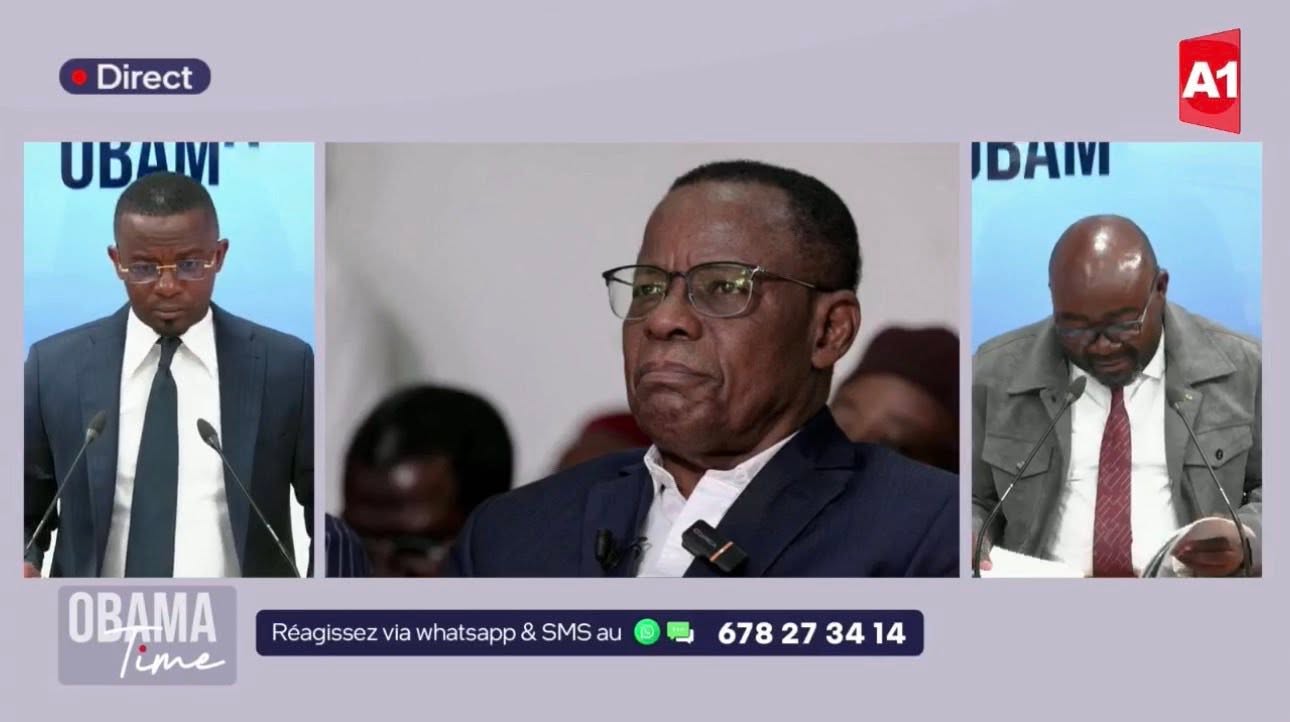
A significant internal conflict has emerged within Cameroon's Mouvement pour la Renaissance du Cameroun (MRC), pitting co-founder Joseph Thierry Okala Ebode against the party's president, Maurice Kamto. The dispute centers on the regularity of the convention that led to Kamto's re-election and the subsequent validity of the MRC's internal governance. Okala Ebode, who was later excluded from the party, publicly challenged Kamto's return to leadership, asserting on A1, a private television station broadcasting from Yaoundé, that the MRC was operating under an internal governance void or illegality.
Okala Ebode's public questioning of Maurice Kamto's return to the MRC's helm — a position Kamto resumed after having previously resigned to represent the Manidem party — directly preceded his exclusion from the Mouvement pour la Renaissance du Cameroun. Following this internal disciplinary action, Okala Ebode initiated legal proceedings to contest his removal from the party, which are currently ongoing and were most recently postponed to September 24, 2026, escalating the internal disagreement into the judicial sphere. This move underscored the depth of the schism within the party regarding its leadership and foundational principles.
MINAT's Intervention and Legal Ramifications
The controversy surrounding the `Okala Ebode contestation réélection Kamto` gained significant momentum with the direct involvement of the Ministry of Territorial Administration (MINAT). Under the leadership of Paul Atanga Nji, MINAT issued official correspondences that explicitly refused to acknowledge the convention responsible for Maurice Kamto's re-election. This administrative stance effectively lent considerable weight to Joseph Thierry Okala Ebode's ongoing challenges against the party's leadership and his `exclusion MRC`.
The `MINAT refus reconnaissance réélection Kamto` highlights the critical role of state administrative bodies in overseeing the internal affairs and `validité convention MRC Cameroun` of political parties. By declining to recognize the re-election, MINAT's action introduced a substantial legal and administrative hurdle for the MRC, suggesting that the party's internal processes for leadership selection might not align with regulatory expectations. This intervention by `Paul Atanga Nji intervention MRC` underscores the complex interplay between party autonomy and governmental oversight in Cameroon's political landscape.
Conflicting Accounts of Internal Consultations
At the heart of the `Mouvement pour la Renaissance du Cameroun litige` are conflicting narratives regarding interactions between Maurice Kamto and party members. Joseph Thierry Okala Ebode publicly claimed that Professor Kamto had threatened him at his residence, stating an intent to do 'everything to return to the MRC.' This assertion, made on A1 television, painted a picture of a leader determined to regain control by any means.
However, this account was directly contradicted by another individual who was present during the alleged encounter. This person, who chose to remain unnamed in the report, detailed that Kamto had organized extensive consultations, meeting with members of the Directorate in several groups. The individual specifically recalled being present with Okala Ebode at Kamto's home, as one of five attendees, where Kamto allowed each person, including Okala Ebode, to speak freely. The source questioned the timing and nature of any alleged threats, further noting that the lengthy meeting concluded with a shared meal in a convivial atmosphere. This counter-narrative suggested that Okala Ebode's claims were 'shameless lies' intended to harm the party he helped establish, accusing him of feigning concern while aiding the party's adversaries.
Practical Implications
This case illustrates the administrative and judicial avenues available in Cameroon for challenging the internal governance and leadership elections of political parties, particularly when the Ministry of Territorial Administration (MINAT) intervenes. Lawyers advising political entities must be aware of the legal grounds for such challenges and the administrative body's role in validating internal decisions.
Source
How does this affect you?
Get an AI analysis of this article grounded in your jurisdictions, practice areas, and any policy documents you've uploaded to Wansom.
Finish Reading the Full Story and the Expert Analysis.
Wansom is AI and can make mistakes.