
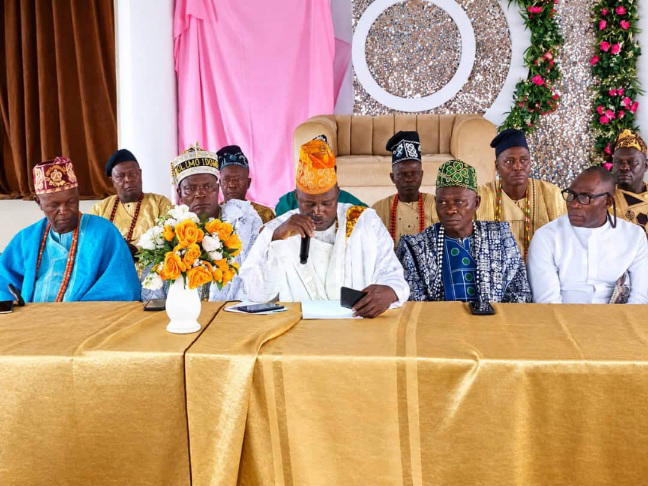
Ogun Monarch: Denies N170k Protection Fee Demand From PDP
Summary
- An Ogun traditional ruler has denied allegations of obstructing a Peoples Democratic Party (PDP) campaign.
- The denial addresses a "N170,000 protection fee" saga linked to the alleged obstruction.
- The monarch suggested that eyewitness accounts, police records, bank records, photographs, and videos should clarify the situation.
What Happened
The "N170,000 protection fee" saga, despite the Ogun monarch's denial, carries substantial implications for public trust in both traditional institutions and the electoral process.
An Ogun traditional ruler has publicly refuted claims that he obstructed a political campaign by the Peoples Democratic Party (PDP) in Ogun State. The denial comes amidst a controversy surrounding an alleged N170,000 protection fee, which has been termed a "saga." The monarch's statement directly addresses accusations that he demanded or received this sum to allow the PDP campaign to proceed. This incident highlights the sensitive intersection of traditional authority and modern political activities in Nigeria.
The monarch, whose identity was not specified in the initial reports, asserted that various forms of evidence should be consulted to ascertain the truth of the matter. He specifically pointed to eyewitness accounts, official police records, financial documentation such as bank records, and visual evidence including photographs and videos. By calling for a review of such comprehensive evidence, the Ogun monarch suggests a transparent process to resolve the N170k protection fee dispute and clear his name from the allegations of stopping the PDP campaign. This stance underscores the gravity with which such accusations are viewed within the community and political landscape.
Legal & Regulatory Context
Allegations of traditional rulers interfering with political campaigns, particularly through demands for 'protection fees,' raise significant legal and ethical questions within Nigeria's democratic framework. While traditional institutions hold considerable cultural and social influence, their direct involvement in partisan politics, especially in ways that could impede legitimate political activities, is generally viewed as problematic. Electoral laws in Nigeria aim to ensure a level playing field for all political parties, and any action that restricts a party's ability to campaign freely could be seen as an infringement. The alleged N170,000 protection fee Nigeria, if proven, could potentially constitute an act of extortion or a violation of electoral conduct regulations.
The legal limits of traditional authority in political processes are often debated. Traditional rulers are expected to be custodians of culture and and peace, serving as non-partisan figures who foster unity. However, instances of monarch political interference Nigeria, whether alleged or proven, challenge this ideal. The call for evidence like police and bank records suggests that the matter could have legal ramifications beyond mere political disagreement, potentially involving criminal investigations into extortion claims if the protection fee was indeed demanded or paid under duress. Such scenarios underscore the importance of clear guidelines for the engagement of traditional institutions with political parties to prevent situations that could undermine democratic principles or lead to allegations of undue influence.
Why It Matters
The "N170,000 protection fee" saga, despite the Ogun monarch's denial, carries substantial implications for public trust in both traditional institutions and the electoral process. When allegations surface that traditional rulers are demanding payments to permit political activities, it can erode confidence in their impartiality and raise concerns about the fairness of elections. Such incidents contribute to a perception that political access can be bought or restricted, rather than being a fundamental right guaranteed by democratic principles. The denial itself, coupled with the monarch's insistence on verifiable evidence, indicates the seriousness with which these accusations are perceived and the potential damage they can inflict on a traditional ruler's reputation and legitimacy.
Furthermore, the controversy surrounding the alleged N170,000 protection fee Nigeria highlights the ongoing challenge of defining the appropriate role of traditional leaders in a modern democratic state. While their counsel and community leadership are often valued, direct involvement in partisan disputes or the alleged obstruction of political campaigns can lead to accusations of monarch political interference Nigeria. This particular incident, involving an Ogun traditional ruler and a PDP campaign in Ogun State, serves as a potent reminder of the need for all stakeholders – political parties, traditional institutions, and law enforcement – to uphold the integrity of the electoral process and ensure that political activities can occur without undue influence or financial barriers. The outcome of such investigations, whether confirming or refuting the claims, will invariably shape public discourse on the boundaries of traditional authority and political conduct.
Practical Implications
This incident, though a denial, underscores the legal sensitivities surrounding allegations of traditional rulers interfering with political campaigns, especially concerning 'protection fees'. Lawyers advising political parties or traditional institutions should be mindful of potential electoral law violations, extortion claims, and the legal limits of traditional authority in political processes.
Source
How does this affect you?
Get an AI analysis of this article grounded in your jurisdictions, practice areas, and any policy documents you've uploaded to Wansom.
Finish Reading the Full Story and the Expert Analysis.
Get the latest legal & regulatory intelligence in Nigeria
Wansom is AI and can make mistakes.