
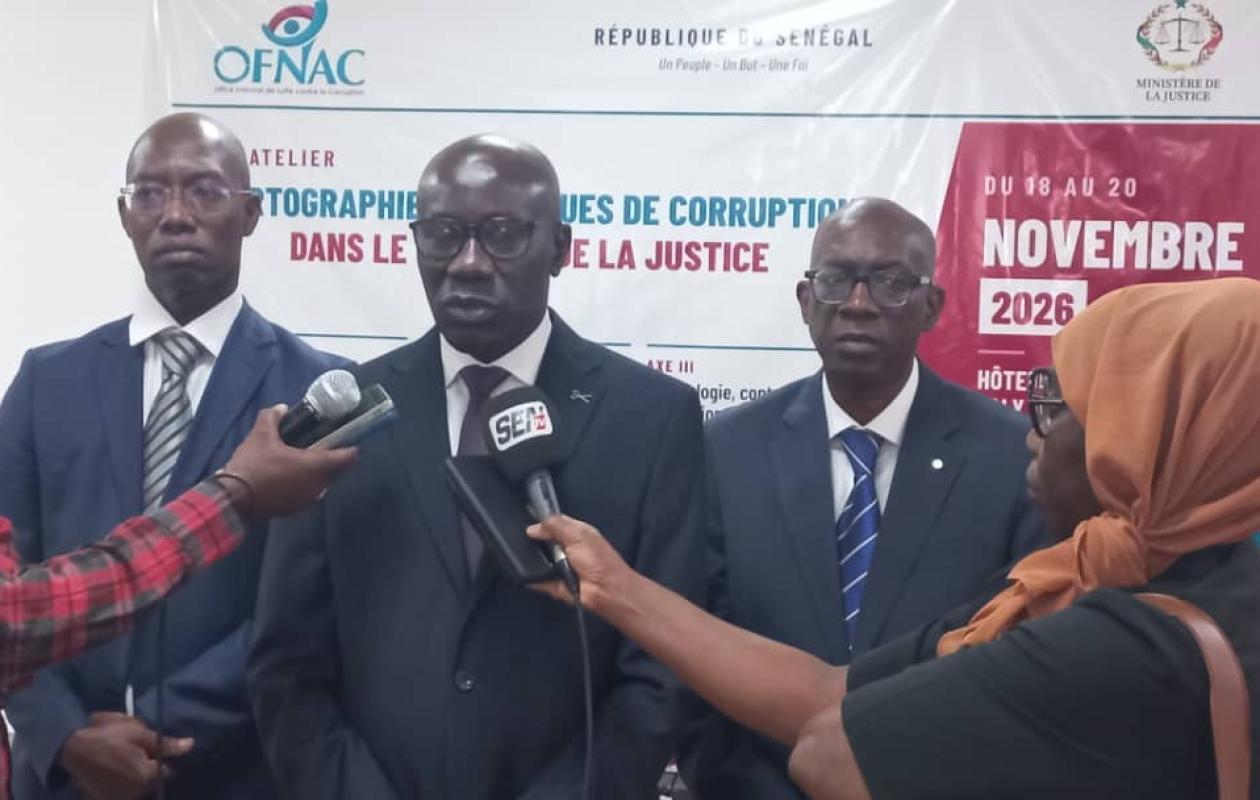
OFNAC, Ministère Justice: Cartographie Risques Judiciaires au Sénégal Lancée
Summary
- OFNAC and the Ministry of Justice have launched a judicial corruption risk mapping initiative in Senegal.
- The project aims to proactively identify vulnerabilities in judicial procedures, public procurement, and case processing.
- This initiative is part of a broader legislative reform package, including bills for OFNAC's creation and asset declaration, slated for parliamentary review in August 2025.
- OFNAC President Moustapha Ka stated the mapping is not about suspicion but about understanding systemic challenges to improve public services.
- The effort prioritizes prevention by examining the causes of potential risks, while respecting judicial independence.
What Happened
The core philosophy behind this initiative is a strong emphasis on prevention, a key aspect of "prévention corruption justice Sénégal."
The Office national de lutte contre la corruption (OFNAC) and the Ministry of Justice in Senegal have jointly initiated a comprehensive corruption risk mapping project within the judicial system. This strategic undertaking, known as the "cartographie des risques judiciaires," aims to proactively identify potential vulnerabilities to corruption before they manifest into actual offenses. Moustapha Ka, the president of OFNAC, emphasized that this initiative is designed to anticipate systemic dysfunctions and enhance the overall efficiency of public services, while also fostering closer ties between citizens and governmental institutions.
The scope of this mapping exercise is broad, encompassing various critical aspects of judicial operations. It will meticulously examine the administrative management of jurisdictions, scrutinize public procurement processes within the justice sector, and analyze the procedures for handling cases and executing decisions. Furthermore, the initiative extends its focus to the activities of judicial professionals and their interactions with litigants, ensuring a holistic review of potential risk areas across the entire judicial landscape. This proactive approach underscores a shift towards prevention in the ongoing "Sénégal lutte corruption judiciaire."
Legal and Regulatory Context
In September 2025, a legislative package comprising four pivotal laws dedicated to strengthening transparency, accountability, and the fight against corruption was enacted. These laws include provisions for the formal creation of OFNAC (Loi n° 2025-12), mandates for asset declaration by public officials (Loi n° 2025-13), guarantees for access to information (Loi n° 2025-15), and robust protections for whistleblowers (Loi n° 2025-14). The National Assembly had adopted these reforms in August 2025, with the bill concerning the establishment of OFNAC and the asset declaration legislation being among those examined. These legislative efforts establish a robust institutional foundation for corruption prevention, complementing the practical, on-the-ground work of identifying specific risks through initiatives like the judicial risk mapping. The "loi création OFNAC" is a cornerstone of this comprehensive reform.
Why It Matters
Moustapha Ka, president of OFNAC, clarified that the "cartographie des risques judiciaires" does not imply a presumption of guilt or suspicion towards judicial professionals. Instead, he presented it as a collaborative endeavor that leverages the extensive experience and insights of those working within the justice system, drawing upon their understanding of the challenges encountered in their daily activities. He further stressed that this mapping process is meticulously designed to uphold the independence of the judiciary and respect the established prerogatives of judicial authorities, ensuring that the integrity of the legal system remains paramount.
The core philosophy behind this initiative is a strong emphasis on prevention, a key aspect of "prévention corruption justice Sénégal." Rather than solely reacting to offenses after they have occurred, the objective is to thoroughly understand the underlying conditions that create opportunities for risky practices. Once a potential risk is identified through this mapping, the subsequent step involves a detailed examination of its root causes. This proactive and analytical approach is crucial for fostering a more transparent and accountable justice system, aligning with the broader goals of "réforme justice transparence Sénégal."
Practical Implications
Lawyers and compliance officers in Senegal should be aware of this new judicial risk mapping initiative by OFNAC and the Ministry of Justice, as it signals increased scrutiny on judicial procedures, public procurement within the justice system, and case processing. This proactive approach to identifying corruption vulnerabilities may lead to new compliance expectations or investigations, impacting how legal professionals advise clients and interact with the Senegalese judiciary.
Source
Source: Original reporting via Seneweb.
How does this affect you?
Get an AI analysis of this article grounded in your jurisdictions, practice areas, and any policy documents you've uploaded to Wansom.
Finish Reading the Full Story and the Expert Analysis.
Get the latest legal & regulatory intelligence in Senegal
Wansom is AI and can make mistakes.