
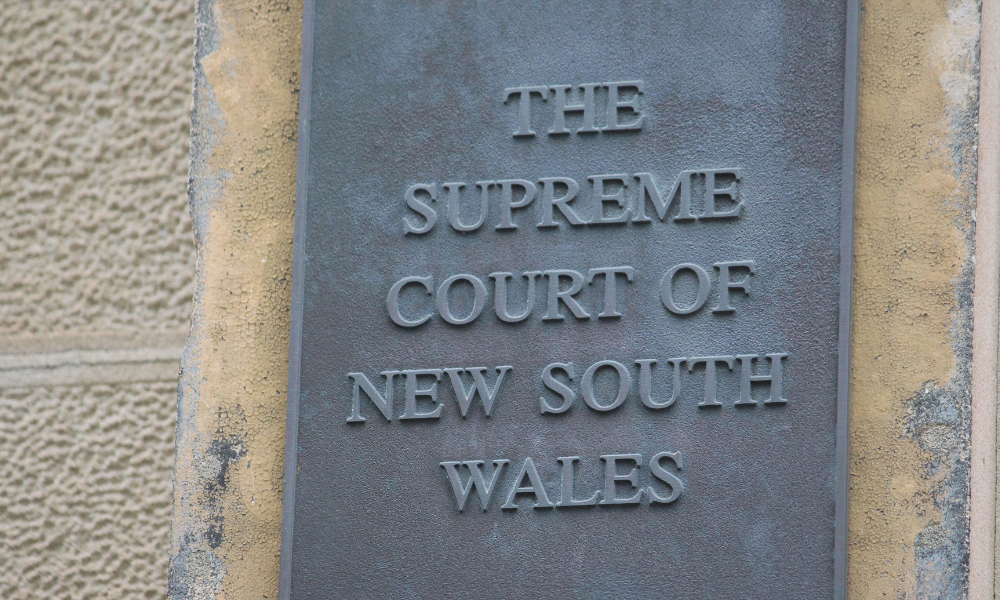
NSWSC: Troost v Coleman Greig Employee Rates Appeal Denied
Summary
- The NSW Supreme Court denied a client leave to appeal a costs assessment review panel's decision regarding a law firm employee's hourly rates.
- The client, Mr. Troost, had previously paid 15 invoices from Coleman Greig Lawyers Pty Ltd totaling over $1.5 million for family law proceedings.
- The review panel had allowed higher hourly rates for an unqualified employee's work, a decision the client sought to challenge.
- The court found no error of principle, public importance, or injustice to justify granting leave under s 89(1)(b) of the Legal Profession Uniform Law Application Act.
- The court noted that the client's consistent payment of invoices could be seen as an implicit acceptance of the rates' fairness and reasonableness.
Background to the Dispute
The Supreme Court underscored that leave to appeal such determinations would not be granted without clear evidence of an error of principle, a matter of public importance, or a demonstrable injustice.
The New South Wales Supreme Court recently declined to grant leave for an appeal concerning a costs assessment review panel's decision on a law firm employee's hourly rates. The case, Troost v Coleman Greig Lawyers Pty Ltd [2026] NSWSC 1109, involved a client, Mr. Troost, who had engaged Coleman Greig Lawyers Pty Ltd to represent him in complex family law proceedings, which included property and parenting disputes. This engagement commenced around 3 December 2021, following prior representation by another legal firm.
Over the course of their retainer, which concluded on approximately 6 June 2023, Coleman Greig Lawyers Pty Ltd issued 15 invoices to Mr. Troost, amounting to a substantial total of $1,572,696.78. Notably, the client paid all these invoices without objection at the time. A subsequent costs assessor initially permitted the work of an employee of the law practice, who was not a qualified legal practitioner, to be charged at a specific hourly rate. However, a review panel, in a determination issued on 9 December 2024, subsequently allowed this employee's work to be billed at higher hourly rates.
The Appeal to the Supreme Court
Dissatisfied with the review panel's determination, Mr. Troost initiated an appeal to the New South Wales Supreme Court. Through a summons dated 9 January 2026, the client sought to challenge the review panel's decision to permit the higher hourly rates for the non-qualified employee's work. This appeal was brought under section 89(1)(b) of the Legal Profession Uniform Law Application Act 2014, a provision that typically grants a right to appeal review panel decisions where the disputed costs amount to $100,000 or more.
Given that the specific amount in dispute in this instance fell below the $100,000 threshold, Mr. Troost was required to seek, and formally requested, leave to appeal the costs determination. He presented two grounds for his application, alleging that the review panel had made errors in its assessment. The defendant law practice, Coleman Greig Lawyers Pty Ltd, actively objected to the client's request for leave to appeal, arguing against the merits of his application.
NSWSC's Ruling and Rationale
The New South Wales Supreme Court ultimately dismissed the client's summons dated 9 January 2026, thereby denying leave to appeal the costs assessment review panel's decision. In its deliberation, the court meticulously considered Mr. Troost's arguments but concluded that there was no discernible error of principle in the review panel's determination. Furthermore, the court found that the matter did not raise issues of public importance, nor did it demonstrate any injustice that would warrant granting leave to appeal.
The Supreme Court underscored that leave to appeal such determinations would not be granted without clear evidence of an error of principle, a matter of public importance, or a demonstrable injustice. A significant factor in the court's reasoning was its observation that the client's prior conduct, specifically his consistent payment of the 15 invoices, could be interpreted by the review panel as an implicit acceptance of the fairness and reasonableness of the hourly rates charged for the employee's work. Following the dismissal of the summons, the court ordered Mr. Troost to pay the defendant law practice's costs, either as agreed between the parties or as subsequently assessed.
Implications for Law Firm Billing Practices
This ruling in Troost v Coleman Greig Lawyers Pty Ltd provides important clarity regarding the robustness of costs assessment review panel decisions, particularly concerning law firm employee hourly rates. It reinforces the high bar clients face when seeking to overturn such determinations, especially when they have previously paid invoices without protest. The NSWSC's stance suggests that mere disagreement with a review panel's allowance of rates, even for non-qualified staff, is insufficient to secure leave for an appeal.
For law firms, the decision offers reassurance that costs assessment outcomes are difficult to challenge successfully on appeal without substantial grounds. It highlights that a client's consistent payment of bills can be viewed as an acknowledgment of the reasonableness of the charges, including those for non-legal professionals. This case underscores that the Supreme Court will not readily intervene in costs determinations unless there is a clear demonstration of fundamental error or significant injustice, thereby affirming the authority and finality of review panel decisions in many instances.
Practical Implications
Law firms can take comfort that costs assessment review panel decisions regarding employee hourly rates are robust and difficult to overturn on appeal, especially if the client has previously paid invoices. This case reinforces that the NSW Supreme Court will not grant leave to appeal without clear error of principle, public importance, or injustice, even for non-qualified staff rates. Clients seeking to challenge such assessments face a high bar and must demonstrate more than mere disagreement.
Source
How does this affect you?
Get an AI analysis of this article grounded in your jurisdictions, practice areas, and any policy documents you've uploaded to Wansom.
Finish Reading the Full Story and the Expert Analysis.
Get the latest legal & regulatory intelligence in Australia
Wansom is AI and can make mistakes.