
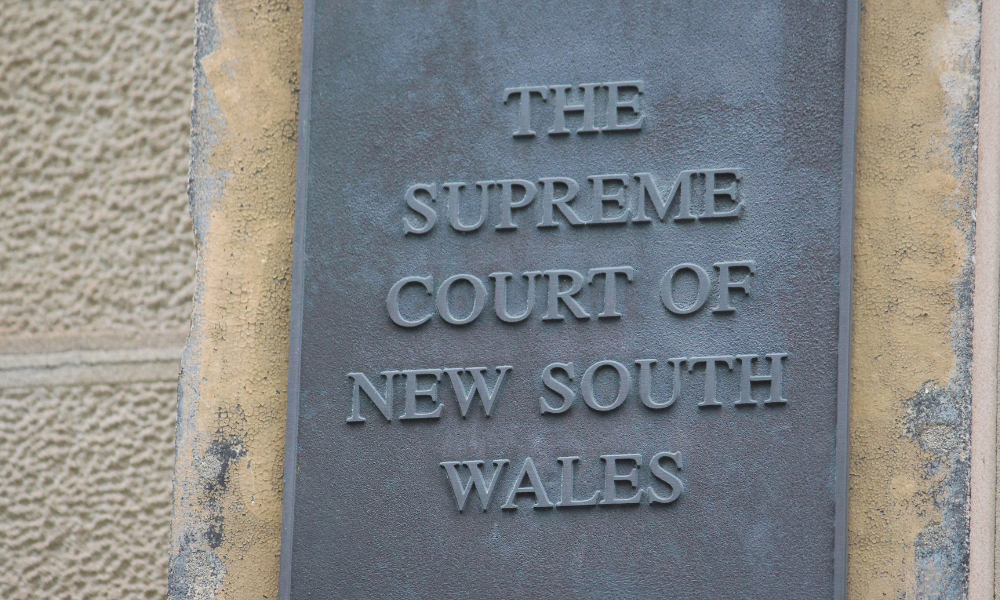
NSWCA: Freund Apprehended Bias Quashed, Judicial Commission Decision
Summary
- The NSW Court of Appeal quashed a Judicial Commission decision due to apprehended bias, constituting jurisdictional error.
- The bias arose from an undisclosed WhatsApp message between the chief judge and a commission member regarding the complaint.
- This communication occurred despite the chief judge being formally excluded from the deliberations on the complaint against the deputy chief judge.
- The court ruled that apprehended bias constitutes jurisdictional error regardless of whether it actually affected the decision.
- The complaint against the deputy chief judge was remitted to the Judicial Commission for redetermination according to law.
What Happened
The court underscored a fundamental principle: apprehended bias constitutes a jurisdictional error, irrespective of whether it demonstrably impacted the final decision.
The New South Wales Court of Appeal recently overturned a significant ruling by the Judicial Commission, specifically quashing its decision to refer a complaint against a deputy chief judge to its conduct division. This pivotal judgment, delivered in Freund v Attorney General of New South Wales [2026] NSWCA 232, centered on the finding of apprehended bias, which the court determined amounted to jurisdictional error. The core issue stemmed from an undisclosed communication between the chief judge of the local court and a member of the Judicial Commission.
The sequence of events began in June 2026 when the Judicial Commission dismissed a complaint lodged by the deputy chief judge against the chief judge. Following this, the chief judge brought the details of that dismissed complaint to the attention of the Attorney General. Subsequently, the Attorney General initiated a new complaint concerning the deputy chief judge, referring it to the Judicial Commission under section 16 of the Judicial Officers Act 1986 NSW. On August 10, the Commission decided against summarily dismissing this new complaint, instead opting to refer it to its conduct division, as permitted by section 21 of the Act.
Crucially, it was established that commission staff had inadvertently sent documents related to the Attorney General's complaint to the chief judge, despite his exclusion from the deliberations and decision-making process concerning that specific complaint. After reviewing these papers, the chief judge sent a WhatsApp message on July 29 to a commission member, conveying his views on correspondence mentioned within the documents. The commission member acknowledged receipt, stating they had not yet read the August papers. This communication remained undisclosed to the parties before the Commission rendered its August 10 decision.
Legal Basis for Quashing
The NSW Court of Appeal's examination focused on whether a hypothetical fair-minded lay observer would reasonably apprehend that the Judicial Commission had deviated from the impartial course it aimed to maintain, particularly given its efforts to exclude the chief judge from its internal discussions. The court concluded that the commission member, potentially influenced by the chief judge's unsolicited comments, might have inadvertently swayed the commission's ultimate decision. It is important to note that no party alleged, nor did the court find, any deliberate misconduct on the part of commission members or staff; the issue was purely one of perceived impartiality.
The court underscored a fundamental principle: apprehended bias constitutes a jurisdictional error, irrespective of whether it demonstrably impacted the final decision. This means the mere appearance of partiality is sufficient to invalidate an administrative decision. Consequently, the NSWCA ordered the quashing of the August 10 decision, along with any related resolutions and appointments. The complaint against the deputy chief judge was remitted back to the Judicial Commission, mandating its determination in accordance with legal principles, free from any taint of bias. The court also dismissed other claims by consent and directed the Judicial Commission to cover the applicant's legal costs.
Implications for Administrative Decisions
This ruling carries significant weight for administrative and quasi-judicial bodies, reinforcing the stringent standards required for procedural fairness and impartiality. The case highlights that even inadvertent communication between parties and decision-makers can lead to a finding of apprehended bias, thereby invalidating administrative decisions. The NSWCA Freund apprehended bias quashed decision serves as a clear precedent, emphasizing that the appearance of impartiality is as critical as actual impartiality, particularly when public confidence in institutional integrity is at stake.
The judgment in Freund v Attorney General of New South Wales [2026] NSWCA 232 underscores that strict adherence to impartiality is paramount in such processes. Lawyers should note that this case provides a robust basis for challenging administrative decisions where procedural fairness is compromised by the mere appearance of partiality, even in the absence of malicious intent. The finding of NSW Judicial Commission jurisdictional error due to apprehended bias reinforces the high bar for maintaining public trust in judicial and quasi-judicial proceedings.
Practical Implications
Lawyers should note that even inadvertent communication between parties and decision-makers can lead to a finding of apprehended bias and jurisdictional error, irrespective of actual influence. This case provides a precedent for challenging administrative or quasi-judicial decisions where procedural fairness is compromised by the appearance of partiality, emphasizing the need for strict adherence to impartiality in such processes.
Source
How does this affect you?
Get an AI analysis of this article grounded in your jurisdictions, practice areas, and any policy documents you've uploaded to Wansom.
Wansom is AI and can make mistakes.